
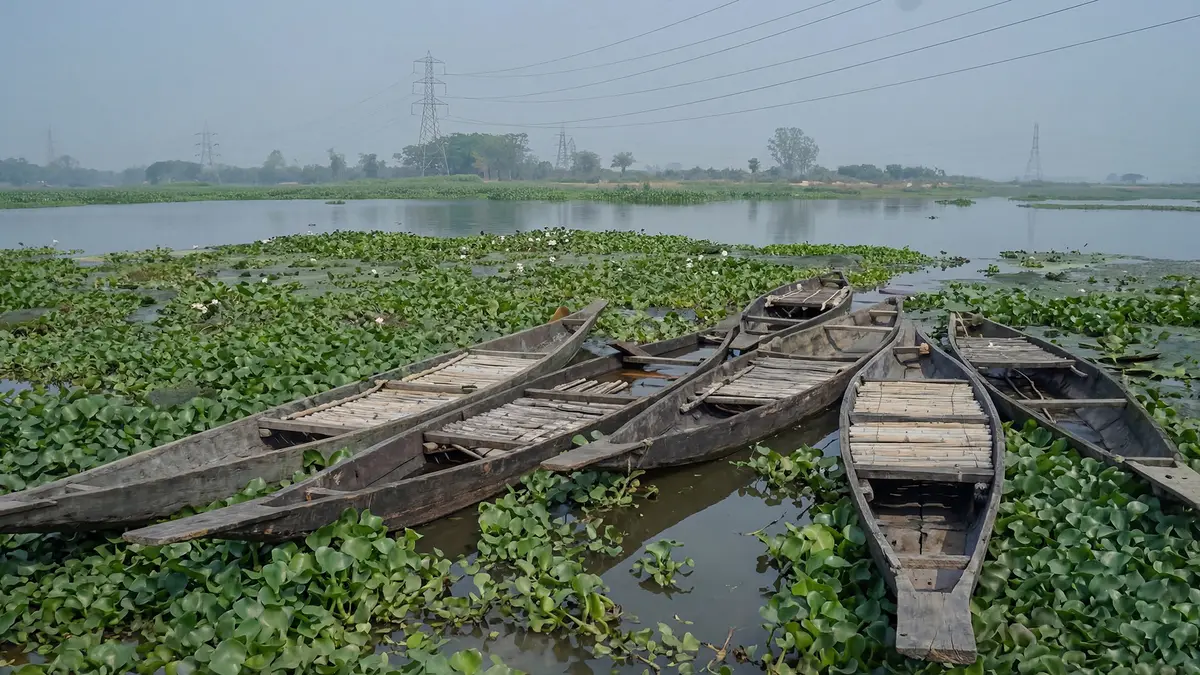
Why in news?
Environmentalists and local authorities renewed efforts in March 2026 to restore Deepor Beel, the only Ramsar wetland in Assam, following reports of pollution and encroachment. The initiative aims to safeguard biodiversity and improve water quality for nearby communities.
Background
Deepor Beel, meaning “lake of elephants,” is a large floodplain lake south‑west of Guwahati. Drained by small streams flowing from the surrounding hills, it connects to the Brahmaputra through the Khanajan outlet. The wetland covers about 40 square kilometres and was designated a Wildlife Sanctuary and Ramsar site in 2002. Birdlife International declared it an Important Bird and Biodiversity Area in 2003.
Ecological significance
- Storm‑water reservoir: Deepor Beel acts as a natural basin that receives monsoon run‑off and storm water from Guwahati. It moderates floods and recharges groundwater.
- Biodiversity hotspot: The lake hosts migratory birds, including spot‑billed pelicans, greater adjutants and several species of ducks and waders. Elephants from nearby forests visit the wetland during the dry season.
- Livelihoods: Local communities depend on the wetland for fishing, rice cultivation and collection of aquatic plants. Traditional fisherfolk follow sustainable practices that have sustained the lake for generations.
Threats and restoration efforts
- Pollution: Untreated sewage from Guwahati, carried by the Bharalu and Basistha–Bahini rivers, drains into the lake. Solid waste dumping and industrial effluents degrade water quality and harm aquatic life.
- Encroachment: Expansion of settlements, construction of roads and illegal fishing structures have reduced the wetland’s area and disturbed wildlife.
- Conservation initiatives: In 2023 a project began using bioremediation to clean the Pamohi canal, one of the main inflows. Authorities are working with local communities to control waste dumping, remove invasive species, and build an elevated railway to reduce habitat fragmentation.

