
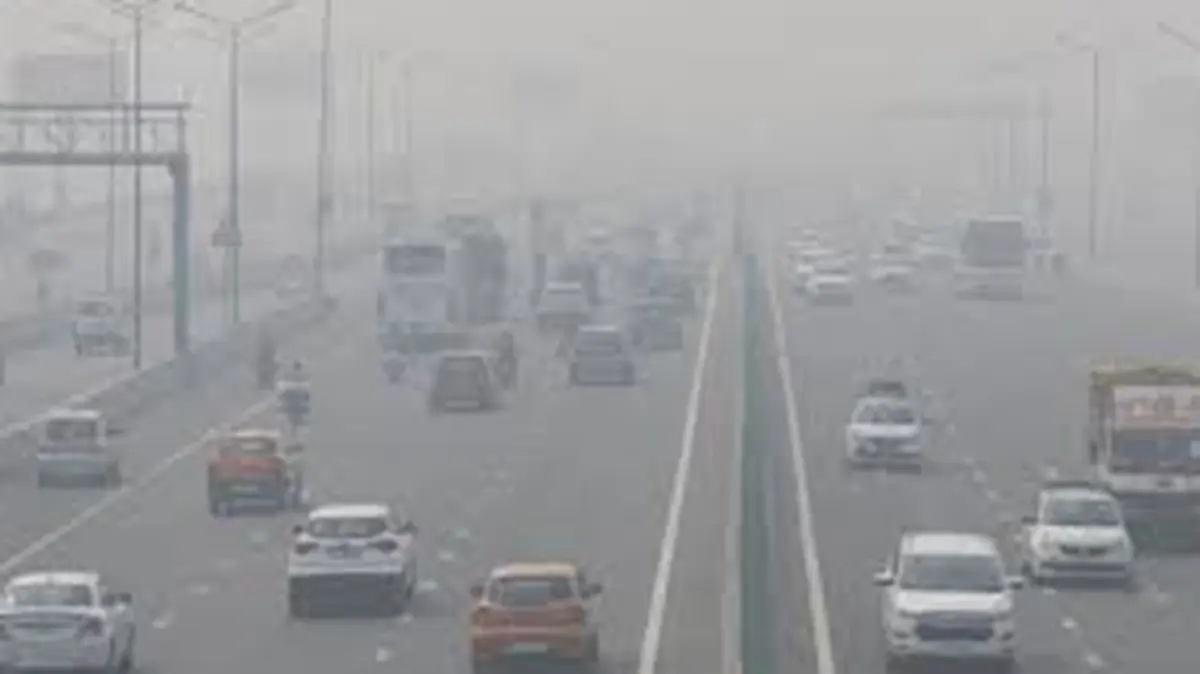
Why in news?
The Delhi government and the Indian Institute of Technology (IIT) Madras launched a six‑month pilot project in March 2026 to test smog‑eating photocatalytic coatings on city roads. The initiative aims to explore whether coating road surfaces or nearby structures with titanium dioxide can help break down air pollutants such as nitrogen oxides (NOx) and volatile organic compounds (VOCs) using sunlight.
Background
Photocatalytic coatings are thin films containing semiconductor materials like titanium dioxide (TiO2). When exposed to ultraviolet or visible light, TiO2 generates highly reactive radicals that oxidise pollutants and microorganisms. Unlike filters, the catalysts are not consumed in the reaction and can function for years if kept clean. Similar coatings are used on self‑cleaning glass and tiles.
About the Delhi pilot
- Lab to field: Researchers will first replicate Delhi’s smog conditions in the laboratory to optimise the concentration of TiO2 and the mode of application. If results are promising, field trials will follow on selected stretches of road.
- Application methods: Options include blending TiO2 into concrete or asphalt, coating existing road surfaces, and installing panels on nearby walls or streetlights. The choice will depend on durability, cost and ease of maintenance.
- Potential benefits: Preliminary studies suggest that TiO2 coatings can reduce NO and NO2 concentrations by a few per cent in street canyons, particularly under strong sunlight. Such reductions could complement other measures like emissions controls and green buffers.
- Limitations: The efficiency drops in dusty or humid conditions, and the coatings require regular cleaning to remain active. Overall cost will depend on the amount of catalyst used and the longevity of the coating.
Why it matters
- Innovation in pollution control: Traditional approaches focus on reducing emissions at the source. Photocatalysis provides a complementary method by removing pollutants from the ambient air.
- Scope for urban areas: Indian cities suffer from persistent smog. If the technology proves effective and cost‑efficient, it could be deployed on walls, roofs and pavements in pollution hotspots.
- Need for realistic expectations: Experts caution that photocatalytic coatings alone cannot solve air pollution. They should be part of a broader strategy that includes cleaner fuels, public transport, and green spaces.
Conclusion
Delhi’s smog‑eating road experiment reflects a willingness to explore novel solutions to urban air pollution. Thorough testing under real‑world conditions will be essential to determine whether photocatalytic coatings can make a measurable difference to air quality.
Source: The Indian Express

