

Why in news?
Scientists from the Birbal Sahni Institute of Palaeosciences used tree‑ring analysis of deodar trees from the Sangla valley in Himachal Pradesh to reconstruct nearly four centuries of moisture history. Their study, published in December 2025, shows a shift from wetter spring conditions during the Little Ice Age to drier conditions after 1757 CE and links recent droughts to increased rockfall events.
Background
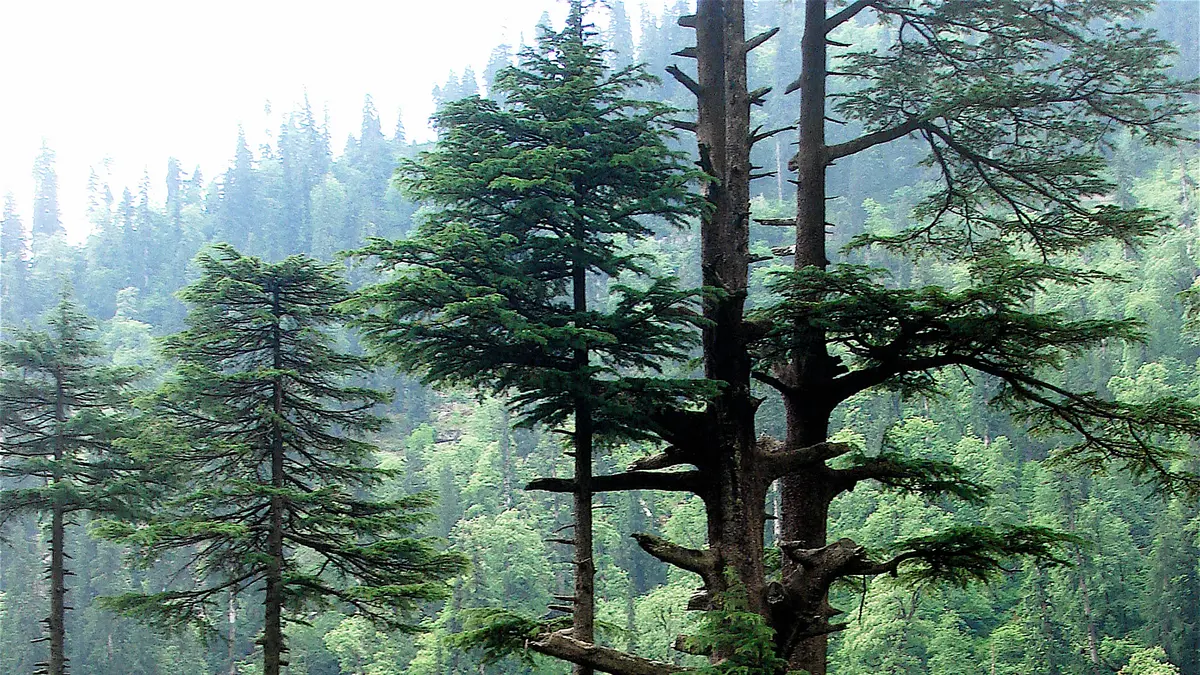
Deodar (Cedrus deodara) is a long‑lived cedar species native to the western Himalaya. Tree rings provide annual records of growth; by studying their width and density, scientists can infer past climate conditions. Dendroclimatology uses such records to reconstruct temperature and precipitation, while dendrogeomorphology examines growth anomalies linked to geomorphic events like landslides and rockfalls.
Key findings
- The study analysed tree rings from multiple deodar trees in the Sangla valley and constructed a 378‑year moisture index. The data show wetter spring conditions during the Little Ice Age (approximately 1600–1850 CE) and a gradual shift toward drier conditions beginning in 1757.
- Researchers identified 53 major rockfall events over the past 168 years. Most events occurred following periods of exceptionally dry springs, suggesting that drought stress weakens root systems and destabilises slopes.
- Tree growth in this region is highly sensitive to spring moisture, which depends on western disturbances — winter storms that bring rain and snow to north‑western India. A decline in such disturbances correlates with recent droughts.
- The study highlights an increase in extreme events such as droughts and flash floods since the mid‑20th century, a trend consistent with global climate change.
Implications
- Hazard preparedness: Linking dry spells to rockfalls helps authorities anticipate geohazards in mountain regions. Early warning systems can be designed by monitoring climate indicators and tree‑ring records.
- Forest management: Understanding how climate affects deodar growth aids in planning forest conservation, afforestation and sustainable harvesting.
- Climate science: Long‑term reconstructions complement instrumental records and improve models of hydroclimatic variability, especially in regions with sparse weather data.
Conclusion
Tree rings act as natural archives of climate. The deodar study shows that Himalayan ecosystems are sensitive to changes in precipitation and temperature. With rising variability in moisture regimes, integrating palaeoclimate records into development planning and disaster risk reduction becomes vital. Communities living in mountain valleys need support through early warning systems, land‑use planning and awareness about climate risks.