
Why in news?
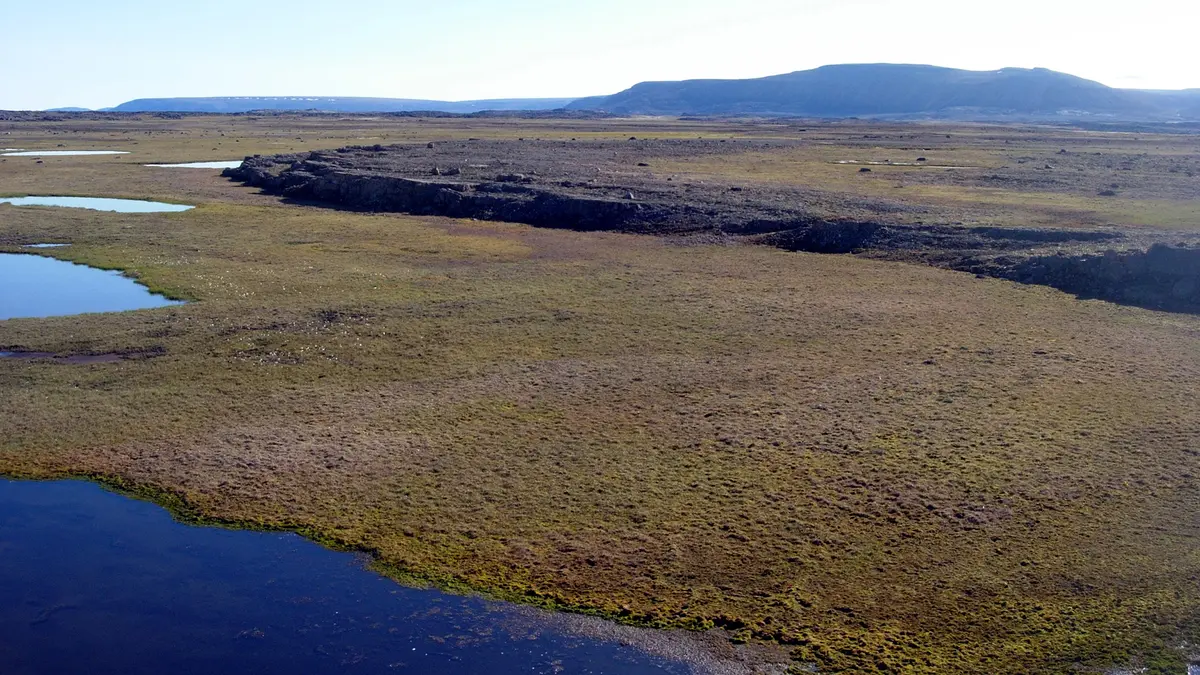
Scientists have once again turned their attention to Devon Island, an enormous and desolate landmass in the Canadian Arctic, because its barren landscape closely resembles the surface of Mars. NASA’s Haughton‑Mars Project uses the island to test rovers, habitats and instruments in preparation for future missions to the Red Planet. The island’s extreme climate and polar desert conditions make it one of the best places on Earth to rehearse Martian exploration.
Background
Devon Island lies in Baffin Bay within Canada’s Arctic Archipelago and is the largest uninhabited island on the planet, covering about 55,000 square kilometres. To its north is Ellesmere Island and to its east the icy waters of Baffin Bay. The terrain is dominated by a polar desert climate: summers are brief, with temperatures rarely rising above 8 °C and a growing season of only 40–55 days. Winters are long and harsh, plunging below −50 °C, and annual precipitation is extremely low. Snow and ice shroud the island’s ice cap all year round, leaving vast areas of bare rock and gravel.
The island hosts the 20‑kilometre‑wide Haughton impact crater, formed about 23 million years ago when a meteorite struck Devon’s surface. The crater’s fractured rocks and permafrost resemble the Martian highlands, making it a natural laboratory for planetary science. Since 1999, researchers from the Haughton‑Mars Project, led by NASA, have travelled to Devon Island each summer to study geology and test technologies. They build field camps near the crater, drive prototype rovers across the rocky terrain, and evaluate habitats, spacesuits and instruments in conditions that mimic those on Mars.
Key facts about Devon Island
- Location and size: Devon Island is situated in Nunavut, Canada, between 75° and 77° north latitude, and has an area of about 55,247 km².
- Climate: The island experiences a polar desert climate with very low precipitation. Summers are cool (2 °C to 8 °C) and last for just over a month, while winters are extremely cold, dropping to −50 °C.
- Geology: The landscape is characterised by barren rocks, permafrost and the ice‑dominated Devon Ice Cap. The Haughton crater’s exposed bedrock provides insight into ancient impact processes.
- Ecology: Due to the harsh conditions, only a few hardy species live here, including muskoxen and small Arctic plants. The island is virtually devoid of human settlement.
- Mars analog: Devon’s isolation and Mars‑like terrain allow scientists to test rovers, habitats, drones and communication systems in realistic conditions. Astronauts also train here to prepare for lunar and Martian missions.
Significance
- Advancing space exploration: Research on Devon Island helps engineers design better rovers and habitats for Mars by exposing them to extreme cold, remote operations and dusty surfaces.
- Understanding Earth’s polar deserts: Studies of Devon’s geology and ecology contribute to knowledge about permafrost, climate change and life in extreme environments.
- Inspiring education and outreach: Images and stories from Devon Island capture public imagination, illustrating how Earth can serve as a testbed for planetary exploration.
Conclusion
Devon Island demonstrates how remote areas on Earth can prepare us for journeys to other worlds. Its polar desert, impact crater and isolation offer a unique platform for researchers to hone tools and techniques that will one day be used on Mars. As plans for human exploration of the Moon and Mars gather pace, this Arctic outpost will remain an indispensable training ground.
Sources: Times of India

