

Why in news?
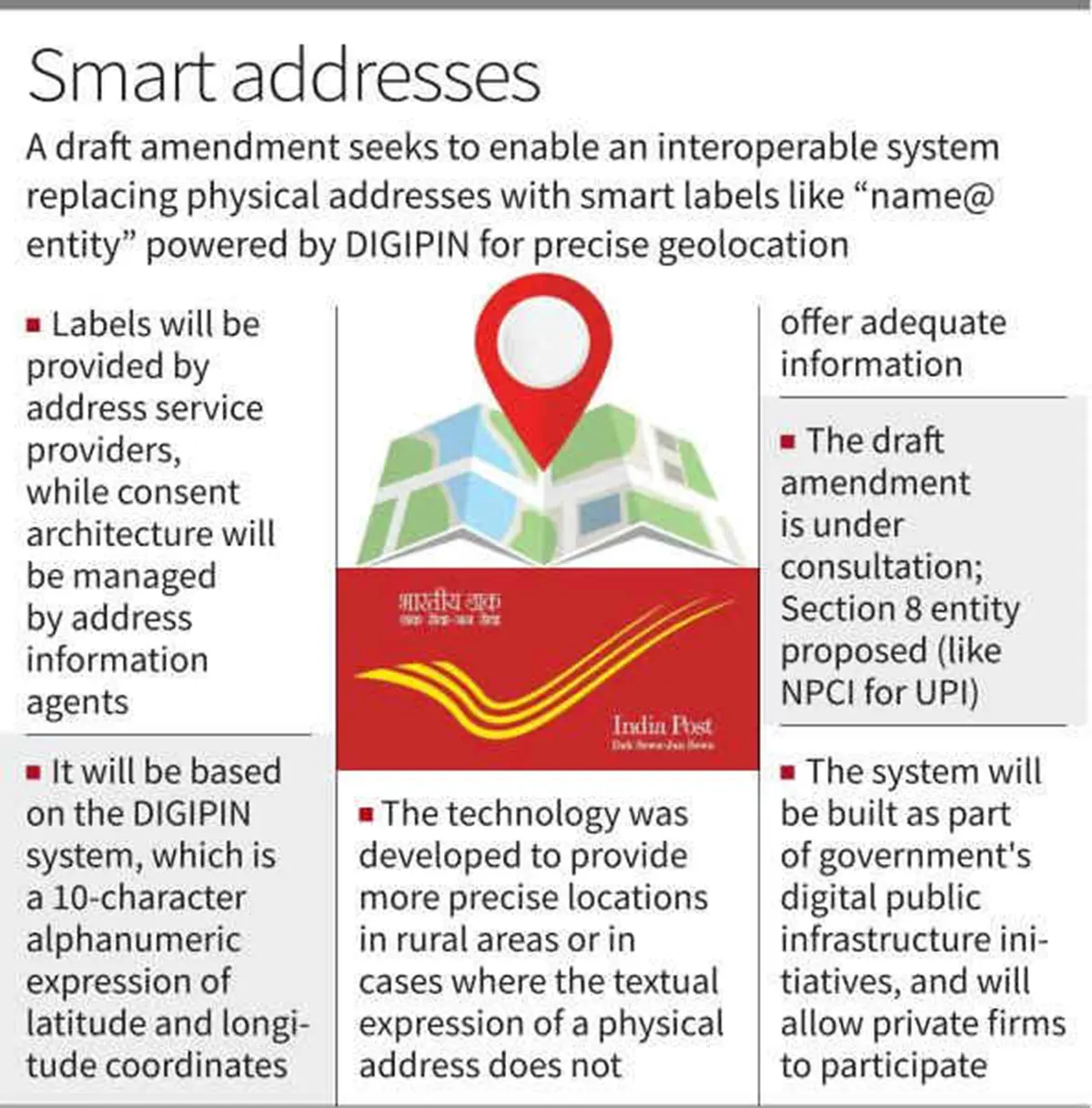
The Department of Posts has unveiled a policy framework called DHRUVA (Digital Hub for Reference and Unique Virtual Address) to create a secure, interoperable digital address system. Alongside a new “Know Your DIGIPIN” mobile application, this initiative aims to standardise and geocode addresses across India, making it easier for citizens, businesses and government services to locate and share addresses without confusion.
Background
India’s addressing system varies widely from one state to another, leading to misdelivery of mail and difficulties in accessing services. Building on the concept of the Digital Postal Index Number (DIGIPIN), the DHRUVA project envisions a Digital Public Infrastructure (DPI) that assigns each premises a geocoded identifier. Under the proposed framework, the Department of Posts will act as a trusted anchor, enabling citizens to create, update and share their digital addresses with consent. The initiative was opened for public comments in mid‑2025 and forms part of the government’s strategy to improve last‑mile delivery and digital governance.
Key features
- Address‑as‑a‑Service: DHRUVA provides a secure platform where users can generate, verify and share their addresses digitally. Service providers can integrate this platform into their applications to obtain accurate locations.
- Geo‑coding and interoperability: Each digital address is linked to precise latitude and longitude coordinates. Standardised data formats allow interoperability across government departments, logistics companies and financial institutions.
- Consent‑based sharing: Individuals retain control over who can view or use their address. Consent mechanisms ensure privacy and prevent unauthorised access.
- Promotion of innovation: By making address data available through open APIs, the scheme encourages entrepreneurs to develop applications for e‑commerce, emergency services, asset management and financial inclusion.
Potential benefits
- Improved delivery services: Accurate digital addresses reduce delays and losses in postal and courier deliveries, especially in rural areas.
- Ease of doing business: Businesses can verify customer addresses quickly, enhancing KYC processes and reducing fraud in banking and telecom services.
- Disaster management: Authorities can map vulnerable households and coordinate rescue operations more effectively during floods, cyclones or other emergencies.
- Urban planning: Planners can analyse address data to design infrastructure, allocate resources and monitor urban growth.
Conclusion
DHRUVA represents a significant step towards modernising India’s addressing system. By providing a unified, geocoded identity for every address, it has the potential to streamline service delivery, boost economic activity and empower citizens with greater control over their location data.
Source: TH