Why in news?
During the first phase of India’s general elections in April 2026, polling officials had to trek through dense forests and cross swollen rivers to reach Laika and Dodhia villages inside Assam’s Dibru–Saikhowa National Park. Forest guards armed with rifles escorted the teams to protect them from wild animals. Despite heavy rain and challenging terrain, locals lined up enthusiastically to vote.
Background
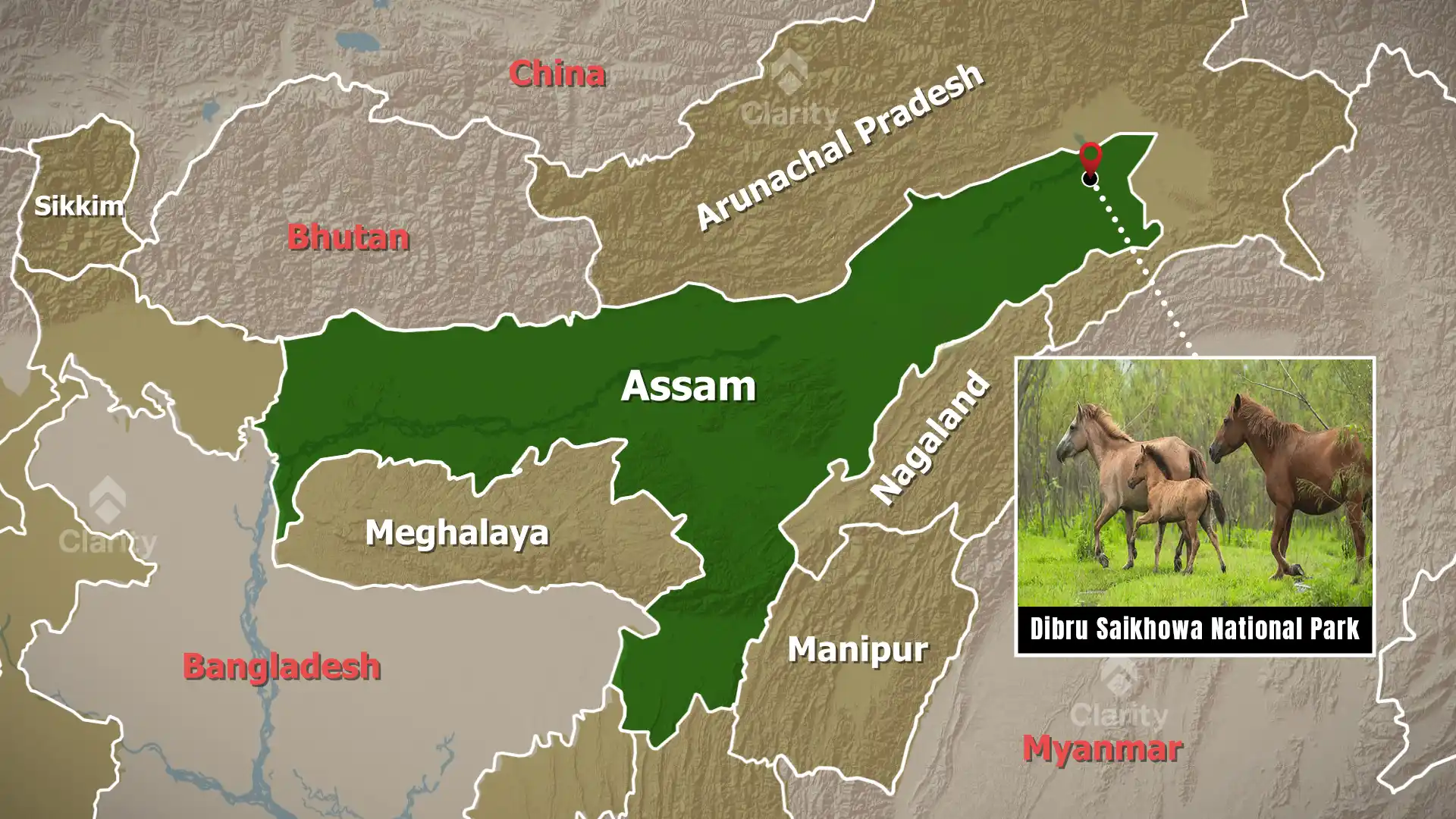
Located in the Dibrugarh and Tinsukia districts of Assam, Dibru–Saikhowa is both a national park and a biosphere reserve. Established as a biosphere reserve in 1997, it covers around 765 sq km (with a 340 sq km core) bounded by the Brahmaputra and Lohit rivers to the north and the Dibru River to the south. The park protects rare wetland ecosystems, grasslands and swamp forests and is one of the few places in India where feral horses roam freely.
Natural features and biodiversity
- Swamp forests and grasslands: Dibru–Saikhowa hosts the largest Salix swamp forest in northeast India, interspersed with canebrakes and tall grasslands.
- Rich fauna: The reserve harbours around 36 mammal species including Bengal tigers, clouded leopards, hoolock gibbons, Gangetic river dolphins and a unique population of feral horses descended from World War II cavalry stock. More than 380 bird species have been recorded, making it a birdwatcher’s paradise.
- Remote communities: Villages like Laika and Dodhia lie deep inside the park. Residents often cross rivers by boat and navigate dense forests for essential services, highlighting the intersection of conservation and human livelihoods.
Challenges and significance
- Accessibility: Monsoon rains and annual floods isolate many parts of the park. Voting teams needed the help of forest guards because elephants, wild buffaloes and big cats frequent the area.
- Conservation vs. human needs: Protecting wildlife while ensuring the welfare of indigenous communities requires careful planning, sustainable livelihoods and periodic relocation discussions.
- Ecotourism potential: With proper infrastructure, Dibru–Saikhowa’s unique landscapes could promote responsible tourism, bringing income to locals and raising awareness about wetland conservation.
Conclusion
The polling experience in Dibru–Saikhowa demonstrates both the challenges of conducting democratic processes in remote wilderness areas and the resilience of voters eager to participate. Preserving this biodiversity hotspot while supporting its inhabitants remains a delicate balancing act.
Source: TOI