

Why in news?
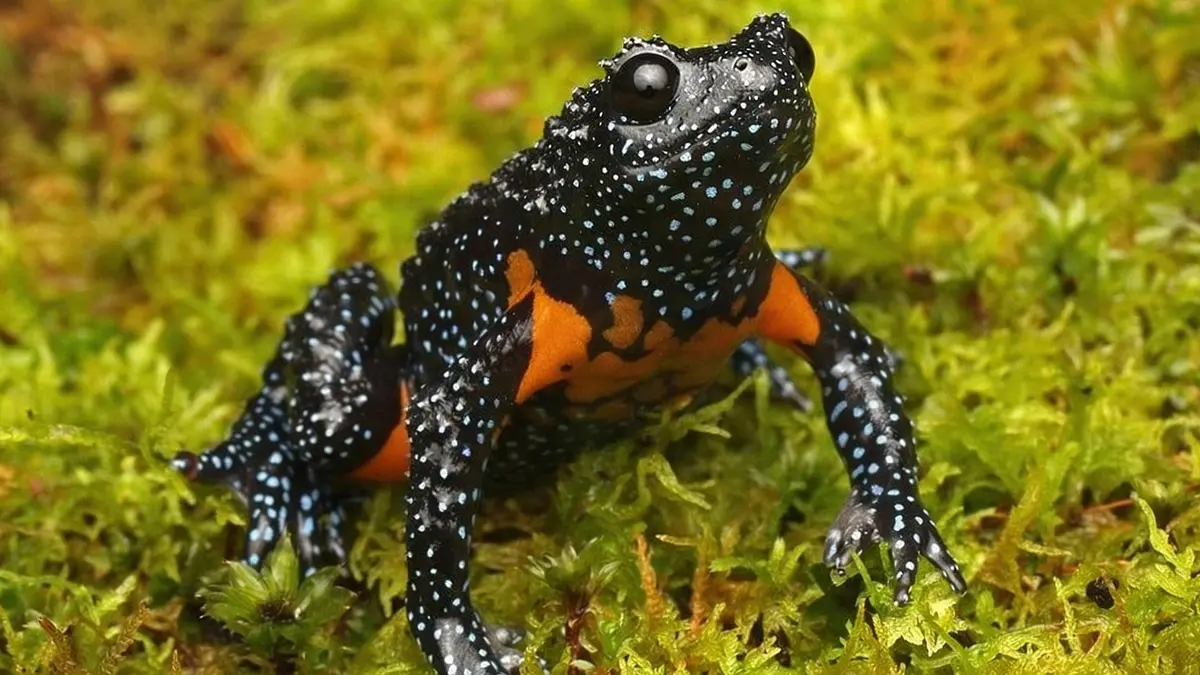
A scientific paper published in December 2025 reported that seven Galaxy Frogs (Melanobatrachus indicus) observed in Kerala’s Western Ghats had vanished within a year of discovery. Researchers believe that intense photo tourism—where photographers overturned logs, handled frogs and used strong flashlights—disturbed the amphibians’ microhabitat, leading to their presumed death. The finding has sparked calls for stricter guidelines on nature photography.
Background on the species
The Galaxy Frog is a tiny, evolutionarily distinct amphibian endemic to the wet evergreen forests of the southern Western Ghats in Kerala and Tamil Nadu. Measuring just 2–3.5 cm in length, it has shiny black skin sprinkled with blue‑white speckles and small orange patches, giving it the appearance of a starry sky. The species lives in cool, moist microhabitats under rotting logs at altitudes above 900 m. Galaxy frogs are nocturnal and lack a vocal sac, which makes them hard to locate; scientists suspect that the bright spots on their skin aid communication instead of calls. The frog breathes partly through its skin and must keep it moist by secreting mucus. Because of its limited range and small population, the International Union for Conservation of Nature (IUCN) lists it as Vulnerable.
Threats
- Habitat loss: Conversion of forests to farmland, road construction, firewood collection and landslides reduce the frog’s already tiny habitat.
- Climate sensitivity: Being cold‑blooded and reliant on a moist environment, the frog cannot survive prolonged exposure to heat or dry conditions.
- Disturbance from photography: The recent study found that photographers searching for the frogs overturned logs, moved the animals for better shots and exposed them to strong camera flashes. Such actions can dry out their skin, disrupt their feeding and breeding and introduce pathogens.
Guidelines for ethical wildlife photography
- Do not handle or chase animals for photographs. Observe and photograph from a distance.
- Minimise the use of high‑intensity lights and use diffusers to avoid harming sensitive species.
- Leave microhabitats undisturbed; if a log or stone is moved to spot an animal, replace it carefully.
- Respect local regulations and obtain permission when entering protected areas.
Conclusion
The disappearance of galaxy frogs serves as a cautionary tale about the unintended consequences of unregulated nature photography. Preserving biodiversity requires not only protecting habitats but also fostering responsible behaviour among visitors. Amateur and professional photographers alike must prioritise the welfare of wildlife over the perfect shot.
Source: Indian Express