
Why in news?
Scientists studying the deep ocean discovered that certain rock formations, called polymetallic nodules, generate oxygen in total darkness. This “dark oxygen” phenomenon challenges long-held assumptions that oxygen is produced only through photosynthesis or chemical reactions involving light. The finding could change our understanding of marine ecosystems and the search for life beyond Earth.
Background
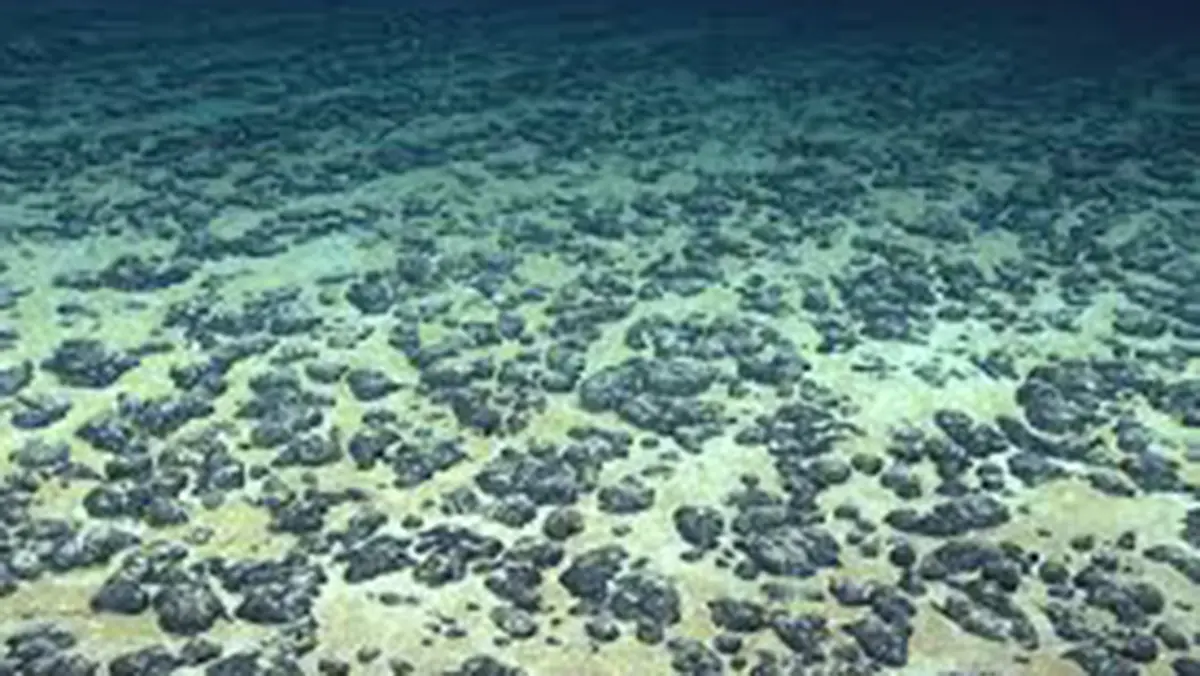
Polymetallic nodules are potato-sized rocks rich in manganese, iron and rare-earth elements that lie on the seabed at depths of around 4,000 metres. They grow slowly over millions of years through accretion of metal oxides. The nodules have long intrigued scientists because they host microbial communities despite the absence of sunlight.
How dark oxygen forms
- Electric currents: Researchers placed benthic chambers over nodules and measured tiny electrical currents flowing between the nodule surface and surrounding seawater. These currents split water molecules, releasing molecular oxygen even without light.
- Microbial activity: Microbes living on the nodules may accelerate the process by transferring electrons and facilitating electrochemical reactions.
- Localized effect: The oxygen is produced in very small quantities but creates micro-environments that support aerobic life in the deep ocean.
Implications
The discovery suggests that oxygen can be generated in dark environments on Earth and possibly on other planetary bodies. It may explain how certain deep-sea organisms survive without photosynthetic oxygen and could inform astrobiological research on moons such as Europa. The finding also adds to concerns about disturbing polymetallic nodules through deep-sea mining.
Source: The Times of India

