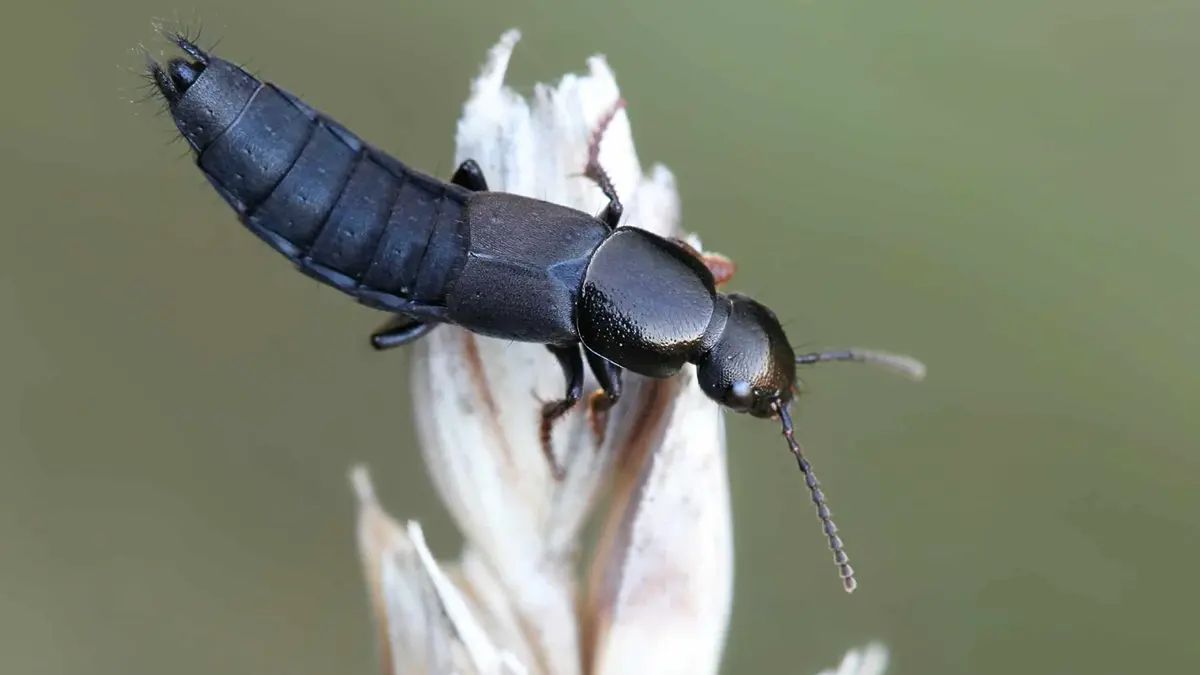
Why in news?
Researchers from Rajiv Gandhi University in Arunachal Pradesh and the University of Tübingen in Germany have identified three previously unknown species of rove beetles in the forests of the eastern Himalayas. These discoveries were recently published in the journal Soil Organisms and underscore the rich but understudied biodiversity of the Northeast.
Background
Rove beetles belong to the family Staphylinidae, one of the largest and most diverse families of insects. Characterised by their very short wing covers that leave most of the abdominal segments exposed, rove beetles are generally small (1–35 millimetres) and vary widely in shape and colour. There are more than 66,000 known species worldwide, and fossils indicate they have existed since the Jurassic period. Most rove beetles are predatory and dwell in leaf litter, decaying wood or animal dung, where they help control populations of pests such as flies and mites.
The new species
- Megalopsilus arunachalensis: Named after Arunachal Pradesh, this species was found in Pakke Tiger Reserve. It has distinctive mouthparts and body bristles that set it apart from its congeners.
- Megalopsilus mithun: Discovered in Eaglenest Wildlife Sanctuary, it is named after the mithun, a semi‑domesticated cattle species important to local tribes. Its slender body and unique genital structures distinguish it from related species.
- Megalopsilus microglossus: Also collected from the East Himalaya, this species features a remarkably small tongue‑like structure in its mouth apparatus, giving rise to its name.
Importance of rove beetles
- Ecological role: Many rove beetles are natural predators of small insects and mites, playing a vital role in nutrient cycling and biological control. They help decompose organic matter and maintain soil health.
- Biodiversity indicators: Because rove beetles occupy specific niches and respond quickly to habitat changes, their presence and diversity can indicate the health of ecosystems.
- Need for conservation: The discovery of new species highlights the undiscovered diversity of the northeastern forests. Deforestation, infrastructure development and climate change threaten these habitats. Protecting forests like Pakke and Eaglenest is essential for safeguarding unique species and the services they provide.
Conclusion
The identification of three new rove beetle species in Arunachal Pradesh draws attention to the hidden richness of India’s insect fauna. Continued research and habitat protection will help reveal more such species and emphasise the value of biodiversity for ecological balance and human well‑being.
Sources: India Today North East, Rove beetle – Wikipedia, Utah State University Extension