

Why in news?
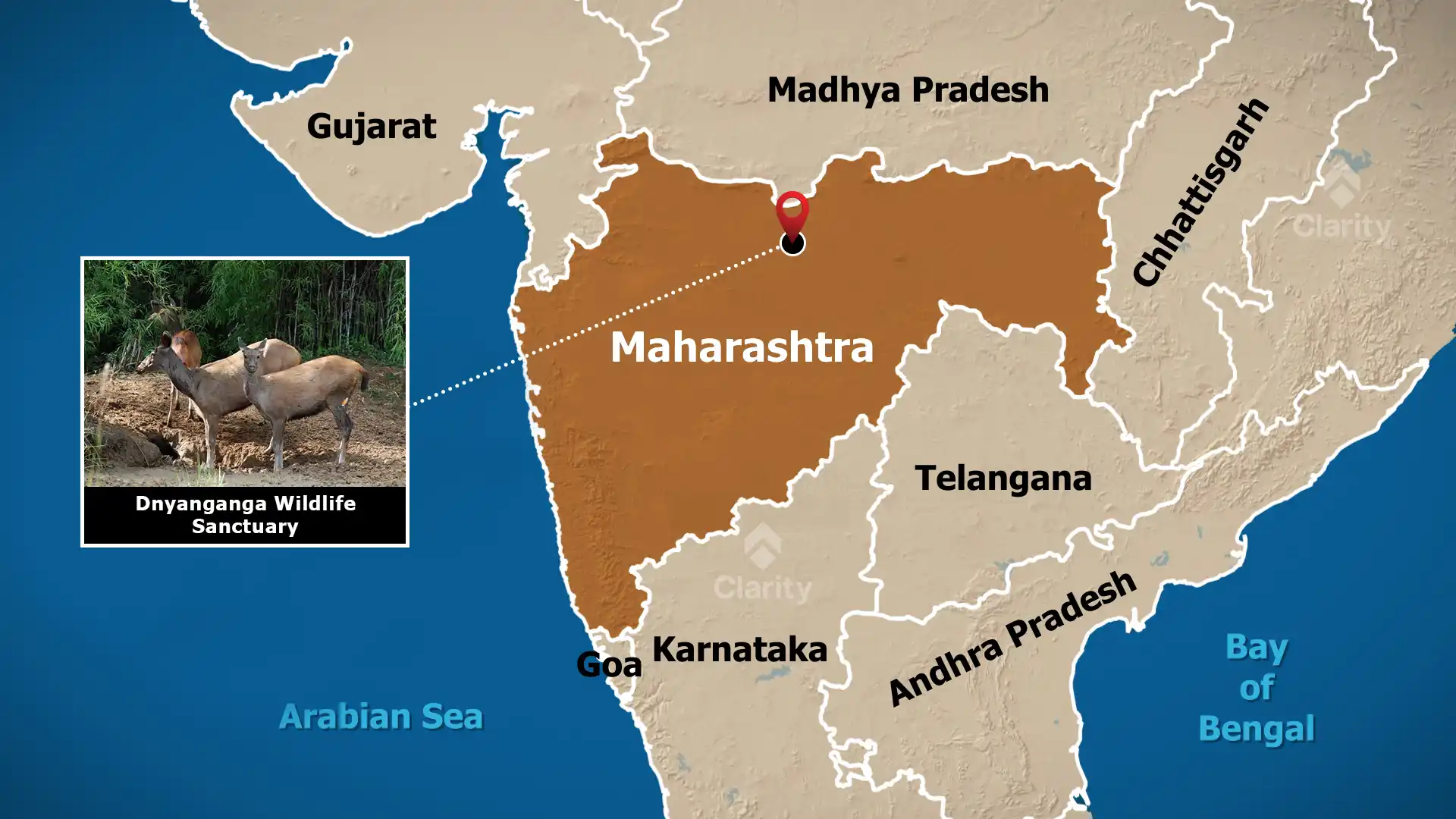
A three‑year‑old male tiger, raised from a cub after losing its mother, has been released into the wild at the Dnyanganga Wildlife Sanctuary in Maharashtra. This rewilding marks an important milestone in India’s efforts to rehabilitate orphaned big cats and restore predator populations in lesser‑known protected areas.
Background
Dnyanganga Wildlife Sanctuary forms part of the Melghat Tiger Reserve and is located near Buldhana town in Maharashtra. Covering about 205 square kilometres, the sanctuary is named after the Dnyanganga River and contains two large lakes that support diverse flora and fauna. Its gentle hills and mixed deciduous forest provide habitat for leopards, sloth bears, barking deer, nilgai (blue bulls), sambar and spotted deer. Roughly 150 bird species are recorded here. The best time to spot wildlife is during the dry season between February and May.
Rewilding effort
- Rescued cub: The male tiger and his sister were rescued as cubs in 2023 from Yavatmal district after their mother died. They were hand‑reared at Pench Tiger Reserve and taught to hunt and survive independently.
- Release locations: In January 2026 the male, designated PKT7CP1, was released into Dnyanganga Wildlife Sanctuary, while his sister was released into Painganga Wildlife Sanctuary. Both sanctuaries provide ample prey and suitable forest cover for the tigers to establish territories.
- Monitoring: Wildlife officials have equipped the tigers with radio collars to track their movements and ensure they adapt well to the wild. The rewilding programme will monitor their hunting success, interactions with other wildlife and potential conflicts with humans.
Significance
- Strengthening smaller sanctuaries: Introducing tigers into Dnyanganga helps diversify the genetic pool and increases the presence of apex predators in areas outside India’s major tiger reserves.
- Conservation success: The successful rehabilitation of orphaned cubs demonstrates how intensive care and training can return big cats to the wild, supporting the long‑term goal of doubling tiger numbers.
- Tourism and awareness: Presence of tigers attracts wildlife enthusiasts and can boost eco‑tourism. This creates incentives for local communities to protect habitats and reduces poaching pressure.
Conclusion
The Dnyanganga rewilding initiative showcases India’s commitment to wildlife conservation beyond its flagship national parks. With careful monitoring and community involvement, such projects can enhance biodiversity, restore ecological balance and inspire pride in lesser‑known wilderness areas.
Source: Devdiscourse