

Why in news?
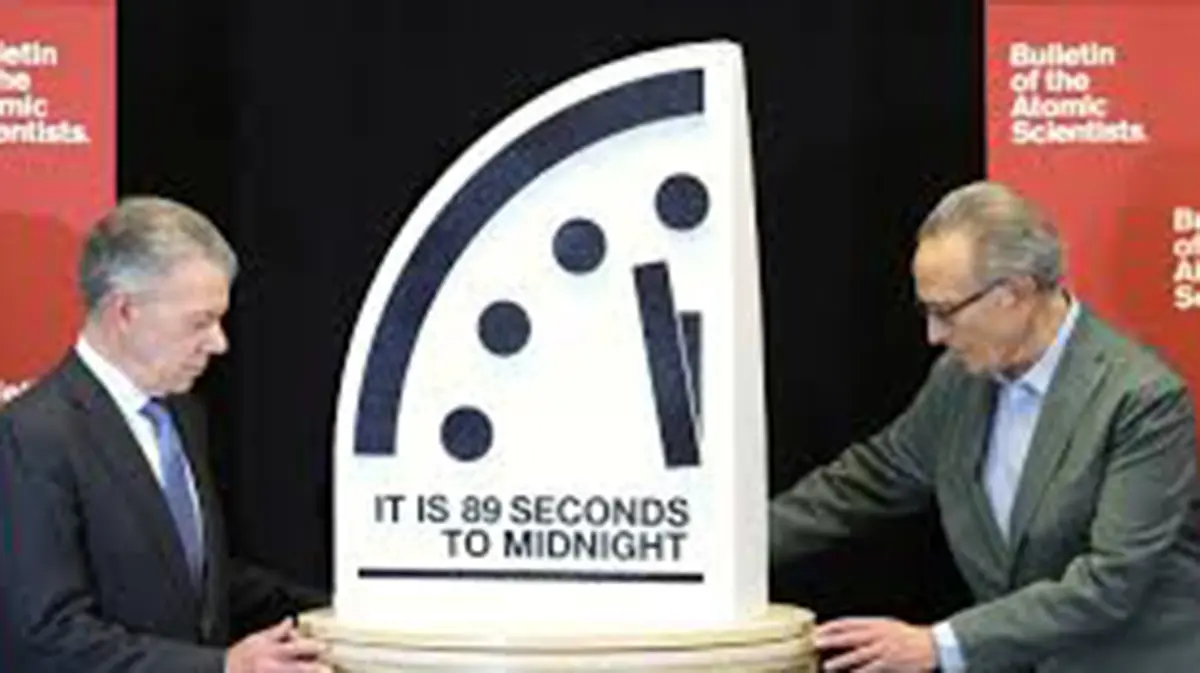
On 27 January 2026, the Bulletin of the Atomic Scientists moved the hands of the Doomsday Clock forward to 85 seconds to midnight, signalling that humanity is closer to global catastrophe than at any point since the Clock’s creation in 1947. The shift reflects mounting nuclear tensions, unchecked climate change, emerging biological and artificial intelligence threats and a rise in nationalistic autocracy.
Background
The Doomsday Clock is a symbolic clock created in 1947 by scientists who worked on the Manhattan Project. Midnight represents global catastrophe from human‑made dangers such as nuclear war, climate disruption and runaway technologies. Each year, the Bulletin’s Science and Security Board, in consultation with experts including Nobel laureates, decides whether to move the hands closer to or further from midnight. In 2023 the clock stood at 90 seconds to midnight; by 2024 it was set to 89 seconds, and now it is 85 seconds.
Reasons for the 2026 reset
- Nuclear risks: The statement cites aggressive rhetoric and military actions by nuclear‑armed states. Conflicts in Ukraine, South Asia and the Middle East have included threats of nuclear weapon use and attacks on nuclear facilities. The last major arms control treaty (New START) is set to expire, and nuclear arsenals are expanding.
- Climate change: Atmospheric carbon dioxide levels reached 150 percent of pre‑industrial levels. 2024 was the warmest year on record, with 2025 close behind. Extreme heat, droughts and floods caused human suffering across continents while climate summits failed to agree on phasing out fossil fuels.
- Biological threats: Advances in biotechnology, such as the synthesis of “mirror life” and the potential for AI‑assisted design of pathogens, pose existential risks. Weakening public health systems and eroding international norms around biological weapons heighten these dangers.
- Artificial intelligence and disinformation: Rapid development of AI raises fears about its misuse, including in weapons systems and the creation of new pathogens. The spread of disinformation undermines public discourse needed to address global challenges.
- Rise of autocracy: Growing nationalism and autocratic tendencies in major powers impede international cooperation. Zero‑sum politics make it harder to address shared threats like nuclear war, climate change and pandemics.
Call to action
The Bulletin urges world leaders to resume dialogue on arms control, cooperate on preventing new biological threats, regulate artificial intelligence, phase out fossil fuels and rebuild trust in international institutions. Citizens are encouraged to demand these changes from their governments. While the Doomsday Clock is symbolic, it reminds us that collective action can move us away from catastrophe.
Source: LM