

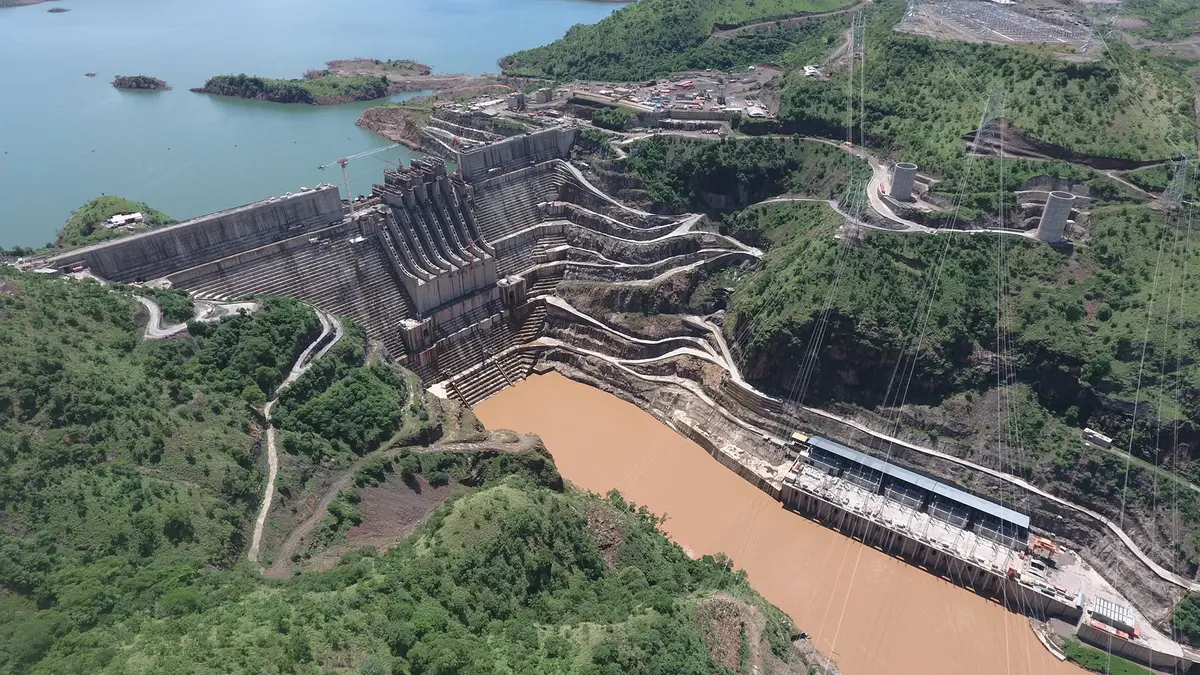
Why in news?
Tata Power and Bhutan’s Druk Green Power Corporation (DGPC) signed commercial agreements on 21 November 2025 to develop the 1,125 MW Dorjilung Hydroelectric Power Project in eastern Bhutan. The project will be the largest Public–Private Partnership (PPP) hydro project in Bhutan and is slated for commissioning in September 2031, with most of the electricity to be supplied to India.
Background
Bhutan is rich in hydropower potential thanks to its mountainous terrain and fast‑flowing rivers. India has long cooperated with Bhutan to harness this resource, resulting in projects such as the 720 MW Mangdechhu and the 1,020 MW Punatsangchhu. Run‑of‑the‑river projects generate electricity using the natural flow of a river without large reservoirs, thereby reducing environmental and social impacts.
Key features of the Dorjilung project
- Project design: Located on the Kurichhu River in the Mongar district, Dorjilung will have six units of 187.5 MW each with six‑hour pondage for peaking power. It is designed as a run‑of‑the‑river scheme, meaning minimal water storage and a small footprint.
- Ownership structure: The project will be implemented through a Special Purpose Vehicle in which DGPC holds 60 percent and Tata Power holds 40 percent. Tata Power will invest about ₹1,572 crore in equity as part of its commitment.
- Financials and support: The total project cost is estimated at ₹13,100 crore. The World Bank is providing support, making this a significant example of cross‑border clean‑energy financing. Approximately 80 percent of the generated electricity will be exported to India.
- Timeline and significance: The project is expected to be commissioned in September 2031. Once operational, it will boost Bhutan’s economy, contribute to India’s renewable energy supply and advance the goal of developing 5,000 MW of clean energy capacity in Bhutan.
Conclusion
The Dorjilung project represents the next chapter in India–Bhutan energy cooperation. By investing in a run‑of‑the‑river design and ensuring a fair ownership structure, the partners aim to deliver reliable, low‑carbon electricity while supporting Bhutan’s development and India’s energy security.
Sources: CNBC,