
Why in news?
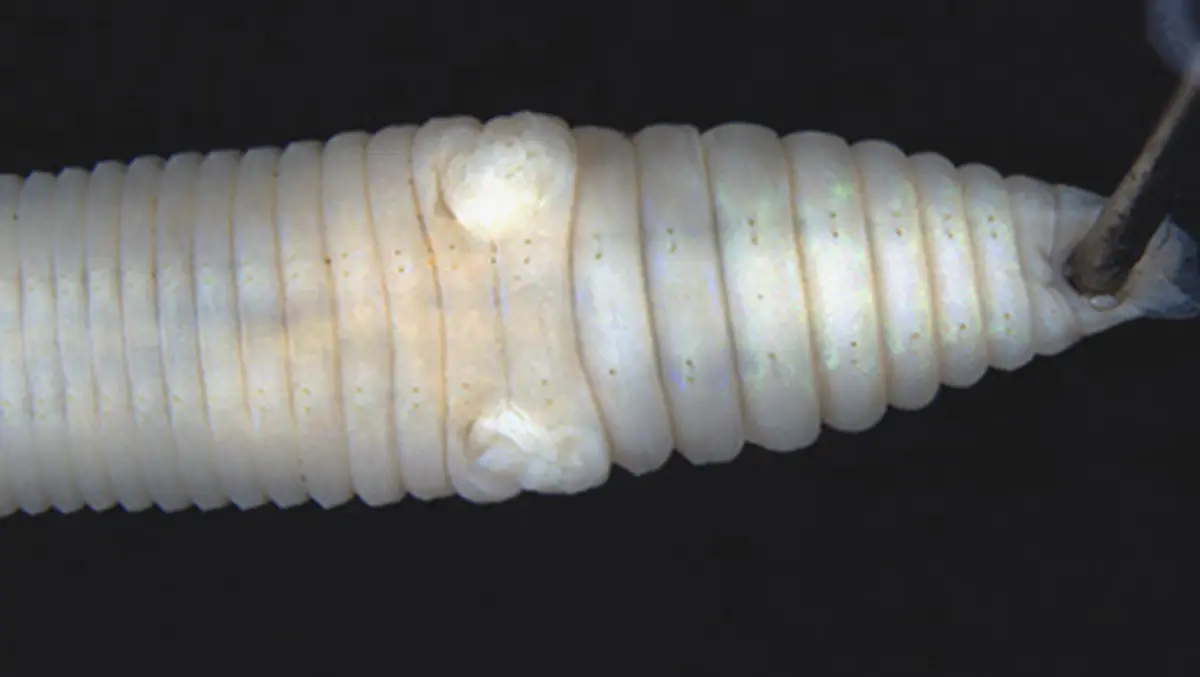
Scientists have reported the discovery of a new earthworm species called Drawida vazhania from the Vazhani Dam area in the Peechi‑Vazhani Wildlife Sanctuary of Kerala. The find expands our understanding of earthworm diversity in the Western Ghats.
Background
Earthworms in the genus Drawida are native to South, South‑East and East Asia. These soil‑dwelling animals play a vital role in recycling nutrients and improving soil structure. The Peechi‑Vazhani sanctuary, located in Thrissur district, protects moist forests and grasslands that harbour numerous endemic species. Researchers exploring the Vazhani Dam catchment recently collected specimens that could not be matched to any known species.
Key characteristics
- The new species is small and belongs to the Barwelli group of Drawida worms. It has a grooved male genital field and a bean‑shaped prostate.
- The prostatic capsule is narrow and forms a C‑shape, and the atrium (the structure opening to the surface) is small and sits directly on the body wall.
- These features distinguish Drawida vazhania from other members of the genus and led taxonomists to describe it as a distinct species.
- With this discovery the number of Drawida species known from India has increased to more than eighty, of which around fifty are found in the Western Ghats.
Significance
- Earthworms are ecosystem engineers: they aerate the soil, aid decomposition and promote plant growth. Documenting new species improves our understanding of soil biodiversity and its benefits for agriculture and forestry.
- The Western Ghats is a globally recognised biodiversity hotspot. New discoveries such as D. vazhania highlight the need to conserve habitats threatened by deforestation, agriculture and urbanisation.
Conclusion
The discovery of Drawida vazhania adds to the rich tapestry of life in the Western Ghats. Continued field surveys and habitat protection are essential to uncover and conserve the many small but ecologically important organisms that dwell beneath our feet.
Source: The Hindu

