

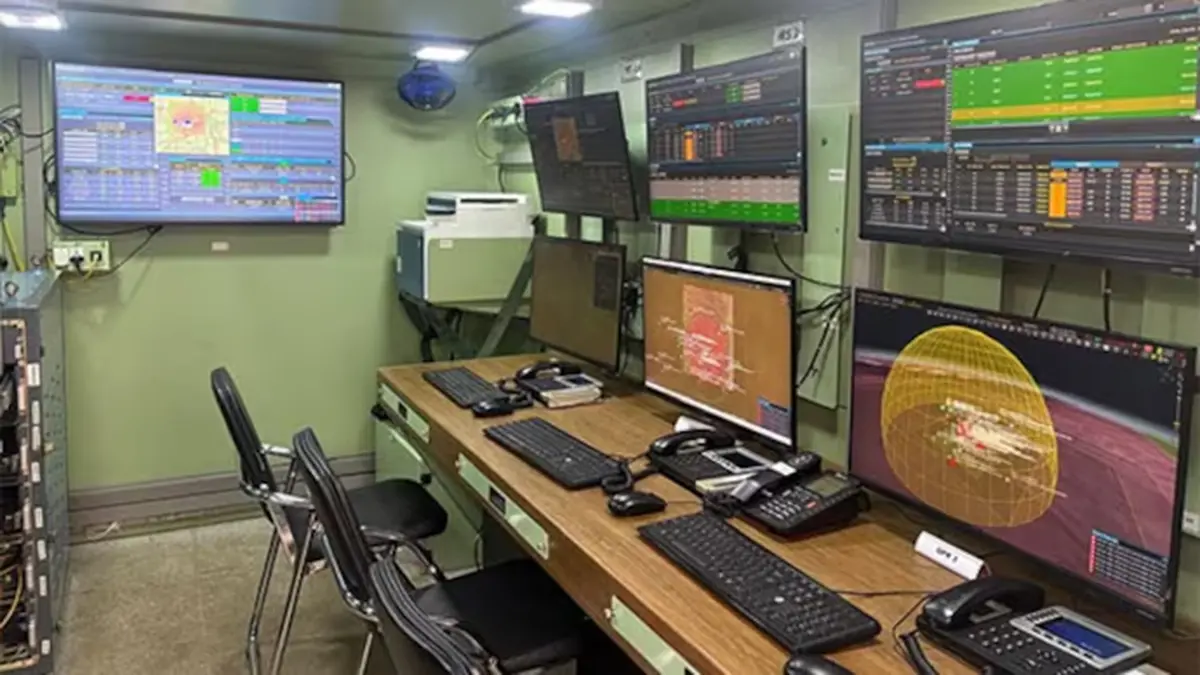
Why in news?
The Defence Research and Development Organisation (DRDO) recently handed over seven indigenously developed technologies to the Indian Armed Forces under its Technology Development Fund (TDF) scheme. The projects were undertaken by start‑ups and micro, small and medium enterprises with financial support from the scheme. Twelve new projects were also approved during the review meeting, further underscoring the push towards self‑reliance in defence.
Background
The TDF scheme was launched to encourage Indian industry to design and develop defence equipment that the country currently imports. It provides up to 90 percent of project cost as grant‑in‑aid to start‑ups and MSMEs for developing niche technologies. The aim is to create a robust defence industrial base, foster innovation and reduce dependence on foreign suppliers.
Technologies handed over
- High‑voltage power supply for jammers: A compact and efficient power module for electronic jamming systems used to block hostile communications.
- Tide‑efficient gangway system: A gangway that automatically adjusts to tides, ensuring safe boarding and disembarking at naval jetties.
- Very‑low‑frequency (VLF) switching matrix: Equipment that improves the reliability of VLF communication with submarines and underwater platforms.
- VLF loop aerial: A special antenna designed to transmit and receive VLF signals from submerged vessels.
- Water‑jet propulsion system: A propulsion unit suitable for small vessels weighing around 2.5 tonnes, offering manoeuvrability in shallow waters.
- Lithium precursor recovery: A process for extracting usable lithium compounds from spent lithium‑ion batteries, aiding recycling and strategic material security.
- Long‑life seawater battery system: A battery that uses seawater as an electrolyte, providing a reliable and long‑duration power source for underwater applications.
New projects
At the meeting, DRDO sanctioned a dozen new projects for development. These include advanced imaging and sensing systems, fuel‑cell power packs, light‑weight composite materials and secure communication devices. The projects are aligned with the Armed Forces’ future requirements and will be undertaken by Indian start‑ups in partnership with DRDO laboratories.
Significance
- Indigenous capability: Developing complex systems at home reduces reliance on imports and enhances strategic autonomy.
- Support for start‑ups: The scheme nurtures innovation by providing technical and financial assistance to young companies, creating jobs and intellectual property within India.
- Atmanirbhar Bharat: The TDF scheme contributes to the larger goal of making India self‑reliant in critical defence technologies.
Source: Press Information Bureau