

Why in news?
Scientists at India’s Agharkar Research Institute have used the fruit fly Drosophila melanogaster to investigate how ageing affects stem cells. Their study, released on 13 January 2026, suggests that neighbouring support cells, not the stem cells themselves, may be the first to show signs of ageing due to impaired cellular recycling.
Background on Drosophila melanogaster
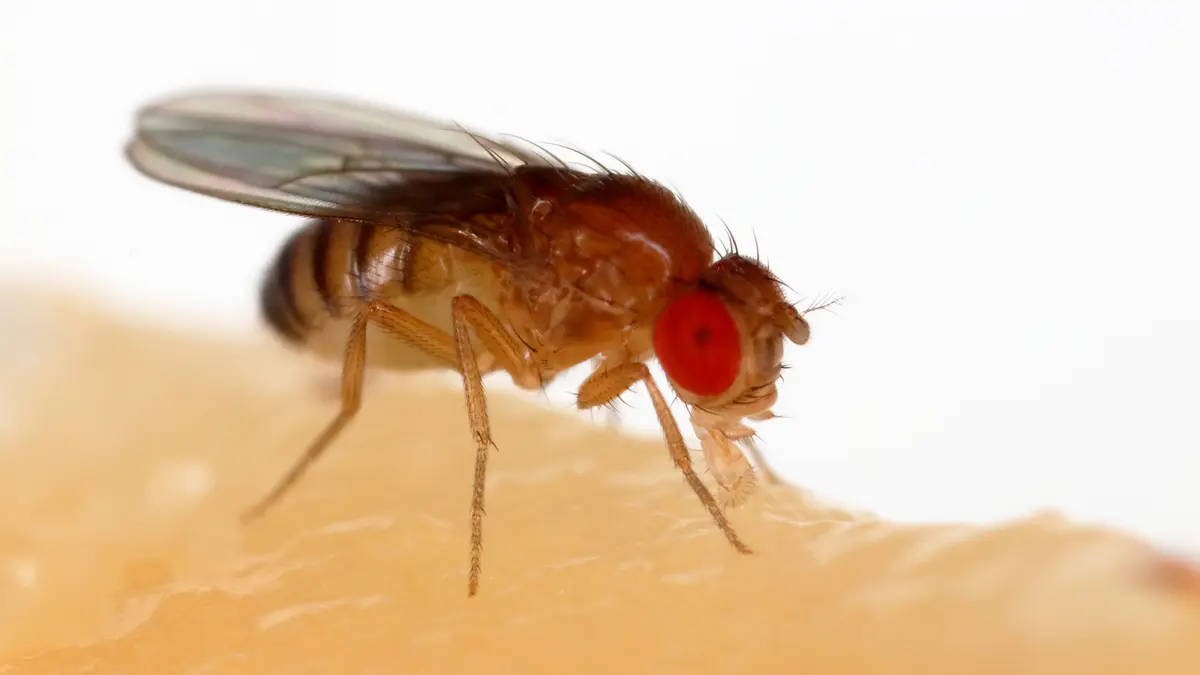
Drosophila melanogaster, commonly called the fruit fly, is a small insect about 3 mm long with a yellow‑brown body and large red compound eyes. Native to the Old World tropics, it is now found worldwide wherever there is decaying fruit. The species thrives in moist, warm environments and cannot survive extreme cold.
Fruit flies undergo complete metamorphosis: eggs hatch into larvae, which feed and grow before forming pupae and finally emerging as adults. A single pair can produce hundreds of offspring in a few weeks, and adults reach sexual maturity in about a week. These characteristics, along with a relatively simple genome and conservation of many human genes, make Drosophila a valuable model organism for studying genetics, development, ageing and disease.
Findings of the new study
- Stem‑cell niche: Researchers focused on the ovary of the fruit fly, where germline stem cells are maintained by a cluster of supporting cap cells. The environment formed by these support cells is called a stem‑cell niche.
- Autophagy deficiency: The team found that cap cells become deficient in autophagy, the process by which cells recycle damaged components. Without autophagy the support cells accumulate cellular waste and can no longer sustain the stem cells.
- Loss of stem cells: When autophagy genes were selectively switched off in cap cells, germline stem cells were lost even though the stem cells themselves had normal autophagy. This indicates that ageing of the niche precedes ageing of the stem cells.
- Implications: The study suggests that therapies aimed at maintaining healthy support cells could prolong the functioning of stem cells and delay tissue ageing. It shifts attention from stem cells alone to their surrounding environment.
Significance
- The findings highlight the importance of studying the microenvironment of stem cells to understand ageing. Similar mechanisms may operate in humans, where tissue support cells could influence the onset of age‑related decline.
- Drosophila continues to be a powerful model for uncovering fundamental biological processes that are conserved across species.
- The research may inspire novel interventions targeting support cells to promote healthy ageing and tissue repair.