
Why in news?
Ukrainian President Volodymyr Zelenskyy announced that the Druzhba pipeline – the main conduit for Russian oil through Ukraine to Hungary and Slovakia – had been repaired after being damaged by a Russian missile strike. With repairs completed, oil pumping was expected to resume, ending months of tension between Ukraine and its land‑locked European neighbours that rely on this route.
Background
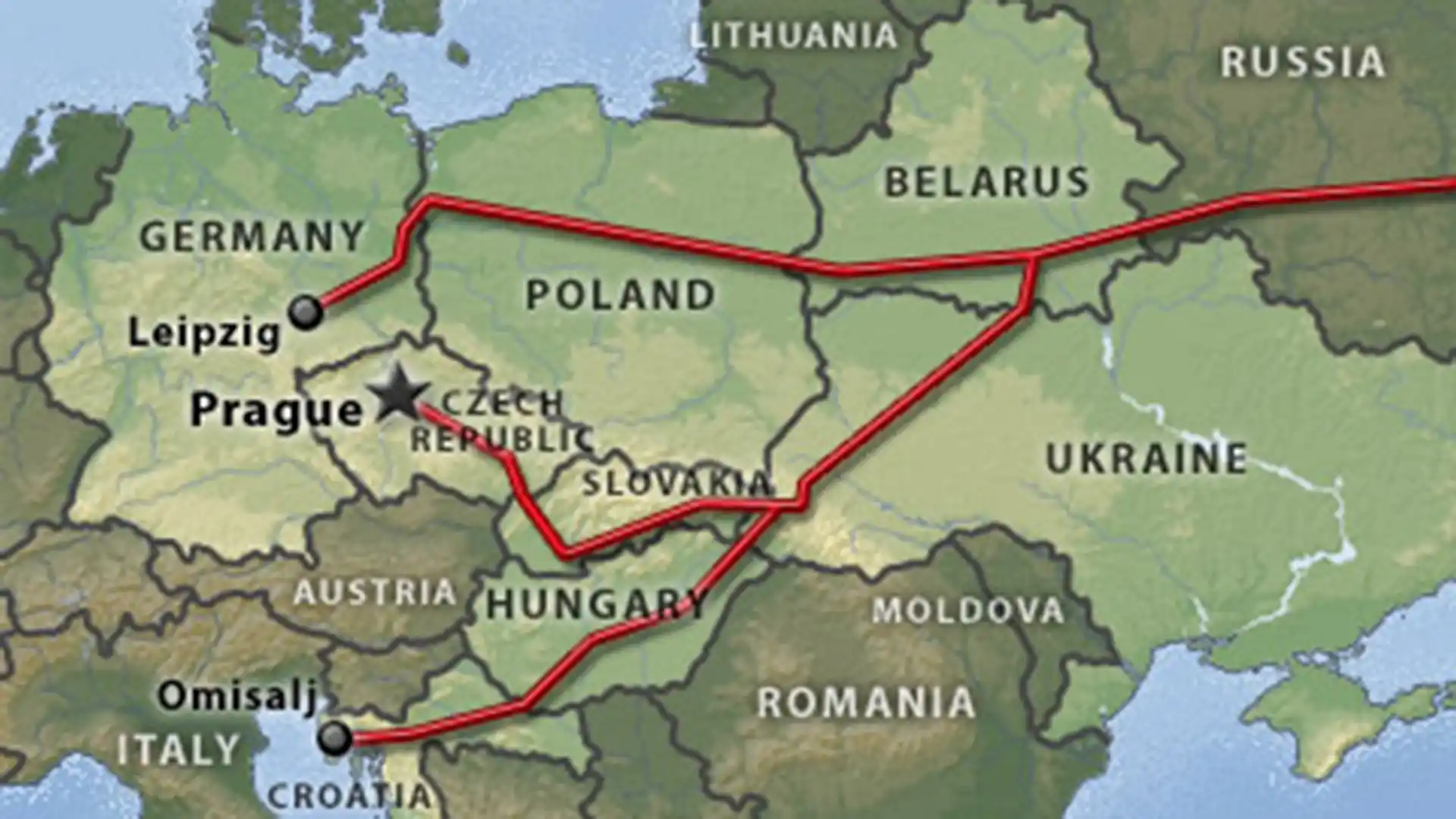
The Druzhba (“Friendship”) pipeline is one of the world’s longest crude‑oil pipeline systems. Built in the early 1960s to supply Soviet oil to Eastern Europe, it remains the principal artery for transporting Russian and Kazakh oil across Europe. The network begins in Almetyevsk in the Russian Federation, where pipelines from Siberia, the Urals and the Caspian region converge. It runs to Mozyr in Belarus and then splits into two branches: the northern branch passes through Belarus and Poland to Germany, while the southern branch traverses Ukraine and splits again in western Ukraine to serve Slovakia, the Czech Republic and Hungary.
Recent developments
- Damage and repairs: In January 2026 a Russian attack on a Ukrainian pumping station forced Kyiv to halt oil flows, angering Hungary and Slovakia. Ukraine insisted it was repairing the damaged section as quickly as possible. Following the repair work, President Zelenskyy said oil pumping could resume and called on the European Union to unblock a €90‑billion loan package tied up over the dispute.
- Political context: The suspension of flows became a contentious issue in Hungarian domestic politics. Prime Minister Viktor Orbán, a critic of Kyiv and a defender of Russian energy imports, used it during his election campaign. After he lost his re‑election bid on 12 April 2026, tensions eased and Ukraine announced the repairs were complete.
- Capacity and reach: The Druzhba network stretches about 5,500 kilometres including its branches and can currently transport around 1.2–1.4 million barrels of oil per day, with scope to increase to two million. It supplies refineries in Germany, Poland, Slovakia, the Czech Republic and Hungary.
Significance
The repair and resumption of the Druzhba pipeline is important for energy security in Central Europe, where some countries remain heavily dependent on Russian oil. At the same time, the episode highlights Europe’s vulnerability to geopolitical tensions and the ongoing debate over energy diversification. The standoff also showed how infrastructure attacks can have far‑reaching economic and political effects.
Source: Aljazeera

