

Why in news?
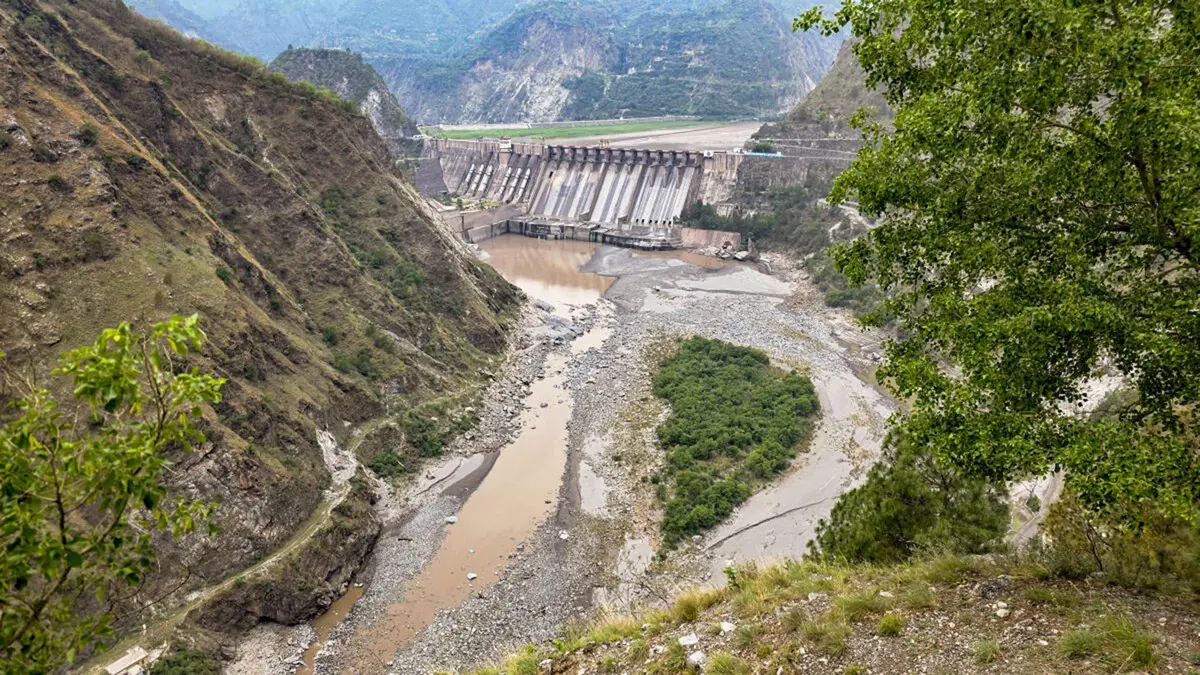
The Ministry of Environment, Forest and Climate Change’s Expert Appraisal Committee has cleared the 260 MW Dulhasti Stage‑II hydropower project in Jammu and Kashmir. The approval comes months after India suspended the Indus Waters Treaty, opening the door to more hydropower projects on the Chenab river.
Background
Dulhasti Stage‑II is an extension of the existing 390 MW Dulhasti Stage‑I project on the Chenab. The new scheme will divert water from Stage I through a 3.7 km headrace tunnel to a small pondage and an underground powerhouse. Two Francis turbines of 130 MW each will generate electricity, with water returned to the river downstream.
Key features
- Run‑of‑the‑river design: Instead of a large dam and reservoir, the project uses a short pondage to regulate flows, minimising submergence and resettlement.
- Tunnel and powerhouse: A horseshoe‑shaped headrace tunnel (8.5 m diameter) conveys water to an underground powerhouse housing two turbines and a surge shaft to absorb pressure surges.
- Cost and land: The estimated cost is around ₹3,277 crore. About 60 hectares of land are needed, including 8 hectares of private land in the villages of Benzwar and Palmar.
- Environmental safeguards: The panel recommended allocating over ₹45 crore for an environmental management plan and carrying out an independent environmental study five years after commissioning.
Importance
- Energy security: The project will provide clean electricity to Jammu and Kashmir, helping meet growing demand and reducing reliance on thermal power.
- Strategic context: Following suspension of the Indus Waters Treaty with Pakistan, India is fast‑tracking hydropower projects on western rivers to utilise its share of waters under the treaty.
- Economic benefits: Construction will create jobs and spur local development. The revenue from power sales could be used for infrastructure and social programmes in the region.
Source: TI