
Why in news?
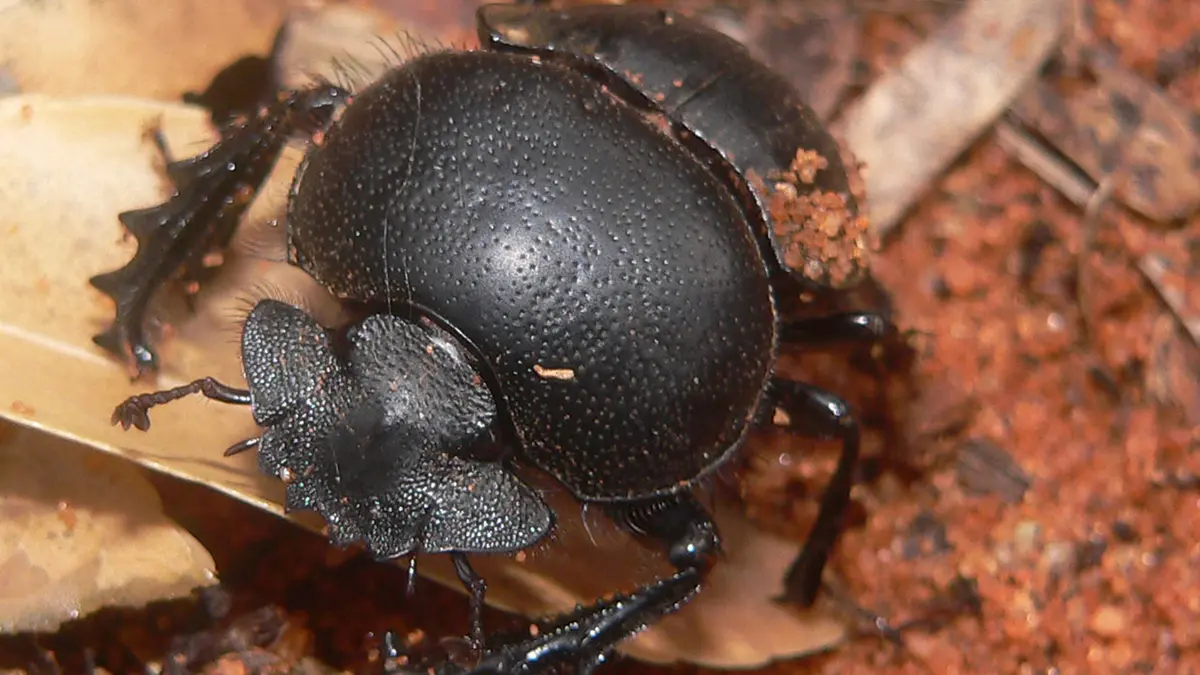
Scientists highlighted that certain African dung beetles can navigate by using the Milky Way’s band of light. This discovery illustrates how insects exploit celestial cues to travel straight even in pitch‑dark environments.
Background
Dung beetles (family Scarabaeidae) collect and roll dung into balls, which they use as food or breeding chambers. After forming a ball, a beetle must quickly roll it away from competitors. Rolling in a straight line is crucial to avoid returning to the dung pile.
How do they use the Milky Way?
- Polarised light: In daylight, dung beetles use the pattern of polarised sunlight to orient themselves.
- Starlight navigation: At night they rely on the diffuse glow of the Milky Way. Experiments in a planetarium showed that when the band of the Milky Way is visible, beetles roll their balls in straight lines; when the band is obscured, they wander aimlessly.
- Comparison with human technology: The beetles’ ability to integrate celestial cues for navigation is analogous to a natural GPS. It demonstrates sophisticated sensory adaptations in insects.
This behaviour underscores the importance of dark skies for nocturnal wildlife. Light pollution may disrupt such natural navigation systems.
Sources: Indian Express

