
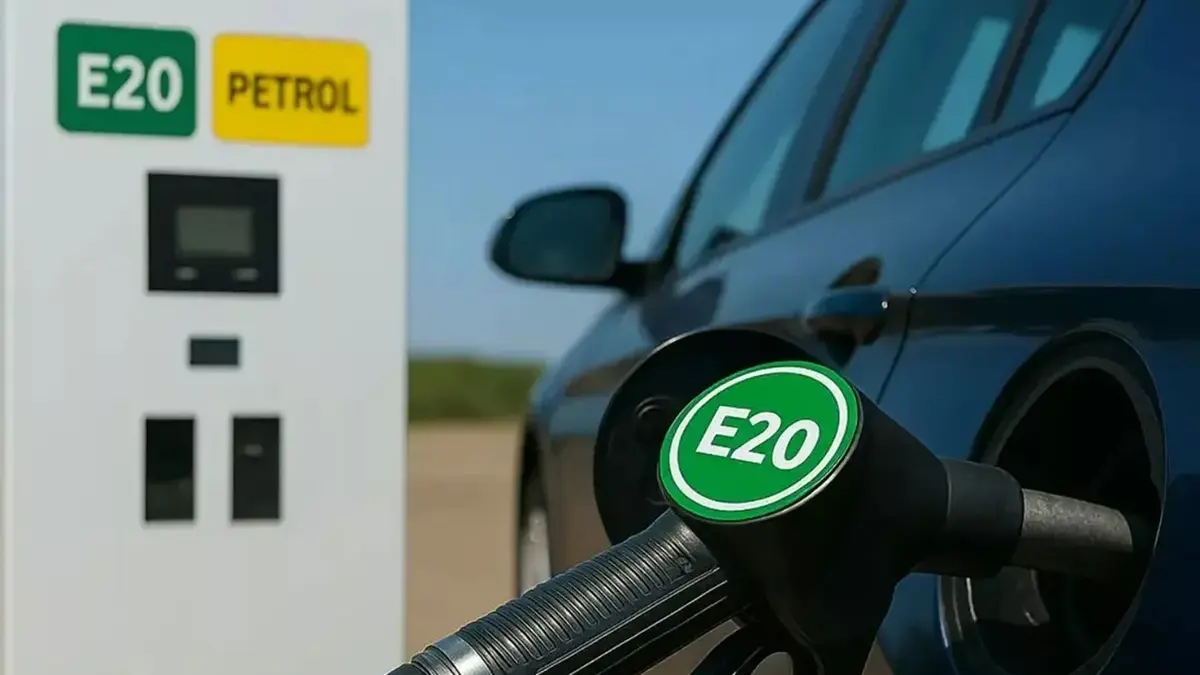
Why in news?
From 1 April 2026, petrol pumps across India are mandated to supply E20 fuel, a blend of 20 percent ethanol and 80 percent petrol, with a minimum octane rating of 95 RON. This change is part of the government’s strategy to reduce crude‑oil imports, promote cleaner fuel and support farmers through the Ethanol Blending Programme.
Background
Ethanol is an organic alcohol (chemical formula C2H5OH) produced from crops such as sugarcane, maize, barley and wheat. India began blending 5 percent ethanol (E5) in petrol in the early 2000s and later scaled up to E10. With abundant biomass available, the government announced plans to achieve 20 percent blending by 2025. E20 fuel is the first nationwide implementation of this target.
What makes E20 different?
- Higher octane rating: Ethanol has an octane number of around 108 RON. Blending 20 percent ethanol increases the fuel’s octane rating from 91–92 RON for regular petrol to at least 95 RON, reducing engine knocking and improving combustion efficiency.
- Cleaner burning: Ethanol contains oxygen, which helps the fuel burn more completely and can lower emissions of carbon monoxide, hydrocarbons and particulate matter.
- Renewable source: Since ethanol is made from agricultural feedstocks, increased blending supports farmers and reduces dependence on imported fossil fuels.
- Fuel ethanol is denatured: To prevent misuse as a beverage, fuel ethanol is mixed with denaturants, making it undrinkable.
Benefits and challenges
- Energy security: Reducing petrol consumption decreases India’s crude‑oil import bill and diversifies the energy mix.
- Environmental benefits: Ethanol blending can lower greenhouse‑gas emissions by displacing a portion of fossil fuel and by sequestering carbon during crop growth.
- Agricultural boost: Demand for ethanol creates a stable market for sugarcane and cereal crops, increasing farmers’ income.
- Technical challenges: Existing engines may require calibration to handle higher ethanol content. Ethanol absorbs water and may corrode certain materials; hence, fuel systems must be compatible.
- Supply constraints: Scaling up ethanol production requires investment in distilleries, improved agricultural yields and efficient distribution networks.
Conclusion
The rollout of E20 fuel represents a significant milestone in India’s transition to cleaner energy. With careful implementation, infrastructure upgrades and support for farmers, the programme can enhance energy security, cut emissions and provide economic benefits. However, vehicle compatibility and sustained production capacity will determine its long‑term success.
Source: Livemint

