

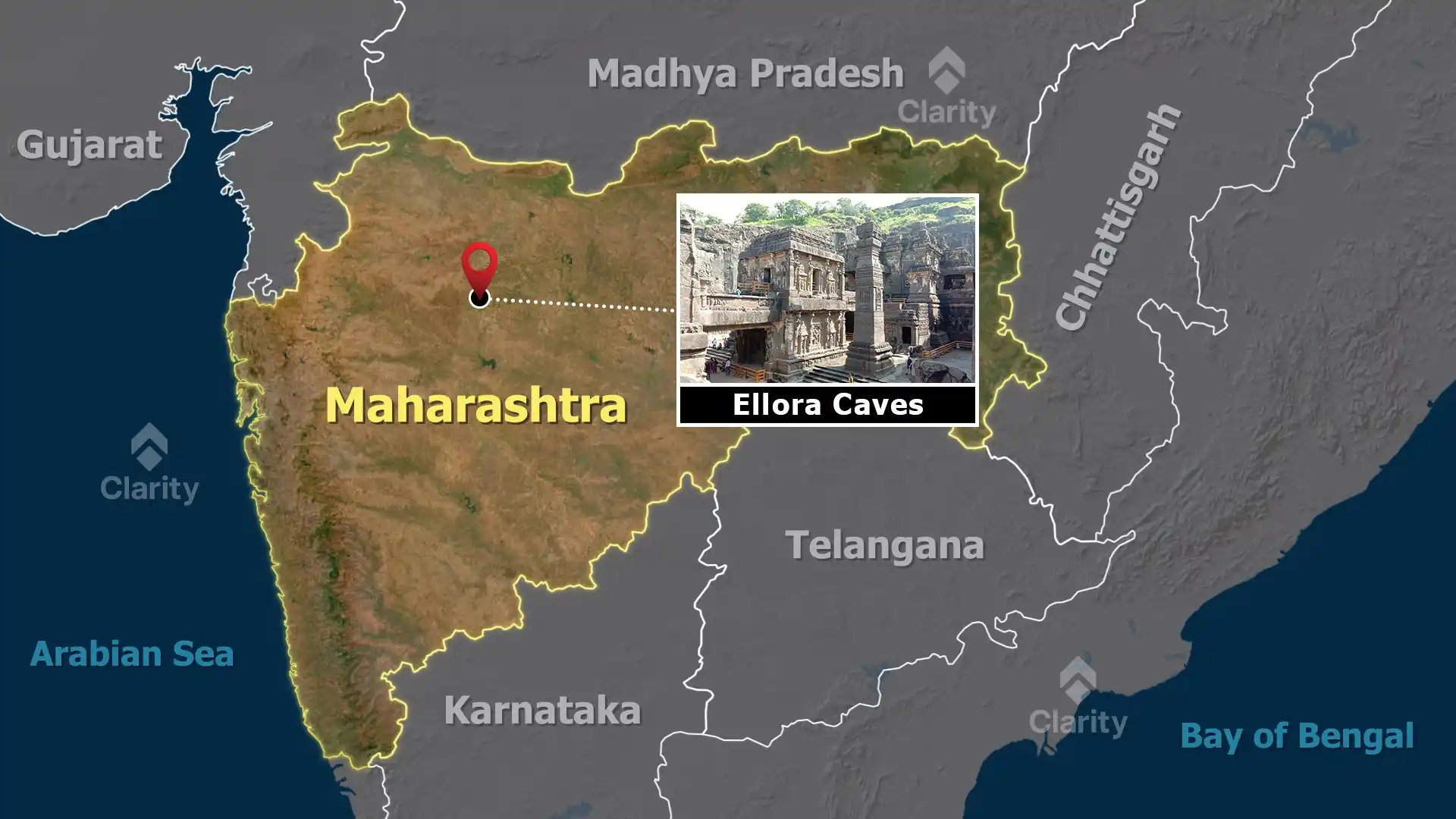
Why in news?
Scottish historian William Dalrymple has urged the Maharashtra government to showcase lesser‑known historic monuments located near the famed Ellora Caves. He noted that visitors often miss significant tombs and shrines in nearby Khuldabad, including an unused mausoleum built for the last Ottoman Caliph and the tomb of the Deccan statesman Malik Ambar.
Background
The Ellora Caves, a UNESCO World Heritage Site near Aurangabad, comprise 34 rock‑cut temples and monasteries carved between the 6th and 10th centuries. The complex embodies a unique harmony of Hindu, Buddhist and Jain traditions. The most famous monument is the Kailasa Temple, a monolithic structure dedicated to Lord Shiva.
Dalrymple pointed out that the surrounding region of Khuldabad and its hills are dotted with monuments that remain largely ignored by tourists. These include a cenotaph for Abdulmejid II, the last Ottoman Caliph; the tomb of Malik Ambar, an Ethiopian‑born general who became the prime minister of the Ahmadnagar Sultanate; graves of Maratha nobles; and shrines associated with Sufi and Naga traditions. Highlighting these sites could broaden public appreciation of the Deccan’s layered history.
Lesser‑known monuments around Ellora
- Empty tomb of Abdulmejid II: A mausoleum built in Khuldabad by his daughter Princess Dur e Shehvar was intended as the resting place of the last Ottoman Caliph. Abdulmejid II was exiled after the abolition of the Caliphate in 1924. He died in Paris in 1944 and was buried in Medina, leaving the Indian tomb unused.
- Tomb of Malik Ambar: Malik Ambar (1548–1626) rose from slavery to become a celebrated military strategist and prime minister of the Ahmadnagar Sultanate. His tomb in Khuldabad, built by himself in black basalt with Indo‑Islamic architectural features, is designated a monument of national importance.
- Maratha and Sufi shrines: The area also hosts the grave of a Maratha noble often identified as the first Peshwa and various Sufi dargahs and Naga monasteries, reflecting the confluence of Hindu and Islamic traditions in the Deccan.
Significance
- Broadening heritage tourism: Developing these sites alongside Ellora could encourage visitors to spend more time in the region, benefiting local communities and preserving diverse histories.
- Inter‑cultural understanding: The juxtaposition of Hindu, Jain, Buddhist, Islamic and Maratha monuments within a small area underscores the pluralistic heritage of the Deccan plateau.
- Conservation needs: Many of the lesser‑known monuments suffer from neglect and require conservation efforts, signage and interpretation to inform visitors of their significance.
Conclusion
Ellora’s global recognition offers an opportunity to draw attention to the wider landscape of historical treasures in the region. By promoting these monuments, authorities can foster heritage tourism and educate visitors about the complex history of Maharashtra’s Deccan heartland.
Source: TH