
Why in news?
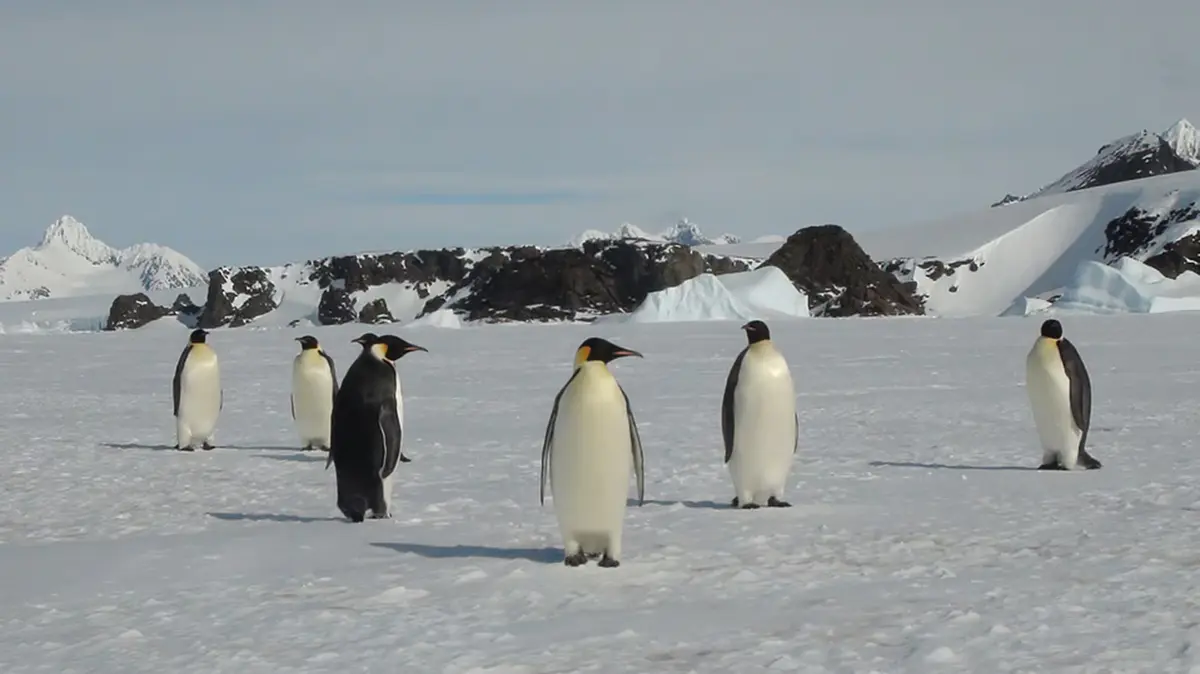
Bird conservation group BirdLife International announced that the Emperor Penguin has been uplisted from “Near Threatened” to “Endangered” on the IUCN Red List. The decision was based on projections that climate‑driven declines in Antarctic sea ice could cut the species’ global population in half by the 2080s. BirdLife urged governments to designate Emperor Penguins as a specially protected species at the upcoming Antarctic Treaty meeting.
Background
The Emperor Penguin (Aptenodytes forsteri) is the largest of the 18 penguin species. Adults weigh up to 40 kg and stand about one metre tall. They breed during the Antarctic winter, laying a single egg that males incubate on their feet under a fold of skin while females forage at sea. Emperor Penguins live in colonies on stable sea ice attached to the continent, known as “fast ice”, and feed on fish, krill and squid.
Adaptations
- Insulation: Dense, scale‑like feathers and a thick layer of body fat keep them warm in temperatures as low as −60 °C.
- Huddling behaviour: During storms, thousands of penguins huddle together, rotating from the cold outer edges to the warmer centre to conserve heat.
- Diving ability: They can dive to depths of 500 m and remain underwater for 20 minutes, allowing them to hunt fish and squid beneath the ice.
Threats and conservation
Climate change is rapidly reducing Antarctic sea ice. Emperor Penguins rely on stable ice for breeding and moulting; if the ice forms late or melts early, chicks may not survive. Scientists estimate that without action, two‑thirds of colonies could decline sharply by the end of this century. Conservationists are advocating for stronger climate policies and the creation of marine protected areas around breeding sites.
Sources
Sources: DTE

