

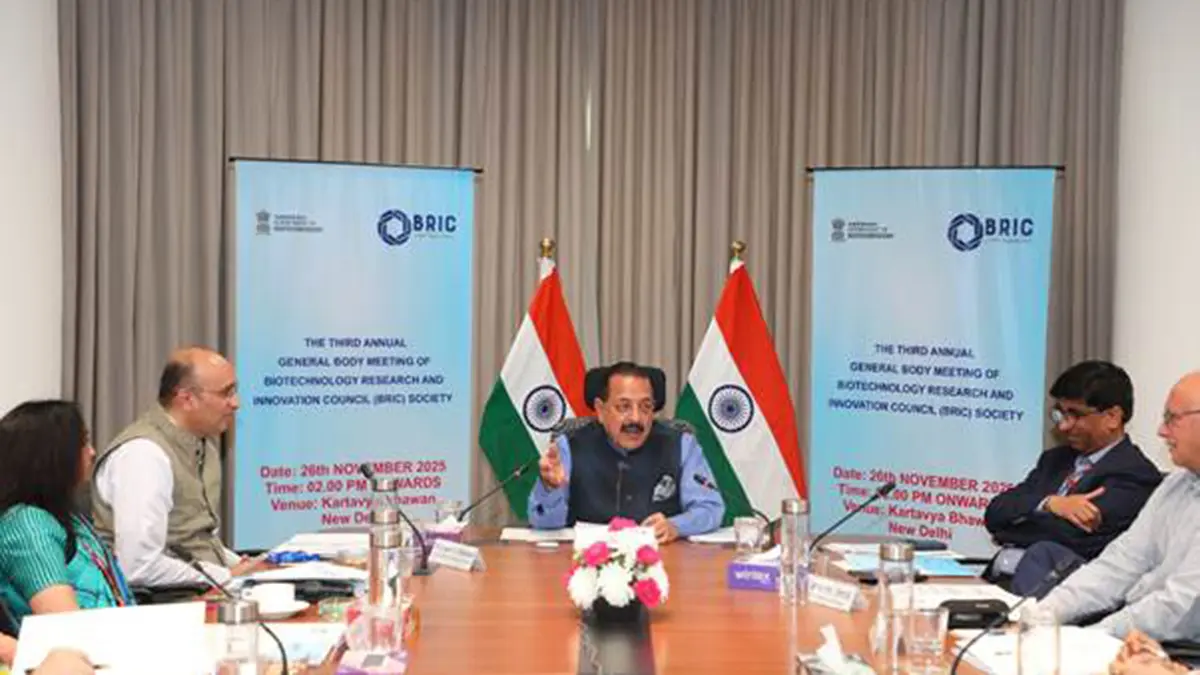
Why in news?
The Union Minister of State for Science and Technology recently noted that the Entrepreneur‑in‑Residence (EIR) programme is gaining traction among young startups. Launched by the Department of Science and Technology and biotechnology agencies, the initiative encourages graduate students and researchers to transform laboratory innovations into commercial ventures.
Background
The EIR programme operates under the National Initiative for Developing and Harnessing Innovations (NIDHI). It is designed to nurture entrepreneurial talent in academic institutions by providing fellowships and mentorship. The Bio‑Innovation Research Consortium (BRIC) and the Biotechnology Industry Research Assistance Council (BIRAC) help implement the scheme across technology business incubators nationwide.
Main features
- Financial support: Selected fellows receive a monthly stipend of up to ₹30,000 for a maximum of 12 months. This allows young innovators to focus on building a business without worrying about immediate income.
- Mentorship and infrastructure: Fellows gain access to incubators’ laboratories, prototyping facilities, technical advice and industry networks. Seasoned entrepreneurs mentor participants on business planning, market analysis and intellectual property.
- Eligibility: The programme targets science‑educated graduates and post‑graduates with ideas that can be commercialised. Projects must have a technology component and potential societal impact.
- Objective: By supporting early‑stage entrepreneurs, the scheme aims to create job‑generating startups, attract venture capital and strengthen India’s emerging biotechnology and deep‑tech sectors.
Significance
- Bridging research and enterprise: Many scientists struggle to translate discoveries into viable products. The EIR scheme provides them with time, funds and mentorship to refine prototypes and assess market potential.
- Building a knowledge‑driven economy: By nurturing technology startups, the programme contributes to India’s goal of becoming a global hub for innovation and biomanufacturing.
Source: PIB