

Why in news?
The 3,097 MW Etalin Hydroelectric Project in Arunachal Pradesh is back in the spotlight after the Project Affected Peoples Forum (PAPF) demanded that the new developer, the National Hydro Power Corporation (NHPC), reinstate local workers whose jobs ended when project ownership changed. The project has also been controversial due to its potential impact on forests and Indigenous communities.
Background
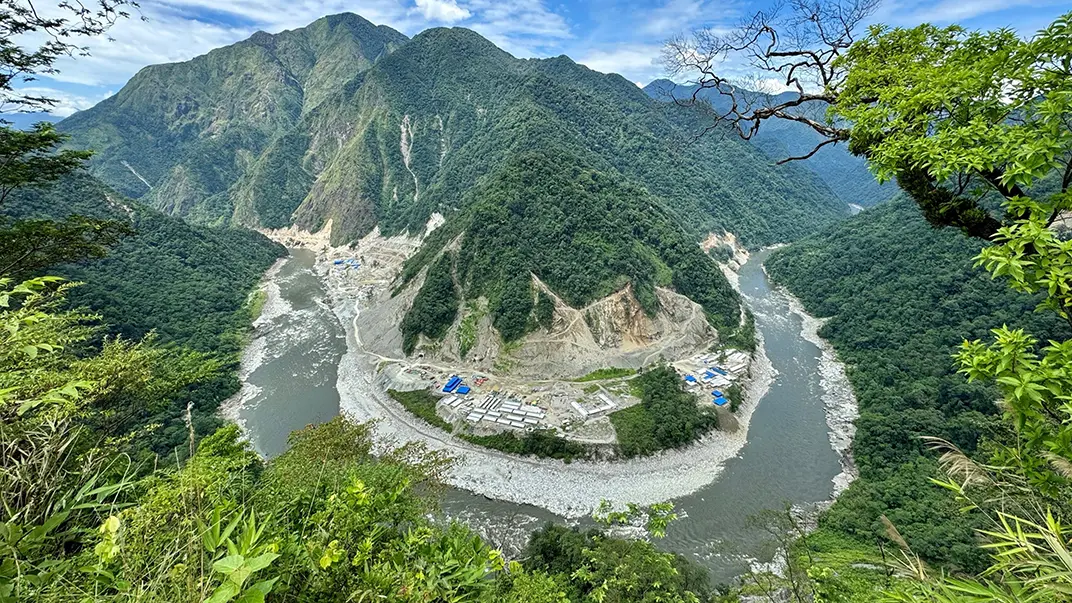
The Etalin project is a run‑of‑the‑river hydropower scheme planned on the Dri and Talo rivers in Dibang Valley, Arunachal Pradesh. It envisages two concrete gravity dams (about 101 metres and 82 metres high) feeding 24 turbines to generate roughly 12,752 GWh of electricity annually. The project was originally a joint venture between Jindal Power and the Hydro Power Development Corporation of Arunachal Pradesh. In 2023 the joint venture was taken over by Satluj Jal Vidyut Nigam (SJVN), and in 2025 NHPC became the new concessionaire.
Environmental and social concerns
- Biodiversity hotspot: The project site lies within the Eastern Himalaya biodiversity hotspot, home to rare species such as the Mishmi takin, red panda and clouded leopard. Over 1,175 hectares of dense forest would be diverted, requiring the felling of roughly 2.7 lakh trees.
- Forest clearance process: In February 2023 the Ministry of Environment’s Forest Advisory Committee refused to grant final forest clearance, citing inadequate assessment of cumulative impacts and the need for high‑level review. However, in May 2025 the committee granted in‑principle approval with conditions, including handing back temporary forest land after construction and implementing robust wildlife management plans.
- Local livelihoods: The Indigenous Idu‑Mishmi community initially supported the project in hopes of jobs and infrastructure. When the project changed hands, many local workers were laid off, prompting the PAPF to demand reinstatement and fulfilment of previous promises such as schools, healthcare and roads.
Implications
- Renewable energy vs. conservation: Etalin would contribute significantly to India’s hydropower capacity and reduce dependence on fossil fuels. Balancing this goal with protection of fragile ecosystems and Indigenous rights remains a challenge.
- Need for equitable development: Ensuring that local communities benefit through employment, compensation and social amenities is crucial for the project’s legitimacy.
- Transparent decision‑making: Ongoing monitoring by independent experts and adherence to environmental conditions will be necessary to mitigate adverse impacts.
Source: NorthEast Now – Local voices