Why in news?
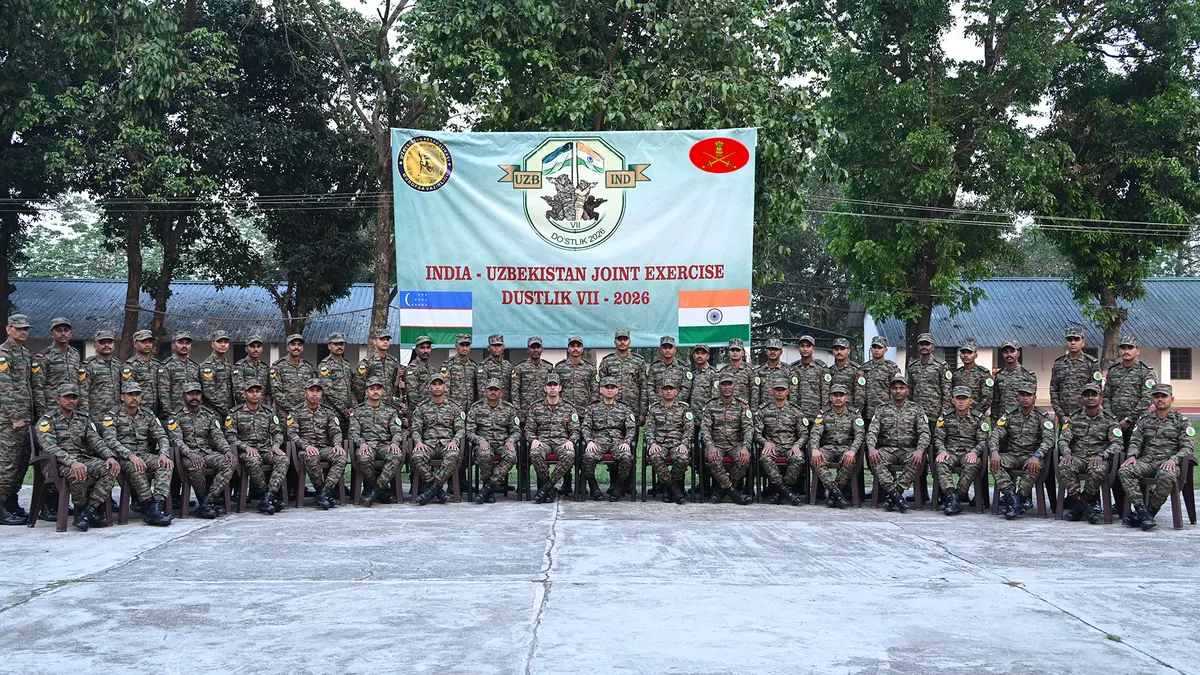
On 12 April 2026, contingents from the Indian Army and Uzbek armed forces kicked off the seventh edition of Exercise Dustlik at the Gurumsaray Field Training Area in Uzbekistan. This two‑week exercise, running until 25 April 2026, aims to improve joint planning and execution of counter‑terrorism and hostage‑rescue operations in semi‑mountainous terrain. India has sent 60 personnel from the MAHAR Regiment and the Air Force, while a similar‑sized Uzbek contingent is participating.
Background
Exercise Dustlik began in 2019 to strengthen defence ties between India and Uzbekistan. The countries host the drill alternately; the 2025 edition took place at Aundh near Pune. The exercise underscores growing cooperation between New Delhi and Tashkent, especially in counter‑terrorism, disaster relief and peacekeeping.
Key activities
- Land navigation and strike missions: Soldiers practise navigating difficult terrain, planning ambushes and conducting precision raids on simulated enemy camps.
- Area domination and hostage rescue: The drill includes exercises on capturing strategic heights, freeing hostages and neutralising armed groups. Special operations units demonstrate stealth movement and coordinated assaults.
- Validation exercise: A 48‑hour final mission tests the combined forces’ ability to plan and execute a complex operation in real time while dealing with simulated injuries, communications breakdowns and changing objectives.
Significance
- Interoperability: Joint training helps troops understand each other’s tactics, communication protocols and equipment, paving the way for seamless cooperation in real operations.
- Confidence building: The exercise promotes camaraderie and trust among soldiers and demonstrates India’s commitment to regional security.
- Strategic partnership: Enhanced military ties complement broader economic and cultural cooperation between India and Uzbekistan, key partners in Central Asia.
Conclusion
By honing skills in mountain warfare and counter‑terrorism, Exercise Dustlik 2026 strengthens the preparedness of both nations to tackle common security challenges. It also signals the growing depth of India–Uzbekistan relations, which extend beyond defence into trade, connectivity and cultural exchanges.
Source: Press Information Bureau