

Why in news?
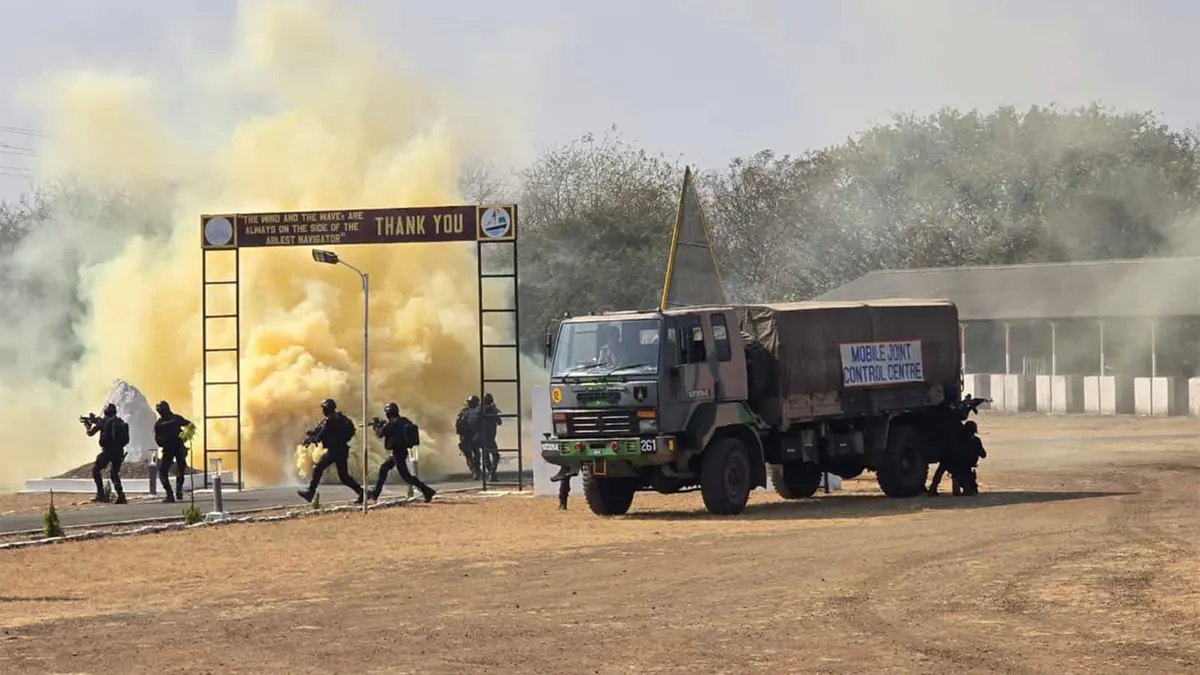
The Southern Command of the Indian Army conducted Exercise Sanjha Shakti at the Diggi Hills Range near Pune in January 2026. The exercise involved over 350 personnel from the army and 16 civil agencies to test interoperability and rapid response during emergencies.
Background
Disaster response often requires coordination among the armed forces, police, medical services and local administration. Sanjha Shakti – meaning “joint strength” – is designed to strengthen this civil–military synergy. The exercise forms part of the Indian Army’s outreach to support civilian authorities during natural disasters, accidents or terror attacks.
Highlights of the exercise
- Realistic scenarios: Drills simulated floods, chemical and radiological accidents and mass casualty events. Teams practised rescuing victims, providing first aid and controlling hazardous materials.
- Multi‑agency participation: Besides army units, the exercise involved the Maharashtra police, Force One (a rapid response force), the fire department, medical services, National Disaster Response Force (NDRF) and civil defence volunteers.
- Communication and command: Participants tested communication channels, joint decision‑making and standard operating procedures. Observers assessed how quickly information was shared and resources deployed.
- Public awareness: Demonstrations of rescue equipment and techniques were organised for local residents to raise awareness about disaster preparedness.
Significance
Exercises like Sanjha Shakti improve coordination between military and civilian agencies, ensuring that responses to disasters are swift and organised. They highlight the importance of joint training and integrated command structures, especially as India faces frequent floods, cyclones and industrial accidents.
Conclusion
Civil–military collaboration is essential for managing emergencies. By rehearsing complex scenarios, Exercise Sanjha Shakti builds confidence among agencies and enhances preparedness to protect lives and infrastructure.
Source: The Times of India