

Why in news?
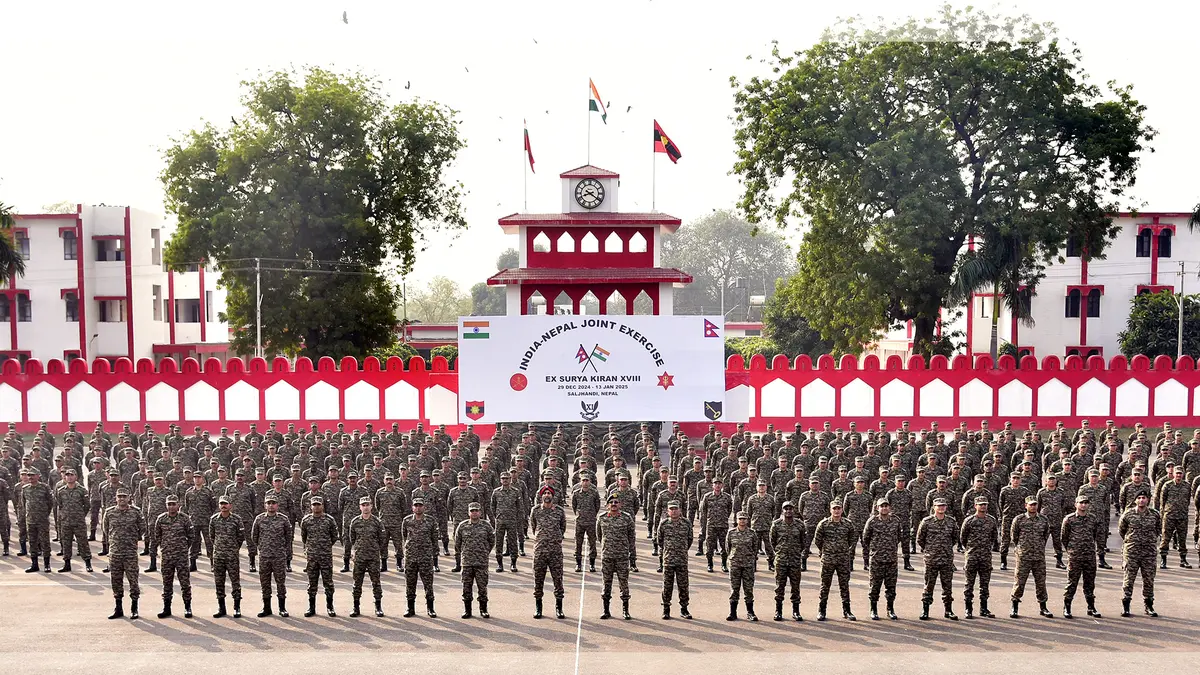
The 19th edition of Exercise SURYAKIRAN, a joint military exercise between India and Nepal, began on 25 November 2025 at Pithoragarh in Uttarakhand. Troops from both countries will train together for two weeks to improve interoperability in counter‑terrorism and disaster‑response operations.
Background
Exercise SURYAKIRAN has been conducted annually (sometimes semi‑annually) since 2011, alternating between India and Nepal. It aims to enhance cooperation at the battalion level, build trust and share best practices in jungle warfare, mountain operations and humanitarian assistance. The exercise takes place under the framework of the United Nations Charter, focusing on sub‑conventional operations relevant to peacekeeping.
Key elements of SURYAKIRAN XIX
- Participants: Each side has sent a contingent of about 334 personnel. The Indian Army is represented mainly by troops from the Assam Regiment, while the Nepalese Army is represented by soldiers from the Devi Datta Regiment.
- Training focus: Exercises will include jungle warfare tactics, counter‑terrorism drills in mountainous terrain, humanitarian assistance and disaster relief, medical response, environmental conservation and integrated ground‑aviation operations.
- Emerging technologies: This edition emphasises the use of unmanned aerial systems, drone‑based intelligence, AI‑enabled decision‑support tools, unmanned logistics vehicles and armoured platforms to adapt to evolving threats.
- Goal: By training together, the armies aim to refine tactics, techniques and procedures, improve communication and strengthen defence cooperation. The exercise also deepens diplomatic ties between the neighbouring nations.
Significance
Regular joint drills like SURYAKIRAN help both armies prepare for real‑world missions, including UN peacekeeping duties. Sharing experiences in disaster response is particularly important given the region’s vulnerability to earthquakes, floods and landslides. The incorporation of drones and AI reflects the modernisation of military training.
Sources: Press Information Bureau