
Why in news?
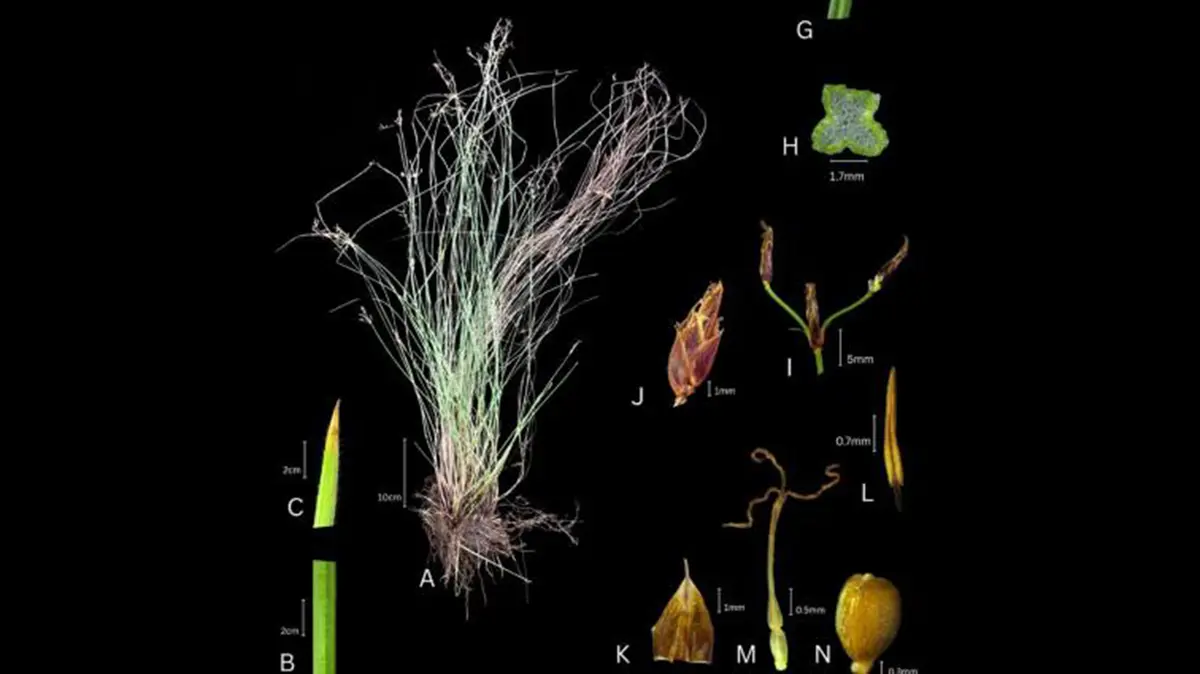
Botanists recently announced the discovery of Fimbristylis wayanadensis, a new species of sedge found in the high mountains of Kerala’s Wayanad district. The discovery attracted attention because it adds to the rich biodiversity of the Western Ghats and highlights the importance of conserving transitional habitats between rocky outcrops and grasslands.
Background
Fimbristylis is a genus of grass‑like plants commonly called sedges. Researchers surveying high‑altitude areas of Wayanad noticed plants that resembled the widespread species Fimbristylis aphylla but displayed distinct features. Detailed study revealed that these plants represented a new species, subsequently named Fimbristylis wayanadensis after the district where it was found.
Key characteristics
- Leaf length: The new species has leaves that are as long as or longer than the stem, whereas F. aphylla has shorter leaves.
- Spikelets: It bears only a few chestnut‑brown spikelets (flower clusters), unlike the yellowish and more numerous spikelets of related species.
- Seed shape: The nutlets (seeds) are larger, smoother and have a unique microscopic rectangular pattern that helps distinguish them from other species.
- Habitat: The plant grows at elevations up to 1 900 m in transition zones between rocky terrain and high‑altitude grasslands in the Western Ghats.
Conservation concerns
Researchers have classified F. wayanadensis as “Data Deficient” because information about its population size and distribution is still limited. Its discovery underscores the need to protect high‑altitude grasslands and rocky habitats, which are often threatened by tourism, agriculture and climate change.
Sources
Source: Research Matters

