
Why in news?
An ancient Telugu inscription linked to the 15th‑century Gajapati kings was found on a stone pillar in the Lakshmi Narasimha Swamy Temple in Guntur, Andhra Pradesh. The inscription names Kumaraguru Mahapatra, a steward serving under King Purushottama Deva, and records an offering of milk to the deity. The find highlights historical connections between Odisha and Andhra regions.
Background
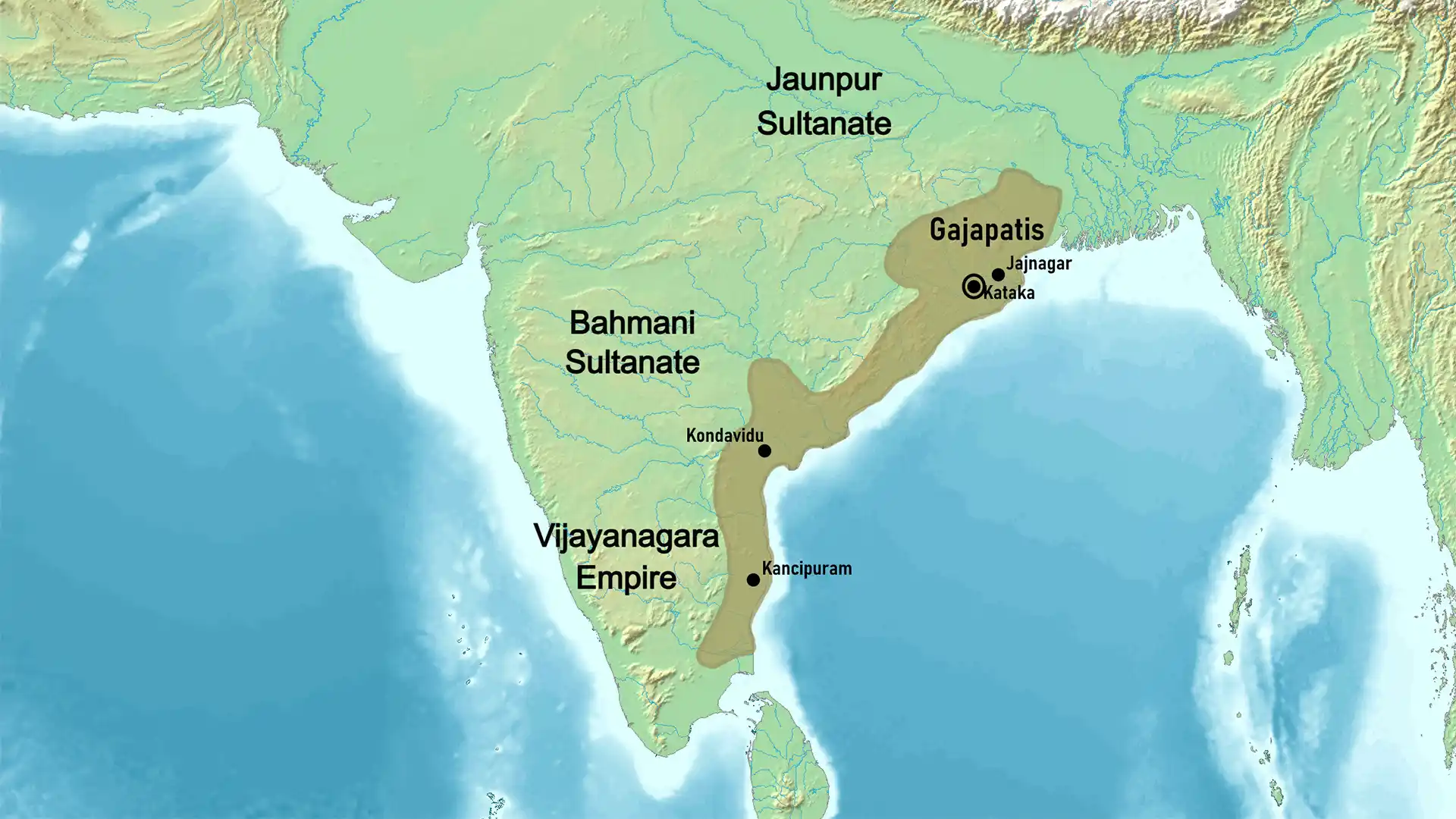
The Gajapati Empire rose in the mid‑15th century in what is now Odisha. It was founded by Kapilendra Deva and reached its zenith under rulers such as Puruṣottama Deva and Prataparudra Deva. At its height the empire extended across large parts of Odisha, northern Andhra Pradesh and parts of Bengal. The capital moved from Cuttack to Kataka (near Konark), and the rulers were patrons of art, literature and monumental architecture such as the Sun Temple at Konark.
The newly found inscription came from a pillar originally part of the Kondaveedu Fort before being relocated to the temple. It shows that officials of the Gajapati court supervised temple offerings and that Odia officers were active in the region. The text follows the Hari‑Hara cult, combining Vaishnava and Shaiva elements, which was promoted by the Gajapati rulers.
About the Gajapati Empire
- Founding: Kapilendra Deva seized power around 1435 CE and expanded his realm through diplomacy and military campaigns. The empire remained independent of the Delhi Sultanate and later the Bahmani Sultanate.
- Administration and culture: The Gajapatis supported both Shaivism and Vaishnavism. They patronised the Odia language, classical dance and music, and commissioned temples and forts.
- Decline: Internal succession disputes and invasions by the Bengal Sultanate and the Mughals weakened the empire. By the early 17th century its territories were absorbed into Mughal administration.
Source: Deccan Chronicle

