Why in news?
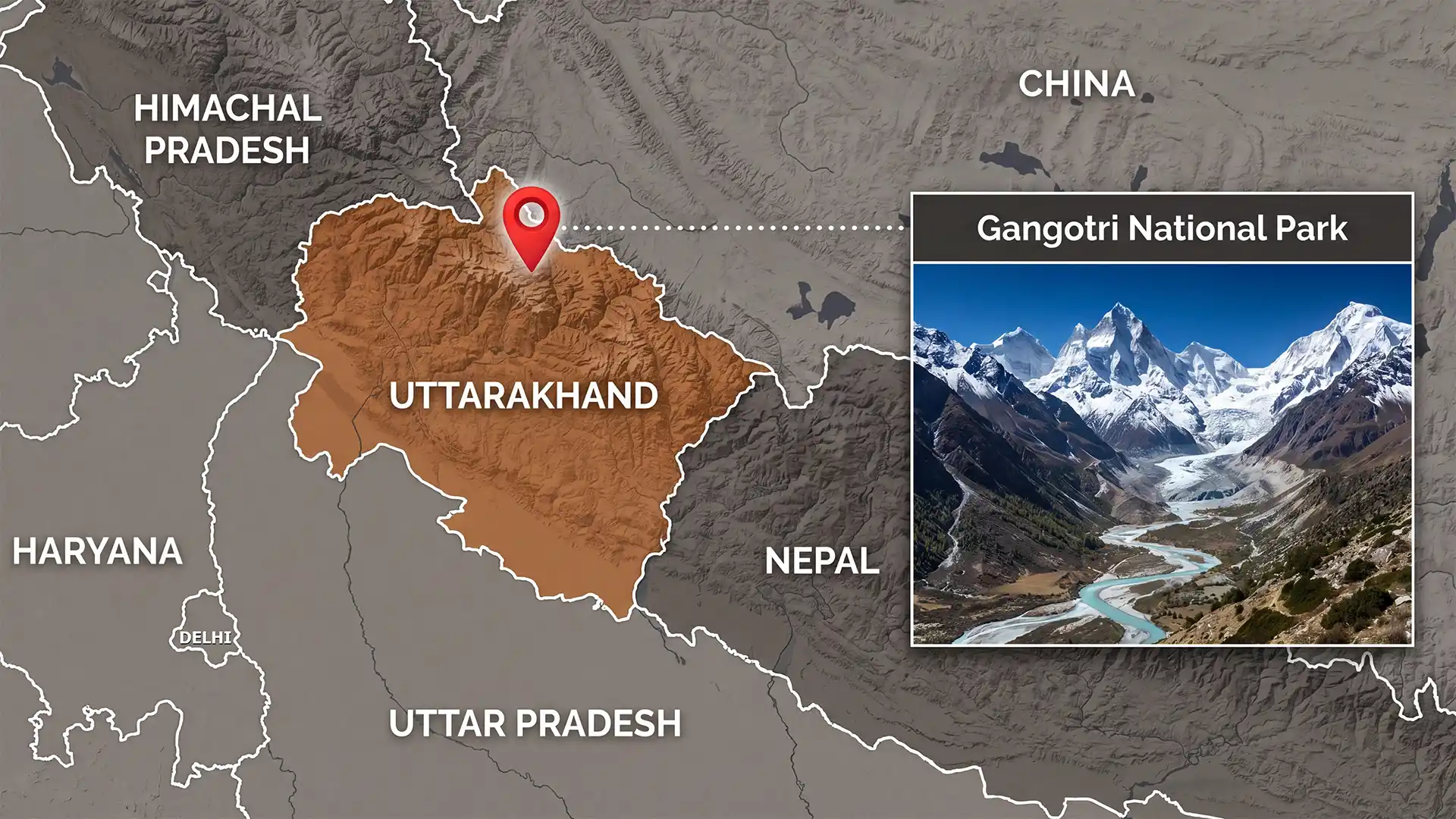
Gangotri National Park in Uttarakhand’s Uttarkashi district reopened to tourists on 1 April 2026 after being closed for the winter season. Officials performed a ceremonial worship at the Kankhu barrier gate before allowing trekkers to enter, and they announced that popular routes such as Nelang Valley, Gartang Gali, Gaumukh–Tapovan and Kedartal would gradually reopen as snow melts. The reopening marks the start of the trekking season in one of India’s most scenic high‑altitude parks.
Background
Established in 1989, Gangotri National Park spans roughly 1,553 square kilometres in the upper catchment of the Bhagirathi River. The park encompasses coniferous forests, alpine meadows and glaciers, including the Gangotri Glacier, which feeds the River Ganga at its origin in Gomukh. It borders China (Tibet) to the northeast and is contiguous with Govind National Park and Kedarnath Wildlife Sanctuary, forming a large protected landscape. Elevations range from about 1,800 metres to over 7,000 metres, creating a mosaic of habitats from temperate forests to high‑altitude tundra.
Ecology and attractions
- Flora: Lower elevations support Western Himalayan subalpine conifer forests dominated by deodar, fir, spruce and oak. Higher up, the vegetation shifts to alpine shrubs and meadows with rhododendrons, dwarf junipers and colourful wildflowers.
- Fauna: The park provides habitat for snow leopards (around thirty‑five individuals), Himalayan black bears, brown bears, musk deer, blue sheep (bharal), Himalayan tahr and numerous bird species such as the Himalayan monal and koklass pheasant.
- Iconic treks: Visitors are drawn to the 18‑kilometre trek to Gaumukh, the glacial snout of the Gangotri Glacier; the challenging Tapovan meadow trek; and the Kedartal trek, which passes turquoise glacial lakes beneath towering peaks. Nelang Valley, nicknamed “Mini Ladakh” for its barren landscape, and Gartang Gali, a restored wooden trail along a cliff face, offer unique experiences.
- Conservation challenges: Harsh winters, difficult terrain and human pressure from pilgrims and trekkers pose challenges. The park remains closed from 30 November to 31 March each year to protect wildlife and for safety. Strict permits and limits on visitor numbers help reduce impact.
Recent developments
- In 2025 the park recorded about 29,000 visitors and generated revenue of roughly ₹81 lakh. Authorities hope to increase tourism responsibly while safeguarding fragile habitats.
- Some trails, such as the Gaumukh and Kedartal routes, remain partially snow‑covered in early April. The forest department has advised trekkers to check conditions and obtain permits before attempting high‑altitude routes.
- Local communities and the forest department continue to restore historic routes like Gartang Gali and to improve amenities, such as campsites and waste‑management facilities.
Significance
- Ecotourism: The park provides livelihoods for local guides and porters while offering visitors a chance to experience pristine Himalayan wilderness. Responsible tourism encourages conservation and awareness.
- Hydrological importance: Protecting the headwaters of the Ganga ensures water security for millions downstream. Glaciers and forests in the park regulate streamflow and store snowmelt.
- Biodiversity conservation: Gangotri National Park is a refuge for rare species and plays a vital role in maintaining genetic diversity in the Western Himalaya.
Conclusion
The annual reopening of Gangotri National Park signals the start of the trekking season and highlights the delicate balance between tourism and conservation. Visitors should respect regulations, minimise environmental impact and appreciate the park’s ecological and cultural significance.
Source: The New Indian Express