Why in news?
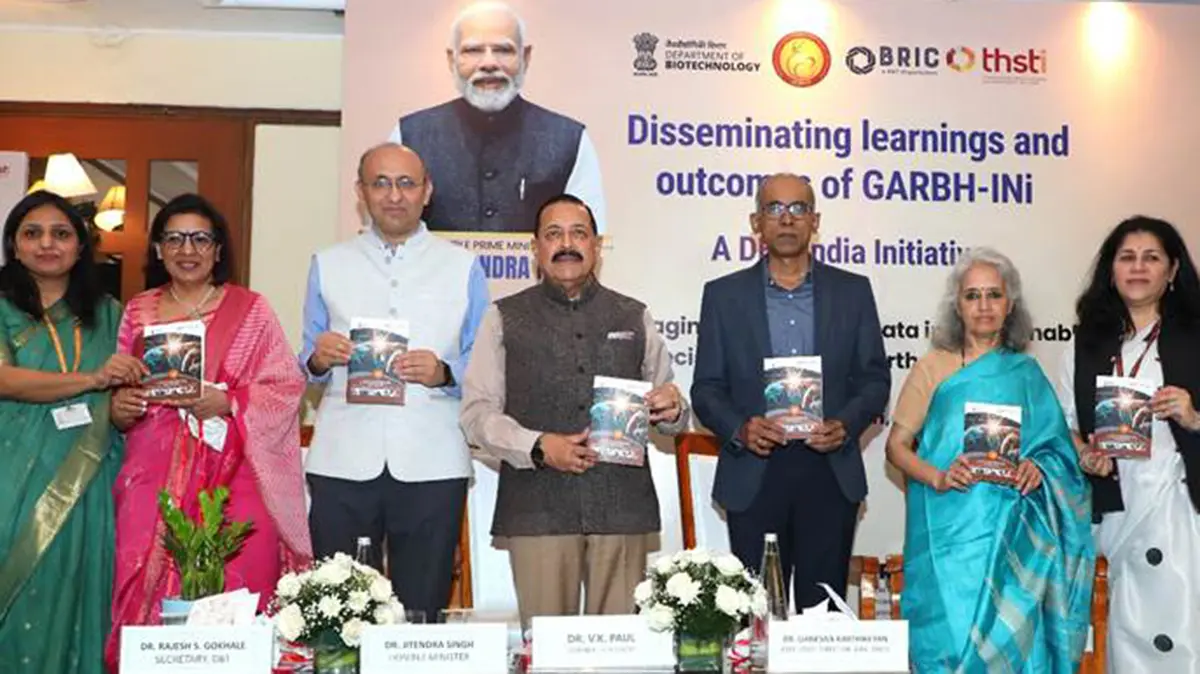
On 23 March 2026 the Union Minister of State for Science and Technology, Dr Jitendra Singh, announced that India’s largest pregnancy cohort under the GARBH‑INi programme has enrolled around 12,000 pregnant women. The programme aims to develop artificial‑intelligence‑driven tools to predict and prevent preterm birth, a leading cause of neonatal deaths and long‑term morbidity.
Background
GARBH‑INi stands for the Interdisciplinary Group for Advanced Research on Birth Outcomes – India Initiative and is funded by the Department of Biotechnology. Preterm birth (before 37 weeks of gestation) is responsible for a quarter of global neonatal deaths, and India carries a disproportionate burden. Launched in 2015, GARBH‑INi integrates clinical epidemiology, multi‑omics biomarkers (genomics, proteomics, metabolomics), imaging and data science to understand the causes of preterm labour and develop personalised prediction models.
Key achievements
- Large cohort and biorepository: More than 12,000 women were recruited early in pregnancy at the Gurugram Civil Hospital and followed through delivery. The study has generated over 1.6 million biospecimens and one million ultrasound images, which are stored in a national biorepository for research.
- AI‑based tools: Researchers have developed pregnancy dating models tailored to Indian populations, identified microbial signatures that predict preterm birth, and discovered genetic markers for early risk assessment. These tools enable clinicians to stratify patients and intervene sooner.
- Data‑sharing platform: The GARBH‑INi‑DRISHTI portal provides secure access to anonymised data and images, allowing researchers worldwide to contribute analyses and accelerating scientific discovery.
- Partnerships for translation: Agreements have been signed with biotechnology firms to develop microbiome‑based biotherapeutics, AI‑enabled ultrasound reporting systems and risk‑stratification platforms under the GARBH‑INi–Anandi Maa initiative.
Why it matters
- Addressing a public health crisis: Preterm birth is a major cause of infant death and disability. Predictive tools tailored to Indian populations can help clinicians take preventive measures and improve outcomes.
- Integrated science: Combining epidemiology, multi‑omics and artificial intelligence creates a holistic understanding of pregnancy and offers a template for tackling other complex health issues.
- Building capacity: The programme trains researchers, builds infrastructure such as biorepositories and fosters collaboration among hospitals, universities and tech companies.
Conclusion
By assembling an unprecedented dataset and harnessing the power of AI, the GARBH‑INi initiative seeks to transform maternal and child health in India. As predictive models mature and clinical partnerships expand, the programme could significantly reduce the burden of preterm birth and set a benchmark for data‑driven healthcare research.
Source: PIB