

Why in news?
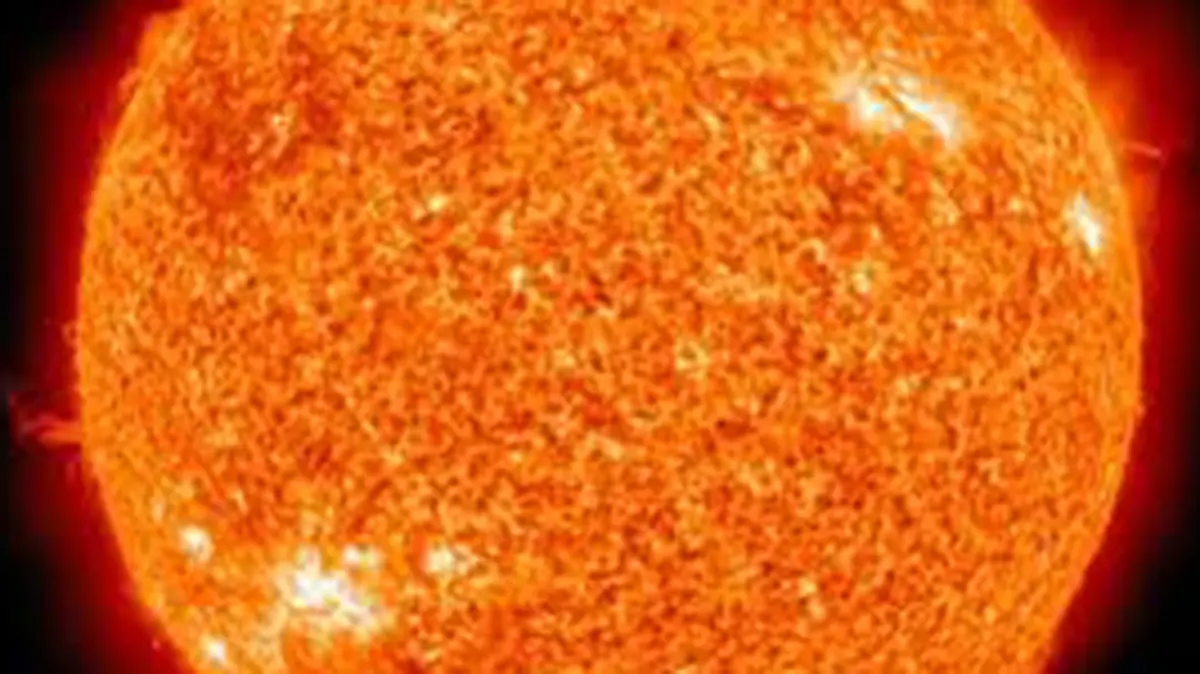
NASA and space weather agencies reported that a huge sunspot cluster more than ten times the size of Earth rotated into view at the start of December 2025. On 30 November (Dec 1 UTC), a powerful X1.9‑class solar flare erupted from a nearby emerging sunspot, causing temporary radio blackouts in Australia and southeast Asia. Forecasters warn that the giant region could produce further flares and auroras in the coming days.
Background
Sunspots are cooler, magnetically active regions on the Sun’s surface. They often appear in groups and can trigger solar flares—bursts of radiation—when magnetic fields reconnect explosively. Flares are classed by their X‑ray intensity: classes A, B, C, M and X, with X being the strongest and each step representing a ten‑fold increase in energy. Large sunspots can also spawn coronal mass ejections (CMEs), which hurl charged particles into space.
The giant sunspot in question, labelled Active Region (AR) 4294/4296, is the largest seen in a decade. A smaller neighbouring sunspot, AR 4299, produced the X1.9 flare. NASA’s Solar Dynamics Observatory captured the flare, which peaked at 9:49 p.m. ET on 30 November. NOAA’s Space Weather Prediction Center recorded a brief radio blackout (R3 level) over Australia and parts of Asia.
Potential impacts and forecasts
- Radio and navigation disruption: X‑class flares can ionise Earth’s upper atmosphere, degrading high‑frequency radio and GPS signals. The recent flare caused a 30‑minute blackout for aviation and maritime communications.
- Aurora chances: While the associated CME was directed away from Earth, large sunspots increase the probability of Earth‑directed CMEs that can trigger geomagnetic storms and bright auroras at lower latitudes.
- Continued monitoring: NOAA forecasters predict a high chance of M‑class flares and a slight chance of additional X‑class flares between 1 and 3 December. The complexity of AR 4294 means it could remain active as it rotates across the solar disk.
Why it matters
Space weather events like strong flares and CMEs can disrupt power grids, satellites and communication systems. Understanding and predicting solar activity helps prepare airlines, utilities and satellite operators for potential disturbances. For sky‑watchers, increased solar activity also offers the chance to see auroras much farther south than usual.
Source: NDTV