
Why in news?
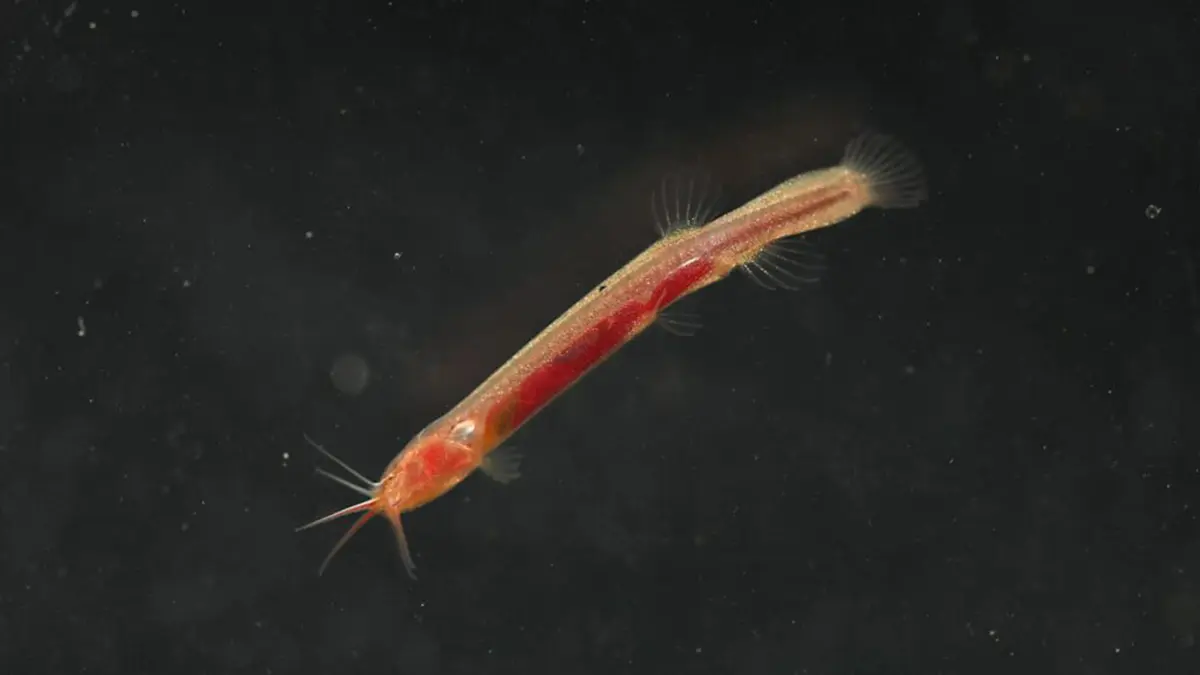
Scientists have described a new genus and species of subterranean fish, Gitchak nakana, discovered in a dug‑out well in western Assam. The discovery, announced in February 2026, marks the first phreatobitic (groundwater‑dwelling) fish recorded from Northeast India.
Background
The research, published in the journal Scientific Reports, was led by Ralf Britz of the Senckenberg Natural History Collections in Dresden along with Wimarithy K. Marak of Assam Don Bosco University and other collaborators. The tiny fish belongs to the loach family Cobitidae and was collected on three occasions from the same well near the foothills of the Shillong Plateau. The name derives from the Garo language: “gitchak” (red), referring to its blood‑red appearance, and “na‑kana” (blind fish).
Distinctive features
- Blind and pigmentless: The species lacks externally visible eyes and body pigmentation, typical adaptations to subterranean life.
- Miniaturisation: Adults grow to just about 2 centimetres in length.
- Unique anatomy: One of its most unusual traits is the complete absence of a skull roof; the brain is covered only by skin. This feature is not seen in other known cobitid genera.
- Troglomorphic traits: The fish exhibits classic features of cave‑dwelling organisms, such as reduced eyesight, translucent body and miniaturised skeleton.
Importance of the discovery
- Expands biodiversity knowledge: Fewer than 10 % of subterranean fishes live in groundwater aquifers, making this find particularly rare. It indicates that northeastern India harbours previously undocumented underground fauna.
- Conservation message: The discovery underscores the ecological significance of aquifers and the need to protect fragile subterranean ecosystems from contamination and over‑extraction.
- Evolutionary insights: Comparative analysis of Gitchak nakana’s morphology may shed light on the evolution of loaches and adaptive pathways to subterranean life.
Source: India Today NE

