

Why in news?
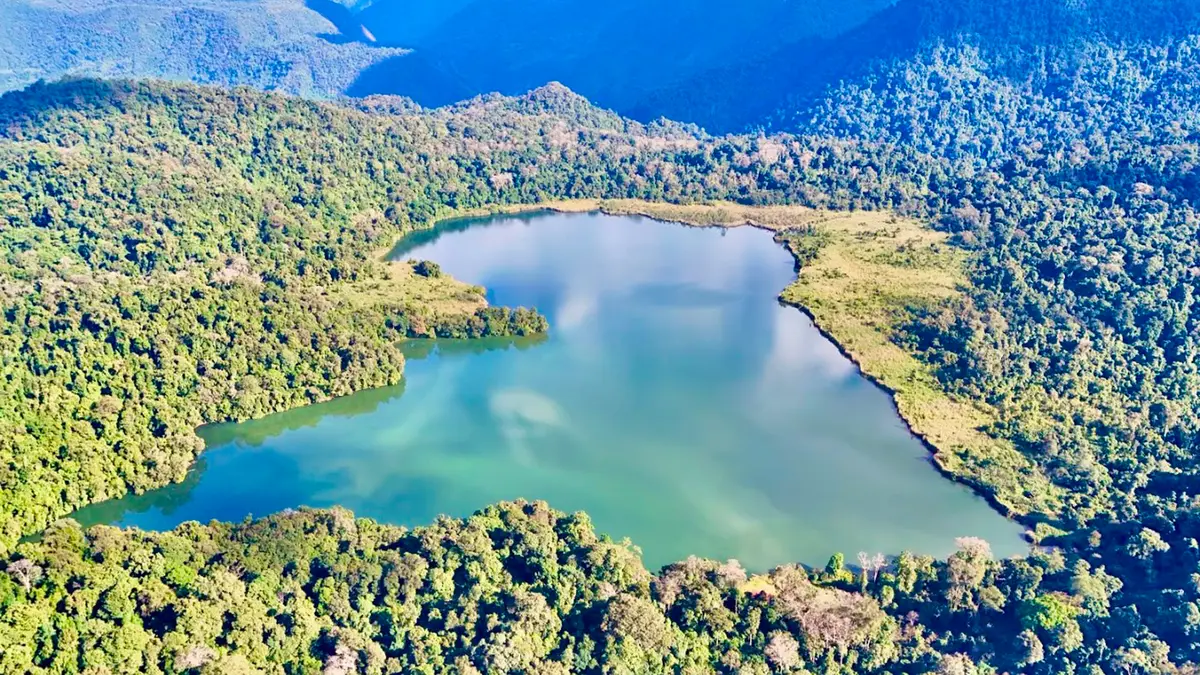
India designated Glaw Lake as its 101st Ramsar Site. It became Arunachal Pradesh's first wetland on the list. The freshwater lake lies within the Kamlang protected landscape. Its recognition was announced on 3 August 2026.
Background
Glaw Lake lies in Lohit district within the Eastern Himalayas, forming part of Kamlang Wildlife Sanctuary and Tiger Reserve. Perennial mountain streams feed the freshwater lake.
The Arunachal Pradesh forest department describes the lake as covering about 82 hectares at roughly 1,168 metres elevation. Wakro is the nearest important settlement, roughly eighteen to twenty kilometres away.
The wider catchment feeds the Kamlang, Lang and Lati rivers. These streams ultimately connect with the Lohit, a major eastern tributary system of the Brahmaputra. Forests around the lake support rich plant and animal diversity.
Official information records more than 150 tree species and 49 orchid species within the site and catchment. The sanctuary supports several carnivores, while Namdapha Tiger Reserve lies within the wider landscape.
What Ramsar designation means
Adopted at Ramsar in Iran during 1971, the Convention on Wetlands entered into force during 1975. Participating countries identify internationally important wetlands and commit to their wise use.
Wise use maintains ecological character through ecosystem-based management without excluding every human activity. Development and livelihood decisions should remain compatible with the wetland's long-term functioning.
Designation brings international recognition, monitoring responsibilities and stronger planning attention. India must report major changes affecting the site's ecological character. The status can also support research, restoration and carefully managed tourism.
Nested layers of protection
Glaw Lake already lay inside a wildlife sanctuary and tiger reserve operating through domestic law and protected-area management. Ramsar recognition adds a separate international wetland commitment.
The protections can reinforce each other, but their boundaries may differ. The state page's 82-hectare figure describes the lake itself. It should not automatically be treated as the final mapped Ramsar boundary.
Management must therefore consider the waterbody, inflowing streams and surrounding forest. Pollution or road construction outside the visible lake can alter sediment and water flows. Protecting only the water surface would be insufficient.
Ecological importance and management needs
Mountain wetlands regulate water, trap sediment and provide habitat, while their small size does not imply low importance. A single disturbance can affect the complete aquatic system.
Remote access can reduce daily pressure, but it complicates monitoring and emergency response. Expanding tourism without sanitation, waste controls and visitor limits could damage water quality. Climate shifts may also alter rainfall and stream flow.
- Baseline surveys should document water chemistry, plants, fish and aquatic invertebrates.
- Catchment planning should control erosion, waste and disruptive construction.
- Local communities need meaningful roles in monitoring and visitor management.
- Authorities should publish mapped boundaries and measurable ecological indicators.
The announcement called Glaw India's 101st Ramsar Site and Arunachal Pradesh's first. These distinctions were current on 3 August 2026, while future designations will change India's total.
Conclusion
Glaw Lake's recognition fills a geographic gap in India's wetland network. Lasting protection requires catchment management beyond the boundary of its visible waters.