Why in news?
Western Rajasthan’s Jorbeer Conservation Reserve and the adjoining Desert National Park have been included in a global action plan (2026–2035) for the conservation of the Steppe Eagle. This recognition under the Convention on Migratory Species follows surveys that recorded more than 2,000 Steppe eagles in the region, making it one of the species’ most important wintering grounds.
Background
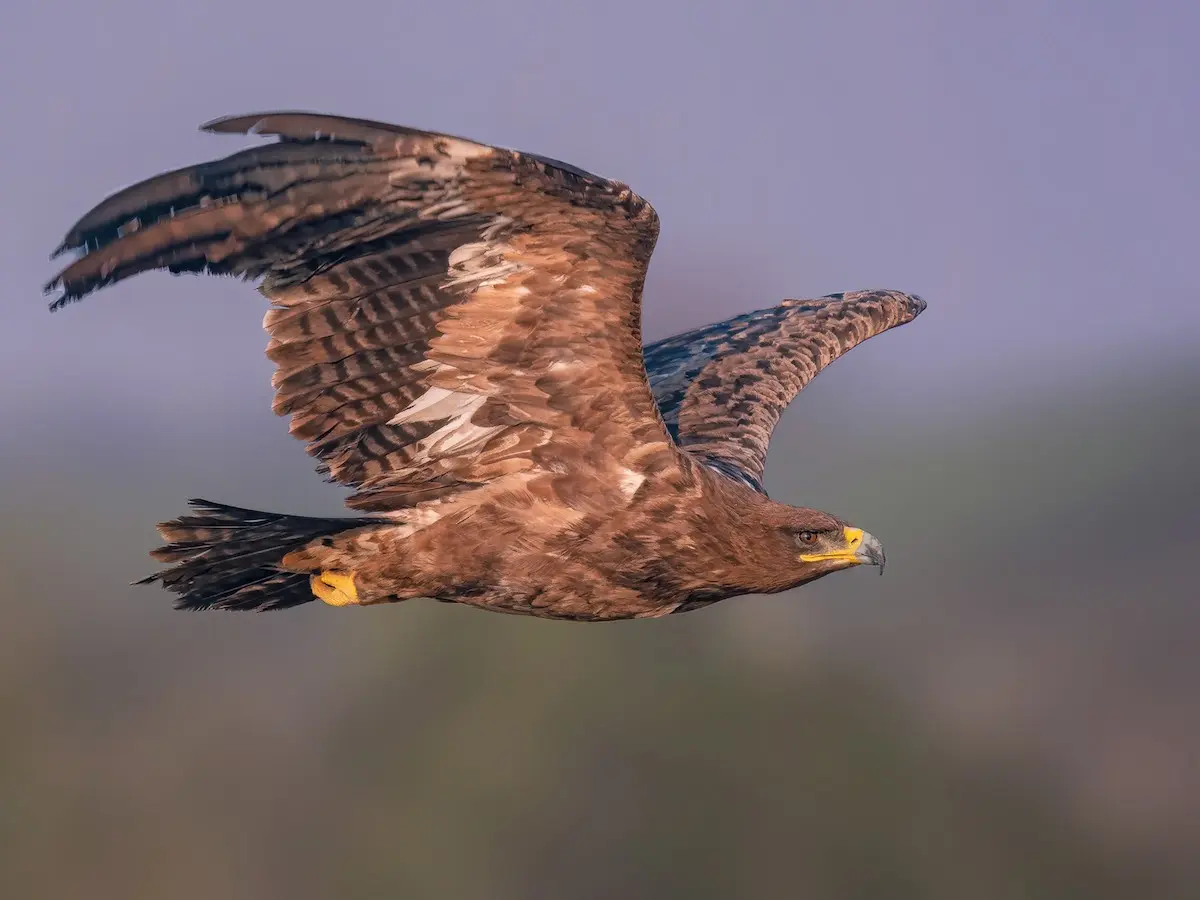
The Steppe Eagle (Aquila nipalensis) is a large bird of prey that breeds on the steppes and semi‑deserts of Central Asia and eastern Europe before migrating south to Africa, the Middle East and the Indian sub‑continent for the winter. Key features include:
- Size: Adults measure about 60–81 cm in length with a wingspan of 165–214 cm. They weigh between 2 and 5 kilograms.
- Colouration: Dark brown body plumage with slightly paler flight feathers and a distinct lighter patch on the nape.
- Diet: Carnivorous; they hunt small mammals like ground squirrels and voles, birds, reptiles and large insects. They also scavenge carrion, often gathering in groups at carcasses.
- Behaviour: These eagles soar over open landscapes using thermal currents, sometimes roosting in groups on the ground or in trees. They build nests on the ground or low cliffs.
The species is classed as Endangered on the IUCN Red List because of habitat loss, electrocution on power lines and direct persecution. As a top predator and umbrella species, protecting the Steppe Eagle also helps conserve entire ecosystems.
Global action plan and Rajasthan’s role
- Convention on Migratory Species (CMS): Parties to the CMS agreed on a 10‑year action plan to stabilise and recover Steppe Eagle populations. Measures include protecting breeding and wintering habitats, reducing power‑line mortality, regulating pesticide use and monitoring migration routes.
- Rajasthan stronghold: Surveys in the Thar desert recorded more than 2,000 Steppe Eagles congregating at carcass dumps around Jorbeer and across the Desert National Park. The abundance of livestock carcasses and open landscapes makes the area ideal for these scavengers.
- Community involvement: Conservationists are working with local authorities to manage carcass dumps responsibly, install bird‑safe power lines and raise awareness among herders and hunters.
Significance
- Global responsibility: India hosts a large proportion of the wintering population, giving it a critical role in the species’ survival.
- Ecosystem health: Steppe Eagles help control populations of rodents and other prey species; their presence indicates functioning grassland ecosystems.
- Tourism potential: Large congregations of eagles attract birdwatchers and can generate sustainable tourism revenues for local communities.
Conclusion
The inclusion of western Rajasthan in the global Steppe Eagle action plan highlights India’s responsibility to safeguard migratory raptors. Protecting carcass dumps, securing electrical infrastructure and conserving grasslands will not only aid the eagles but also support the broader desert ecosystem.
Source: Down To Earth