

Why in news?
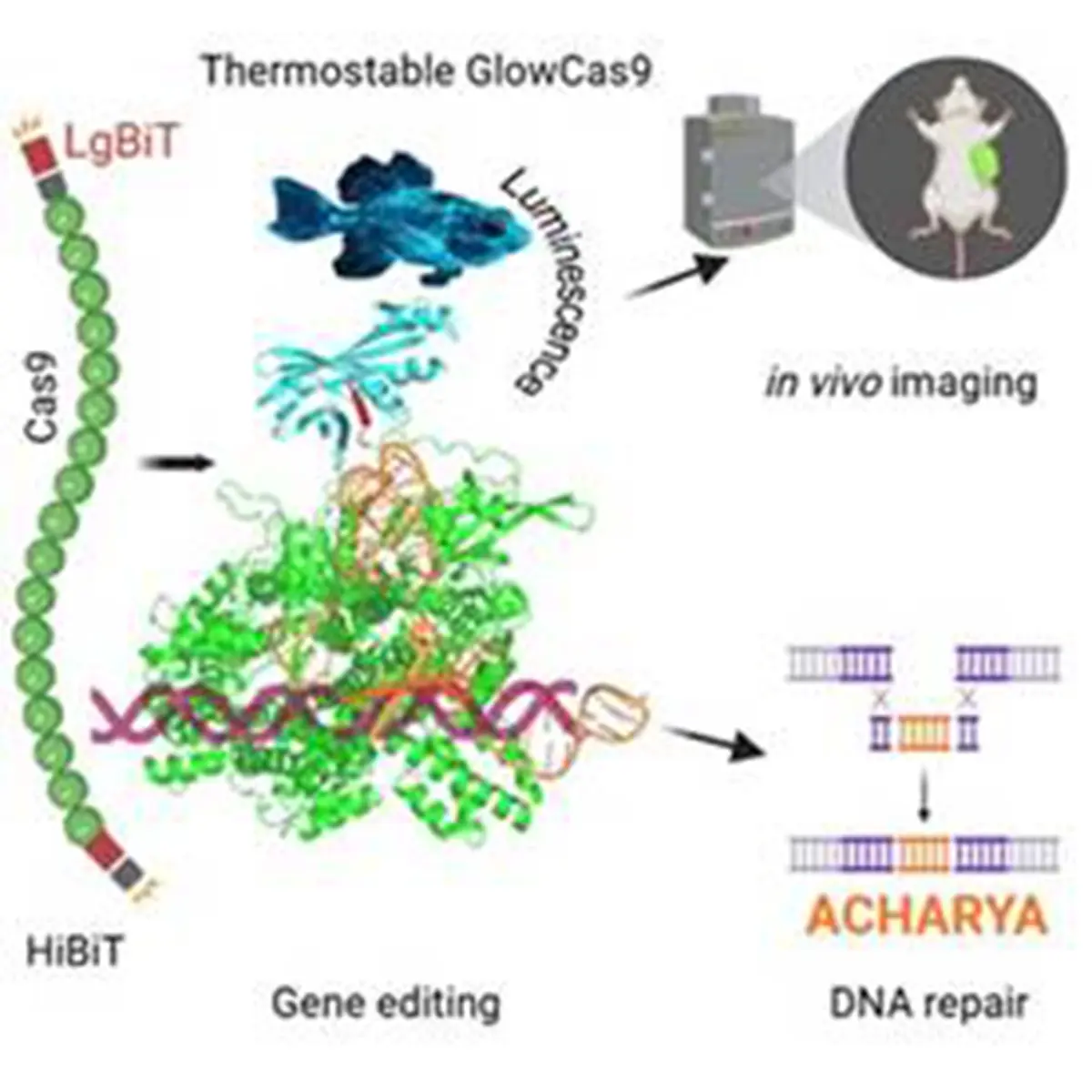
Scientists at the Bose Institute in Kolkata, led by Dr Basudeb Maji, engineered a new CRISPR protein called GlowCas9 that emits light while editing DNA. The Ministry of Science and Technology announced the breakthrough on 10 December 2025, describing it as a tool that allows researchers to watch gene editing happen inside living cells.
Background
CRISPR–Cas9 is a gene‑editing technology that uses an RNA guide to direct the Cas9 enzyme to a specific DNA sequence, where it makes precise cuts. Traditional methods of monitoring CRISPR activity involve fixing or lysing cells, which prevents scientists from observing the editing process in real time. Understanding the dynamics of Cas9 inside living cells is crucial for improving safety and efficiency in gene therapies.
How GlowCas9 works
- The team fused Cas9 to two inactive halves of a nano‑luciferase enzyme derived from deep‑sea shrimp proteins. When Cas9 folds correctly and binds to its DNA target, the enzyme halves are brought into proximity and reassemble to produce a bioluminescent signal, similar to the glow of fireflies.
- This fusion does not impair Cas9’s ability to cut DNA. Instead, it creates a direct visual readout of its activity in living cells, tissues and even plant leaves.
- GlowCas9 is highly stable and retains its structure and activity at higher temperatures compared with conventional Cas9 proteins. Thermal stability is particularly important for therapeutic applications where enzymes must remain functional during delivery to the body.
- The engineered protein enhances the precision of homology‑ directed repair, a DNA repair pathway that fixes mutations underlying genetic diseases such as sickle cell anaemia and muscular dystrophy.
Potential applications
- Real‑time monitoring: Researchers can observe where and when gene editing takes place, reducing off‑target effects and improving safety.
- Therapeutic development: Increased stability and precision make GlowCas9 promising for gene therapy interventions aimed at treating hereditary disorders and cancers.
- Plant breeding: Because GlowCas9 functions in plant cells, it could be used for non‑transgenic crop improvement by precisely editing genes without introducing foreign DNA.
Conclusion
GlowCas9 represents an innovative step in genome engineering. By allowing scientists to “see” gene editing as it happens, it addresses a major limitation of current CRISPR technology. Further research will determine how the tool performs in clinical settings and whether its light‑emitting property can be adapted to other genome‑editing enzymes.
Sources: PIB