

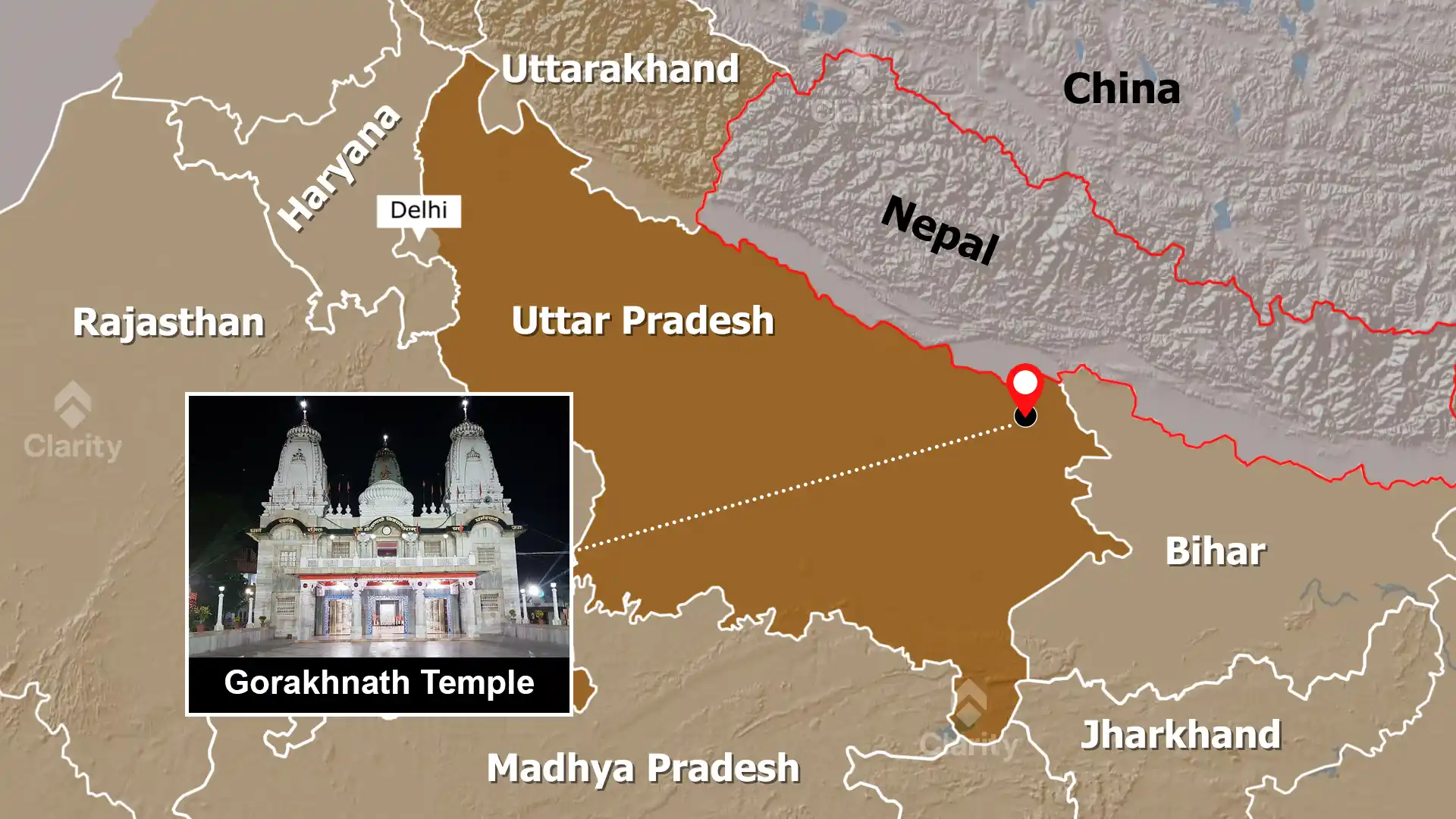
Why in news?
The famous Gorakhnath Temple in Uttar Pradesh drew large crowds during the annual Khichdi Mela celebrated around Makar Sankranti. The festival prompted renewed interest in the temple’s history and cultural role in the region.
Background
Gorakhpur city is named after the saint Guru Gorakhnath, a medieval yogi and proponent of the Nath tradition. The Gorakhnath Math at Gorakhpur serves as the headquarters of the Nath monastic order founded by Matsyendranath. The temple complex spans about 52 acres and includes halls, shrines and community facilities. It houses a white marble idol of Guru Gorakhnath, a sacred eternal flame called Divya Jyoti, and a holy pond known as Mansarovar.
Notable features
- Architecture: The main hall is supported by intricately carved pillars and has a high spire characteristic of north Indian temple design. Pilgrims circumambulate the sanctum while chanting hymns.
- Khichdi Mela: Every year during Makar Sankranti, devotees offer cooked rice and lentils (khichdi) to Guru Gorakhnath. The fair lasts for a month and draws visitors from across the country. The offered khichdi is later distributed as prasad.
- Community service: The temple runs a charitable hospital, educational institutions, a gaushala (cow shelter) and a community kitchen that provides free meals. These activities reflect the Nath philosophy of serving society.
- Light and sound show: An evening show narrates the life and teachings of Gorakhnath using colourful lights and narration, helping visitors understand the temple’s heritage.
Why it matters
- Cultural hub: The temple is a centre for spiritual learning and yoga practices. Its festivals reinforce social harmony and attract tourism to eastern Uttar Pradesh.
- Historical lineage: Gorakhnath’s teachings influenced several Bhakti and Sufi traditions. The temple continues to be a living institution preserving the Nath lineage.
- Regional identity: Gorakhpur’s identity and name stem from the temple, underlining its deep connection with the local populace.