

Why in news?
The grey slender loris came into focus recently as conservationists highlighted its unique ecology and the threats it faces. This diminutive nocturnal primate is often in the news during wildlife awareness campaigns and features regularly in civil services examinations, prompting a closer look at its biology and conservation.
Background
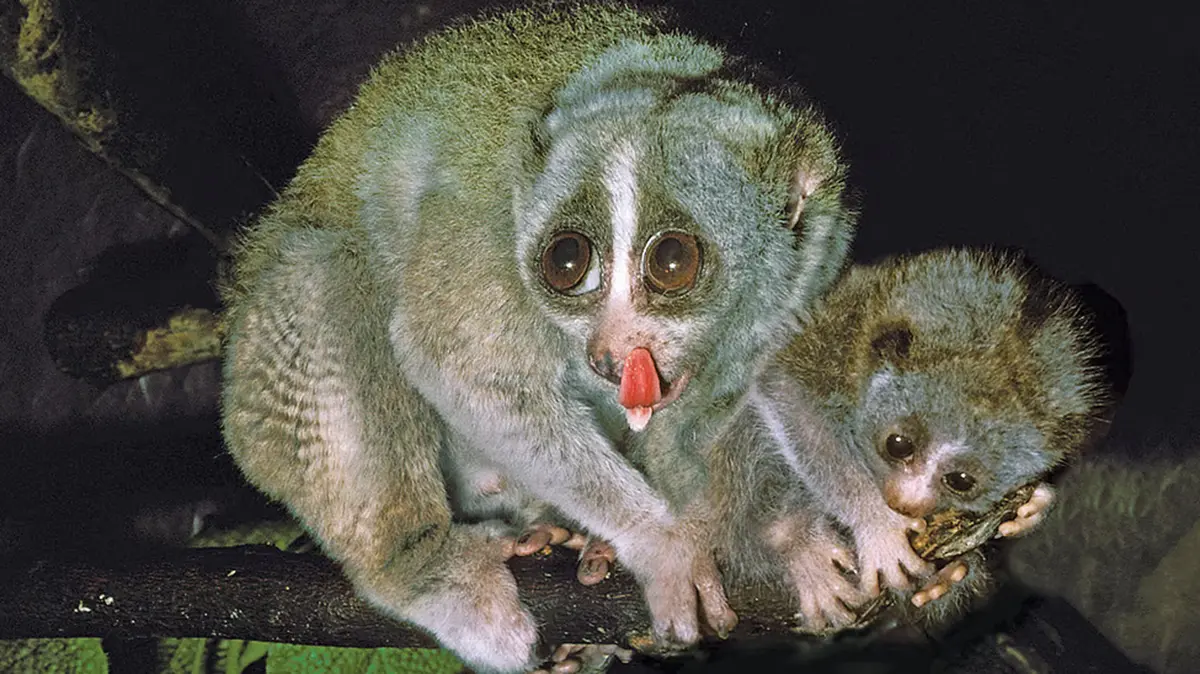
The grey slender loris (Loris lydekkerianus) is a prosimian primate found in the forests of southern India and Sri Lanka. Four subspecies are recognised, of which the Malabar and Mysore slender lorises inhabit India’s Western and Eastern Ghats. These primates weigh around 255 g and measure only about 21 cm long. Unlike many primates, they have no tail; instead, their long, slim limbs and grasping hands enable them to cling to branches. Large forward‑facing eyes give them excellent night vision.
Habitat and lifestyle
- Range: Grey slender lorises live in tropical dry and moist deciduous forests, scrublands and plantations across the southern Western Ghats and parts of the Eastern Ghats. In Sri Lanka they inhabit dry evergreen forests.
- Diet: These primates are insectivorous. Their diet consists largely of ants, termites and beetles, but they also consume spiders, snails and small vertebrates. They use their keen eyesight and sense of smell to detect prey at night.
- Behaviour: Slender lorises are nocturnal and arboreal. They move cautiously along branches, often hanging upside down to reach food. Social interactions are limited; adult males and females meet mainly for breeding. The species has a polygynandrous mating system and breeds twice a year.
- Physical traits: Their fur varies from greyish‑brown to reddish, with lighter undersides and a dark mask around the eyes. The absence of a tail means they cannot leap like some other primates; instead, they creep and cling through the canopy.
Cultural beliefs and threats
- Myths and folklore: In parts of Kerala and Tamil Nadu, some communities revere the loris as a symbol of good luck, while others associate it with spirits. Such beliefs can influence whether the animal is protected or persecuted.
- Habitat loss: Clearing of forests for agriculture, roads and plantations fragments the loris’s habitat. Isolated tree patches make it harder for them to find food and mates.
- Electrocution and road mortality: Low‑hanging power lines and busy roads pose deadly hazards. The animals often use electric wires as travel routes and are at risk of electrocution.
- Illegal trade: Lorises are hunted for body parts used in traditional medicine and sometimes sold as exotic pets, although keeping them is illegal.
- Conservation status: The grey slender loris is listed as “Near Threatened” on the IUCN Red List and enjoys the highest level of legal protection under Schedule I of India’s Wildlife (Protection) Act. Fewer than 9,000 individuals are estimated to survive in some districts.
Conservation efforts
- Habitat restoration: State forest departments and NGOs are restoring canopy corridors by planting native trees and reconnecting forest patches.
- Community outreach: Awareness programmes dispel myths, encourage locals to report sightings and reduce hunting pressure.
- Research: Long‑term monitoring of populations and genetic studies help scientists understand loris ecology and plan conservation actions.
Conclusion
The grey slender loris is a fascinating yet vulnerable component of India’s primate diversity. Protecting its shrinking habitat, ending illegal trade and fostering coexistence with local communities are essential for its survival.
Source: Down To Earth