

Why in news?
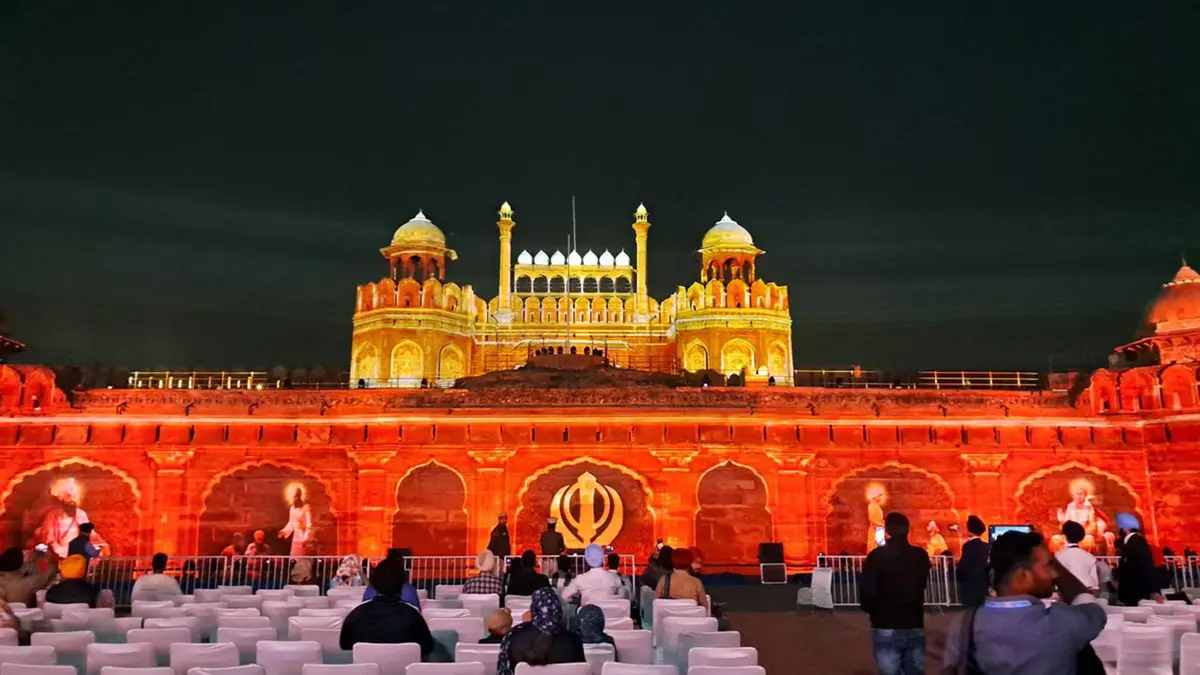
Security has been tightened around the Red Fort in Delhi after a vehicle explosion nearby. Authorities are preparing for events commemorating the 350th anniversary of the martyrdom of Guru Tegh Bahadur, the ninth Sikh Guru.
Background
Guru Tegh Bahadur (1621–1675) was born as Tyag Mal in Amritsar, Punjab. He was the youngest son of Guru Hargobind, the sixth Sikh Guru. Recognised for his bravery in battle, he earned the title “Tegh Bahadur” (brave of the sword). He became the ninth Guru in 1664 after the death of Guru Har Krishan and served until his martyrdom in 1675. His son, Gobind Rai, later Guru Gobind Singh, succeeded him.
Life and contributions
- Founding of Anandpur Sahib: Guru Tegh Bahadur purchased a tract of land in the foothills of the Shivalik range and established the town of Anandpur Sahib. The city later became the centre of Sikh theology and the birthplace of the Khalsa under Guru Gobind Singh in 1699.
- Spiritual writings: He composed over 100 hymns that are included in the Guru Granth Sahib. His verses dwell on the nature of God, detachment from material possessions, dignity in suffering and service to humanity.
- Advocate of religious freedom: During Aurangzeb’s rule, pressure increased on non‑Muslims to convert. When Kashmiri Pandits appealed to him for protection against forced conversions, Guru Tegh Bahadur travelled to Delhi to plead their case.
Martyrdom
- He refused to renounce his faith or perform miracles to prove his divinity. Aurangzeb ordered his execution. On 24 November 1675 he was publicly beheaded in Delhi for defending the right of people to practise their religion.
- Gurdwara Sis Ganj Sahib in Chandni Chowk stands at the site of his martyrdom. Gurdwara Rakab Ganj Sahib marks the place where his followers secretly cremated his body.
- The anniversary of his sacrifice is observed each year on 24 November as Shaheedi Diwas (martyrdom day). Sikhs commemorate his courage and his defence of religious freedom.
Legacy
- Guru Tegh Bahadur is remembered as the “Protector of Humanity” because he laid down his life for the rights of others. His martyrdom inspired his son Guru Gobind Singh to transform the community into a martial brotherhood.
- His hymns continue to guide Sikhs in meditation and righteous living. They urge believers to rise above fear and remain steadfast in their principles.
- Commemorative events are held at shrines across India and abroad, reaffirming the values of religious tolerance and universal human rights.
Source: TH