
Why in news?
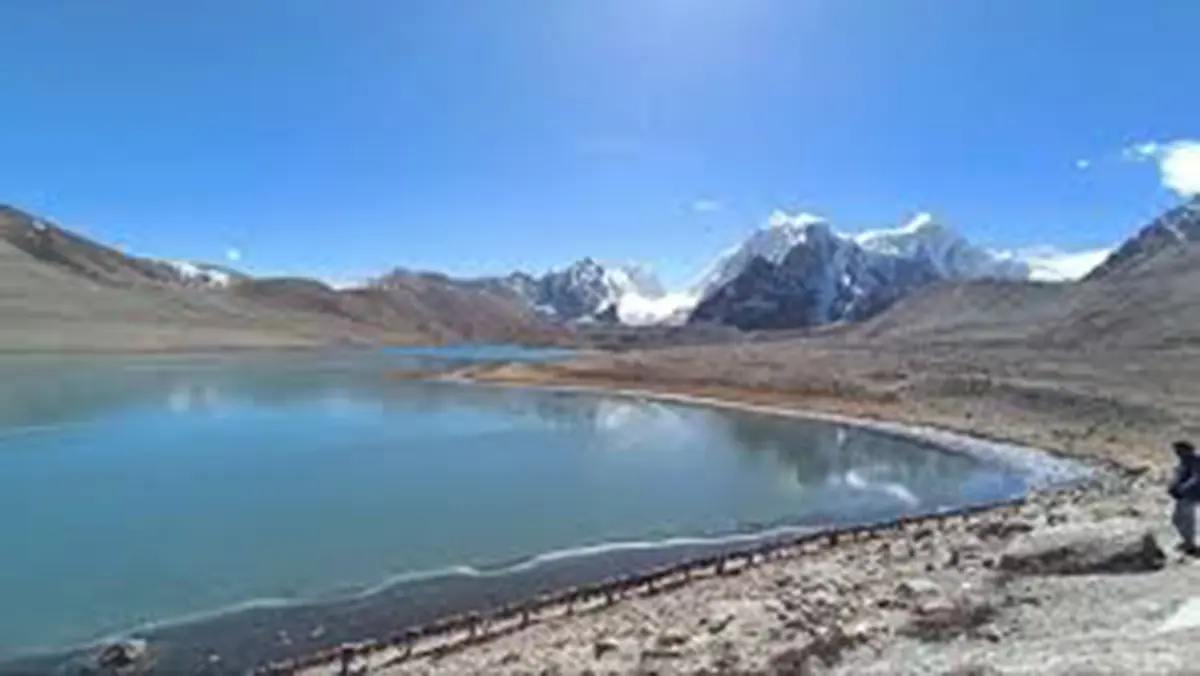
Access to Gurudongmar Lake in north Sikkim has reopened after being closed for more than two years following a glacier lake outburst flood (GLOF) in October 2023. The reopening allows tourists to once again visit one of India’s highest and most sacred lakes.
Background
Gurudongmar Lake lies at an altitude of about 5,430 metres (nearly 17,800 feet) in the Lachen valley of north Sikkim, close to the border with Tibet. The lake is named after Guru Padmasambhava (Guru Rinpoche) of Tibetan Buddhism, and its waters are revered by Buddhists and Sikhs alike. Because of the harsh climate, parts of the lake remain frozen for much of the year.
On 4 October 2023, a glacial lake outburst flood triggered by heavy rainfall burst the Lhonak Lake upstream, causing destructive flash floods along the Teesta River. Bridges and roads connecting Lachen and Gurudongmar were washed away. Reconstruction has included building a 400‑foot Taram Chu bridge and restoring the road along the turbulent torrent. After 887 days of restricted access, the administration reopened the route in March 2026.
Key points and significance
- Tourism revival: The reopening restores livelihoods dependent on tourism in Lachen and nearby villages. Tour operators, hotels and homestays expect visitors to return to the picturesque lake.
- Infrastructure resilience: Engineers used reinforced concrete structures and improved drainage to make the rebuilt bridges more resilient to future glacial floods.
- Ecological sensitivity: Authorities urge visitors to respect the fragile high‑altitude ecosystem by avoiding littering and limiting noise and pollution.
- Regional importance: Gurudongmar lies near the strategic Indo‑China border; improved access aids not only tourism but also border management and disaster response.
Source: EastMojo – Tourism resumes to Gurudongmar Lake after 887 days

