

Why in news?
The Jewish festival of Hanukkah began at sundown on 14 December 2025 and will continue until 22 December 2025. Many communities in India and around the world celebrate the holiday by lighting candles, singing songs and sharing traditional foods.
Background
Hanukkah, which means “dedication” in Hebrew, commemorates the rededication of the Second Temple in Jerusalem in the 2nd century BCE. According to tradition, the Greek‑Syrian ruler Antiochus IV banned Jewish religious practices and desecrated the temple. A group of Jewish fighters led by Judah Maccabee revolted and recaptured Jerusalem. When the temple was cleansed, there was only enough consecrated oil to light the menorah for one day, yet the lamps burned for eight days—a miracle that inspired the eight‑day festival.
How Hanukkah is celebrated
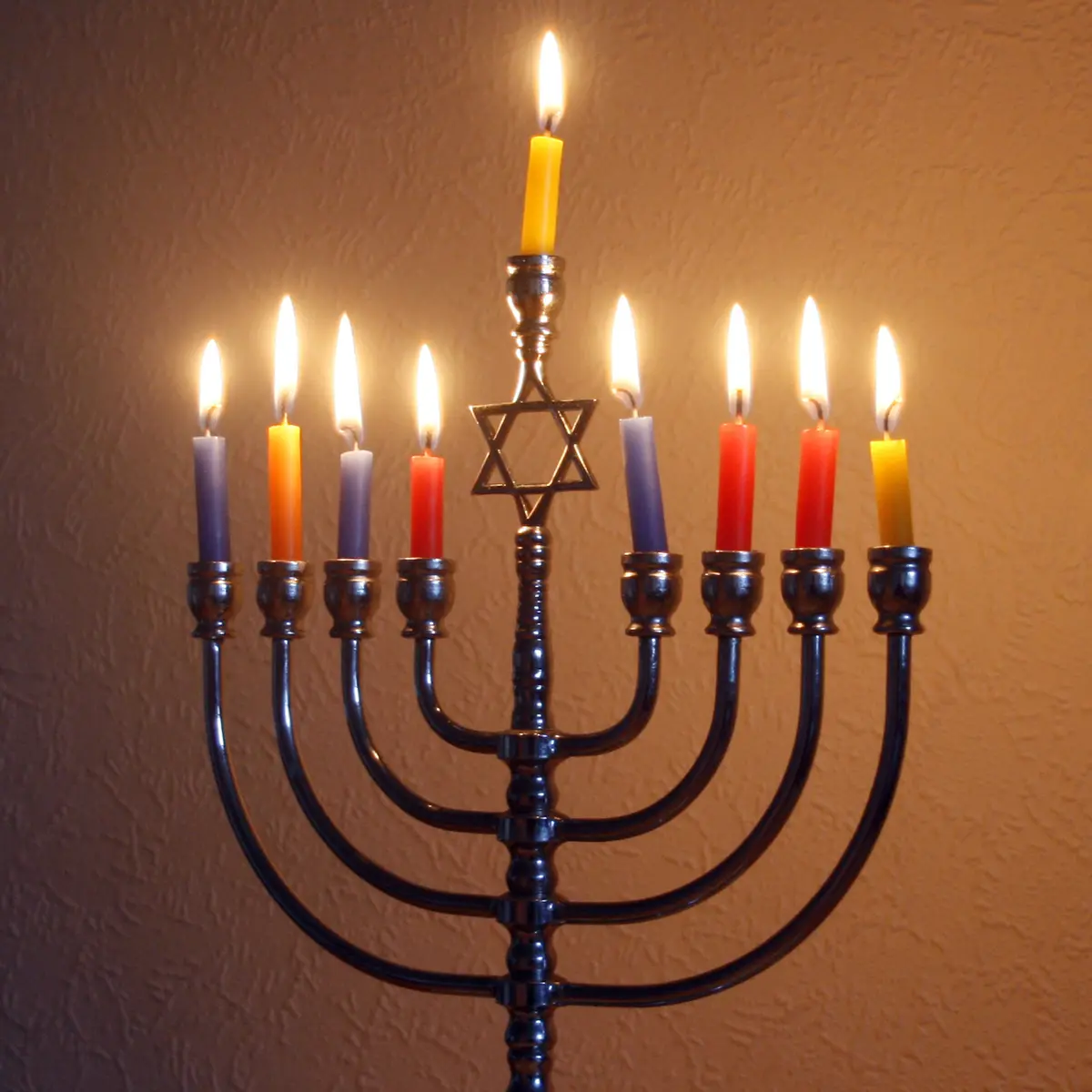
- Lighting the menorah: Families light candles on a nine‑branched candelabrum called a hanukkiyah or menorah. One candle is added each night until all eight are lit.
- Prayers and songs: Blessings and hymns such as “Maoz Tzur” (Rock of Ages) accompany the lighting.
- Traditional foods: Fried foods like latkes (potato pancakes) and sufganiyot (jelly‑filled doughnuts) symbolise the miracle of the oil.
- Games and gifts: Children play with a four‑sided spinning top called a dreidel and receive chocolate coins or small presents. Gift‑giving has become more common in modern times.
Significance
Hanukkah is a celebration of religious freedom, perseverance and cultural identity. While not the most sacred Jewish holiday, it holds a central place in communal life and has gained wider recognition, especially in countries with significant Jewish populations. The festival emphasises hope in the face of oppression and the importance of maintaining tradition.
Sources: CHABAD.ORG