

Why in news?
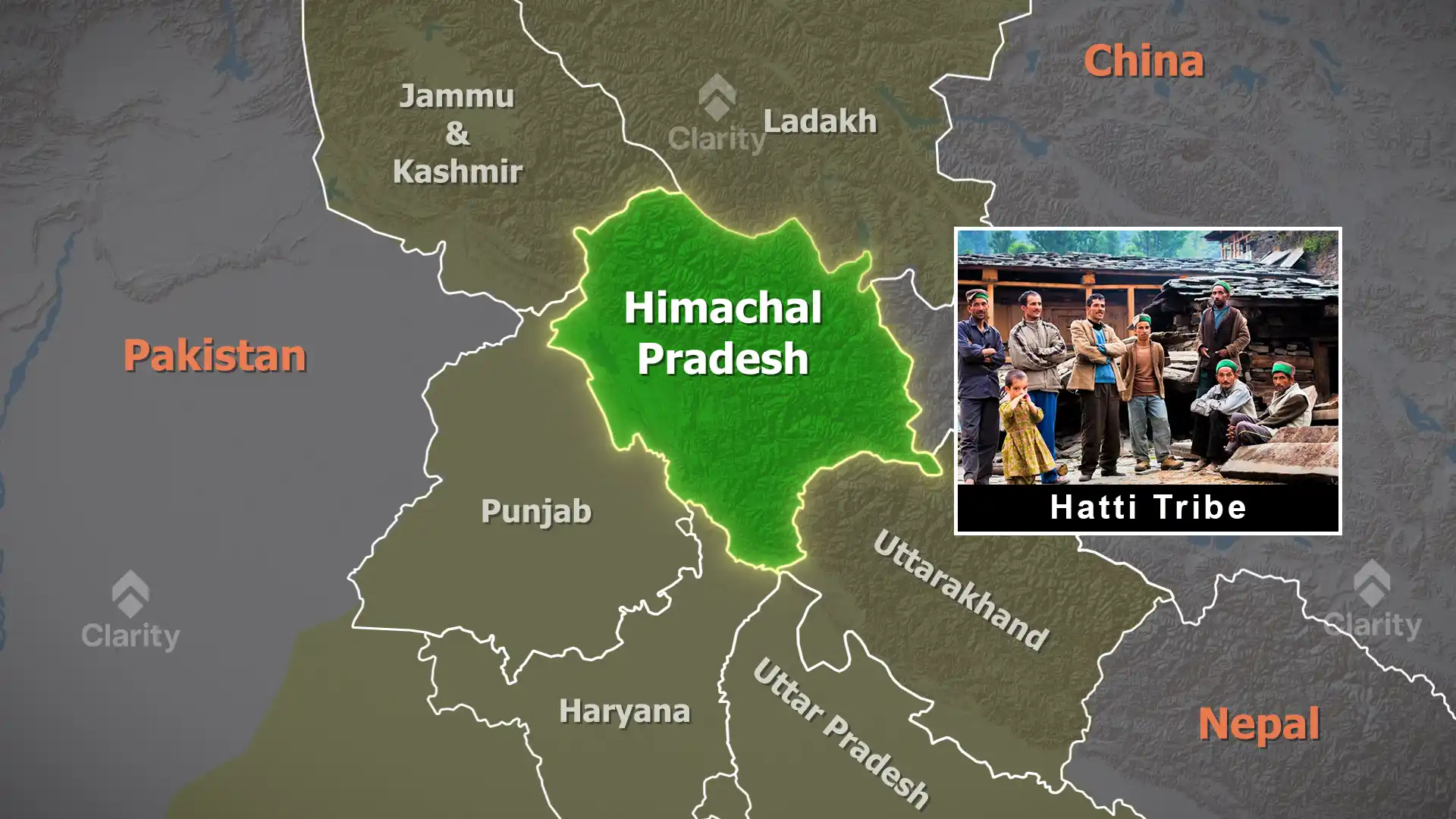
The Hatti community in Himachal Pradesh’s Trans‑Giri region celebrated the Boda Tyohar festival in January 2026. The festival follows the community’s recognition as a Scheduled Tribe (ST) under the Constitution (Scheduled Tribes) Order (Second Amendment) Act, 2023, which has renewed interest in their traditions and rights.
Background
The Hattis are a tight‑knit community living along the Giri and Tons river basins straddling the Himachal Pradesh–Uttarakhand border. Their name comes from “haat” — local markets where they historically traded their produce, including grains, meat, vegetables and wool. They are organised into two main clans: one in the Trans‑Giri region of Sirmaur district (Himachal Pradesh) and the other in Jaunsar Bawar (Uttarakhand). Inter‑marriage between the two groups is common, though internal caste divisions (Bhat and Khash as upper castes and Badhois as lower) persist. Community affairs are managed by a traditional council called Khumbli, similar to the khap panchayats of Haryana.
Socio‑cultural features
- Agrarian economy: Most Hattis are small farmers and pastoralists. They cultivate maize, millets, pulses and barley, rear livestock and sell produce in weekly haats. Wool, ghee and homemade wine are important trade items.
- Distinctive attire: Men wear a white turban or headgear on ceremonial occasions, while women don colourful robes and jewellery. The community celebrates Boda Tyohar (also called Magho ko Tyohar) with folk dances, music and communal feasts.
- Family structure: Extended families live together, and traditional practices such as polyandry (locally known as Jodidara or Jajda) have been reported in the past, although they are declining.
- Governance: The Khumbli council adjudicates disputes, distributes common resources and enforces social norms. Decisions are binding on members.
Recognition as a Scheduled Tribe
- Long‑standing demand: The Hatti community has sought ST status since the late 1960s, arguing that their socio‑economic conditions and cultural practices resemble those of nearby tribal groups.
- Legal inclusion: In 2023 the Indian Parliament passed an amendment to include the Hatti community of the Trans‑Giri region in the list of Scheduled Tribes. The change grants them access to reserved seats in education and government jobs, targeted welfare schemes and special development funds.
- Implications: ST status is expected to improve educational attainment, health services and infrastructure in the region. It also recognises and protects Hatti cultural heritage.
Significance
- Social justice: Recognising the Hatti as a Scheduled Tribe addresses historical exclusion and helps reduce disparities between them and other communities.
- Cultural preservation: Legal recognition encourages the documentation and celebration of Hatti traditions, festivals and language.
- Political empowerment: With reserved seats and representation, the community can better advocate for its needs within state and national institutions.
Source: Hindustan Times