
Why in news?
India’s semiconductor and printed circuit board industries have sounded the alarm over potential shortages of helium gas after attacks on Qatar’s Ras Laffan liquefied natural gas hub. The facility, one of the world’s largest helium production sites, was hit during regional hostilities in West Asia in March 2026. Analysts estimate that the outage removed about 14 percent of global helium supply and caused prices to spike sharply. Shortages threaten to disrupt chip manufacturing and scientific research, prompting calls for diversified supply chains.
Background
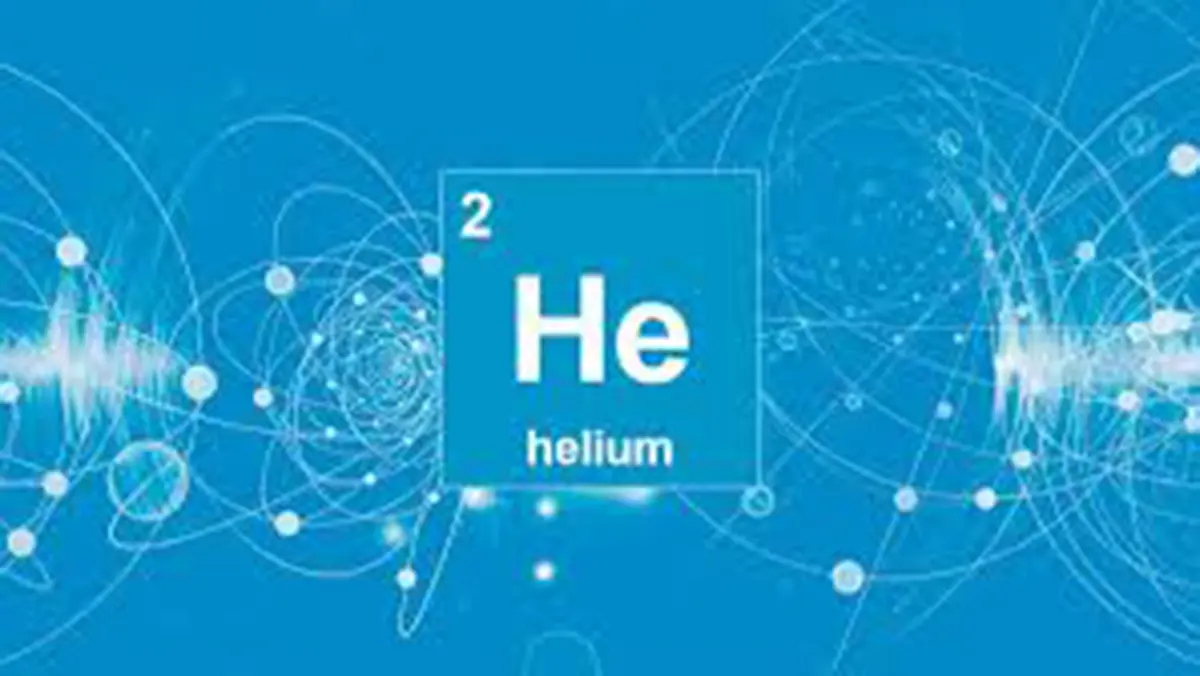
Helium is a colourless, odourless inert gas that makes up the second lightest element in the universe. First identified in 1868 when astronomers observed a yellow spectral line during a solar eclipse, it was named after the Greek word for the Sun, Helios. With an atomic number of 2, helium has extraordinary properties: it remains gaseous down to very low temperatures, does not react with other elements and cannot be solidified at normal atmospheric pressure. These features make it indispensable in high‑technology applications.
Key facts
- Sources and reserves: Helium is extracted as a by‑product of natural gas production. The largest reserves lie in the United States, Algeria and Russia. India’s own Rajmahal volcanic basin in Jharkhand hosts a significant trapped reservoir dating back billions of years.
- Industrial uses: Because of its low boiling point and inert nature, helium is used to pressurise rocket fuel tanks, cool superconducting magnets in MRI scanners and particle accelerators, purge fuel lines, and create controlled atmospheres for semiconductor fabrication.
- Vulnerability of supply: Global helium production is concentrated in a handful of facilities. Disruptions such as the damage to Qatar’s Ras Laffan plant can remove large volumes from the market overnight, leading to price volatility and shortages in industries that rely on continuous supply.
- Safety notes: Helium itself is non‑toxic but displaces oxygen, so inhaling pure helium can cause asphyxiation. It is also one of the few elements that cannot be solidified at normal pressure, though it becomes a superfluid at temperatures close to absolute zero.
Significance
- Impact on technology: Semiconductor fabs, MRI makers and aerospace firms depend on steady helium supplies. A sustained shortage could slow production and increase costs for consumers.
- Need for diversification: The recent crisis underscores the importance of diversifying supply sources, developing alternative production facilities and exploring recycling of helium from industrial processes.
- India’s preparedness: As the country develops its semiconductor ecosystem, strategic reserves and contracts will be necessary to shield industries from external shocks.
Sources: New Indian Express, Reuters

