
Why in news?
The Karnataka High Court has directed the State government to issue a new notification adding an estimated 55 square kilometres of reserve forest that was left out when Kappatagudda Wildlife Sanctuary was declared in 2019. Petitioners had argued that reducing the sanctuary’s area from the 300 square kilometres approved by the State Wildlife Board to 244 square kilometres violated environmental commitments.
Background
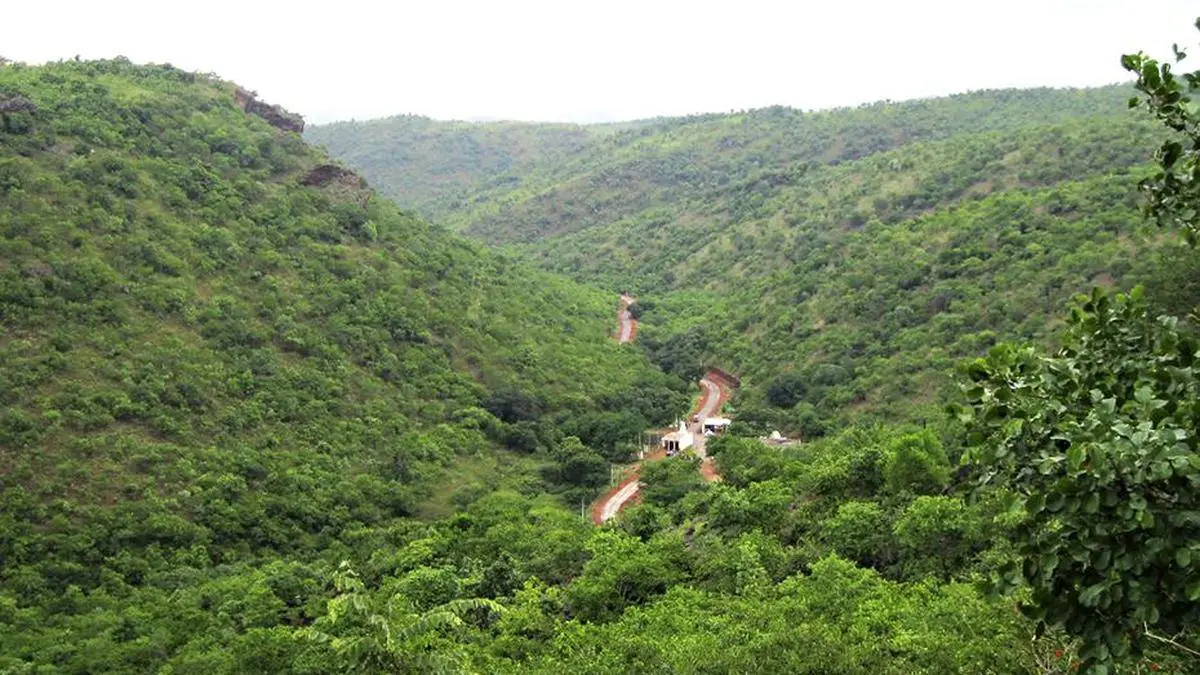
Kappatagudda Wildlife Sanctuary is located in Gadag district of Karnataka. Sometimes called the “Western Ghats of North Karnataka,” it contains a mosaic of dry deciduous forests, grasslands, scrublands and riverine patches. The hills hold ancient temples and ruins from dynasties such as the Chalukyas and Rashtrakutas, including the Jain Basadi, Brahma Jinalaya and Trikuteshwara temples. Kappatagudda forms a major catchment for the Tungabhadra River and supports a variety of medicinal plants.
The sanctuary was officially notified in May 2019 covering about 244 sq km, even though the State Wildlife Board had earlier resolved to include roughly 300 sq km of the reserve forest. Mining interests had opposed the larger area. Stone‑crushing operators challenged the 2019 notification, but the High Court dismissed their petitions and ordered the government to include the remaining 55 sq km. The court emphasised that any exclusion must follow due process under the Wildlife (Protection) Act and cannot be arbitrary.
Ecological importance
- Biodiversity: The sanctuary harbours leopards, hyenas, wolves, foxes, four‑horned antelopes, blackbucks and numerous reptile and bird species. Nearly 400 species of medicinal plants have been recorded.
- Habitat diversity: Its mix of dry forests and grasslands provides habitat for species adapted to open scrub as well as wooded areas.
- Water catchment: The hills play a vital role in feeding the Tungabhadra River, sustaining agriculture and communities downstream.
- Cultural heritage: Ancient temples and ruins within the sanctuary illustrate the region’s historical significance.
Sources: The Hindu, Wikipedia – Kappatagudda Wildlife Sanctuary

