

Why in news?
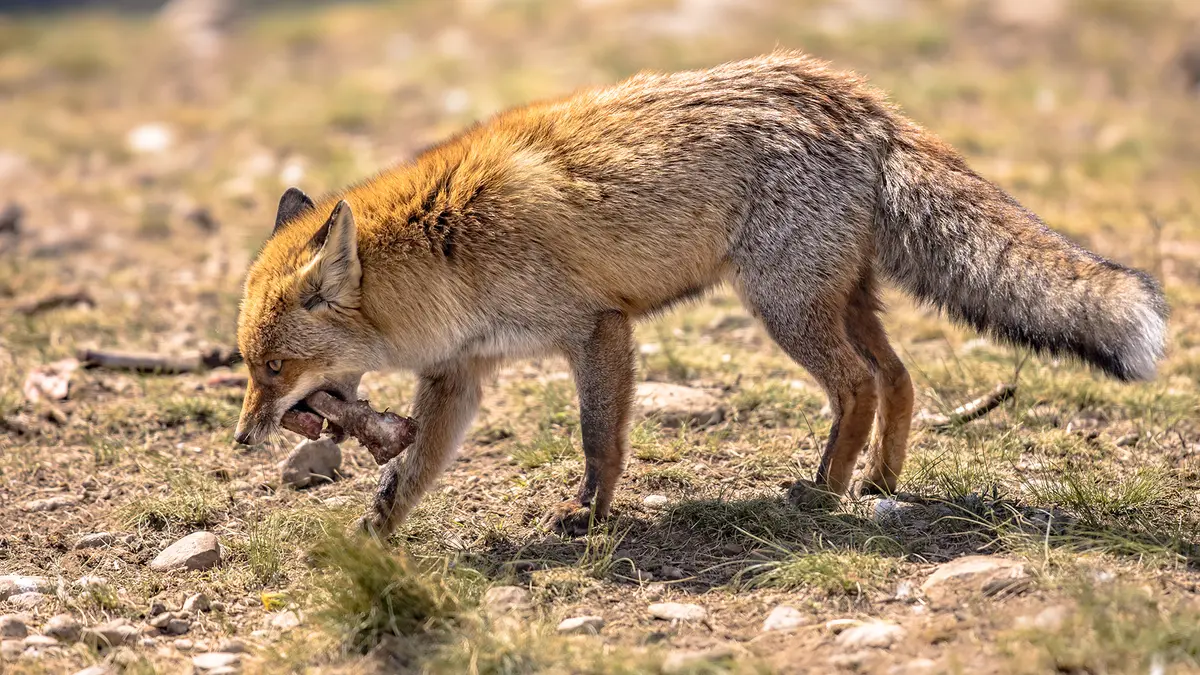
A viral video showing a Himalayan red fox near Pangong Tso in Ladakh captured public attention recently. Wildlife experts used the occasion to warn tourists against feeding wild foxes or approaching them too closely, as such interactions can lead to food conditioning and harmful behaviour in wild animals.
Background
The Himalayan red fox (Vulpes vulpes montana) is a subspecies of the widespread red fox. It inhabits the alpine and sub‑alpine zones of the Himalayas across India, Nepal, Bhutan and Tibet. These foxes are medium‑sized, typically measuring 50–90 cm in body length with a 30–45 cm bushy tail, and weighing between 4 and 7 kg. Their thick reddish‑orange fur and white‑tipped tail provide insulation against freezing mountain temperatures.
Habitat and behaviour
- Distribution and habitat: Himalayan red foxes occur at altitudes ranging from about 2,500 m to 5,000 m. They occupy alpine meadows, grasslands, temperate forests, agricultural fields and even human settlements. Their adaptability allows them to thrive in rugged terrain and harsh climatic conditions.
- Diet and habits: These foxes are opportunistic feeders. Their diet includes rodents, birds, insects, fruits and carrion. They are primarily nocturnal and crepuscular, most active at dawn and dusk. Solitary by nature, they use their keen hearing and stealth to hunt small prey and can run swiftly when needed.
- Conservation status: The species is listed as “Least Concern” by the International Union for Conservation of Nature (IUCN), but habitat loss, climate change and negative encounters with humans pose risks. Conservationists urge visitors not to feed or approach these animals to prevent dependency on human food.
About Pangong Tso
- Location: Pangong Tso is a high‑altitude, brackish lake situated at about 4,350 m in the Himalayas, straddling eastern Ladakh in India and the Tibet Autonomous Region in China. It is roughly 134 km long and up to 5 km wide.
- Features: The lake is one of the world’s highest saltwater lakes and is famous for its changing colours, shifting from shades of blue to green and even red depending on the time of day and weather. About two‑thirds of the lake lies in China.
Sources: Snow Leopard Haven