
Why in news?
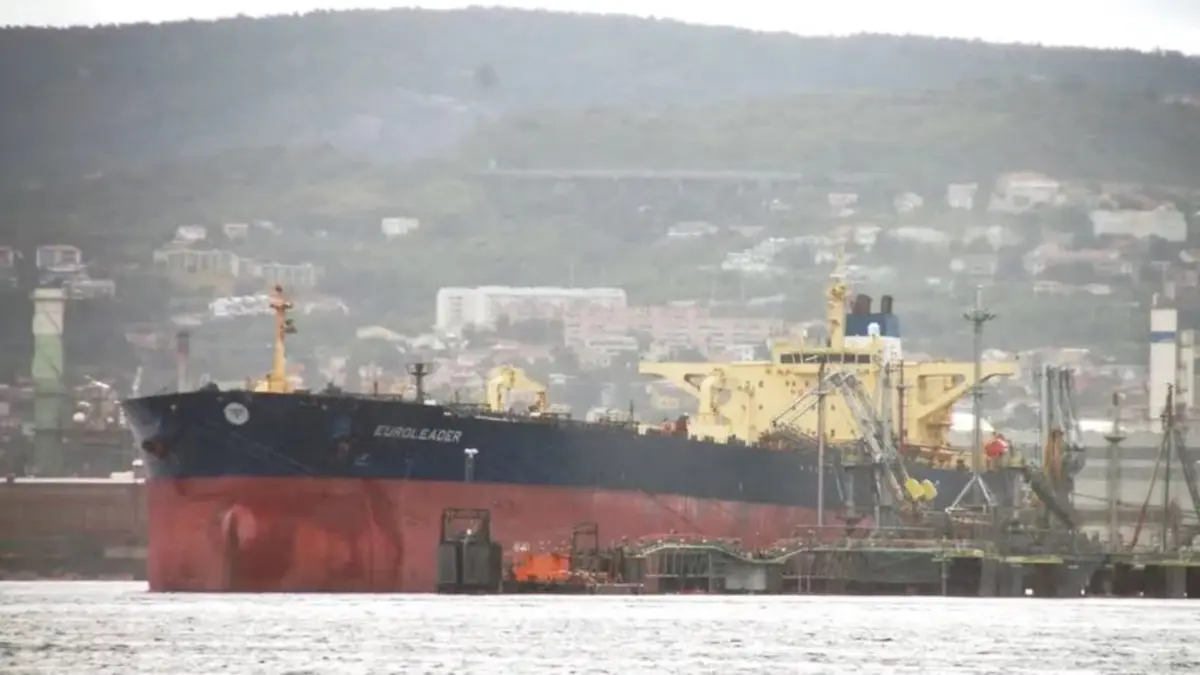
The continuing conflict in West Asia has disrupted oil and gas traffic through the Strait of Hormuz, a narrow waterway between Iran and Oman. Iran's Revolutionary Guards warned shipping companies not to use the strait, prompting traders, insurers and ship owners to suspend shipments. India, which relies heavily on oil and gas imports that pass through the strait, is therefore exploring ways to secure supplies, including increasing purchases of Russian crude oil.
Background
The Strait of Hormuz connects the Persian Gulf with the Gulf of Oman and the Arabian Sea. It is considered the world's most important energy chokepoint, carrying around one-fifth of global petroleum and liquefied natural gas (LNG) trade. Roughly half of India's crude oil imports - about 2.5-2.7 million barrels per day - transit the strait, mainly from Iraq, Saudi Arabia, the United Arab Emirates and Kuwait. India imports more than 88 % of its crude oil and a significant share of its natural gas. When shipping through Hormuz is disrupted, India has to look for alternative sources to keep its economy running.
India's dependence on the Strait
- Heavy reliance on Gulf suppliers: India is the world's third-largest oil consumer. Most of its crude and gas comes from West Asia via Hormuz, making the country vulnerable to regional unrest.
- No large LPG and LNG buffers: India imports 80-85 % of its liquefied petroleum gas (LPG) and around 60 % of its LNG through Hormuz. Unlike crude oil, India has only limited strategic reserves for LPG and LNG, so even short disruptions could affect household cooking fuel and industrial gas supplies.
- Strategic petroleum reserves: Indian refiners currently hold more than ten days of crude oil inventory and the country maintains strategic reserves that can cover roughly one week of demand. These stocks provide a short-term cushion but cannot sustain a prolonged blockade.
Strategic importance of the Strait of Hormuz
- Global chokepoint: About one-fifth of global crude and LNG trade passes through the strait. Any closure or perceived risk immediately pushes up world oil prices and threatens global energy security.
- Narrow waterway: The strait is only about 39 km wide at its narrowest point. It is bordered by Iran to the north and Oman to the south, which makes it a potential flashpoint during regional conflicts.
- Lack of alternatives: Some pipelines in Saudi Arabia and the UAE can bypass the strait, but their combined capacity cannot fully replace Hormuz traffic. If Hormuz were closed, up to nine million barrels per day would remain at risk.
Alternative sourcing options
- Russian crude oil: With shipments through Hormuz uncertain, India is looking to raise imports of Russian oil. Industry estimates suggest about ten million barrels of Russian crude are floating in Asian waters, providing immediate supplies. India had cut Russian purchases in recent months, so there is room to increase imports.
- Spot purchases from other regions: India can procure crude from the United States, West Africa and Latin America. These sources have longer shipping times, but they help diversify supply.
- Drawing from strategic reserves: In a crisis, India can release crude from its strategic petroleum reserves to bridge shortfalls while arranging alternative cargoes.
LPG and LNG vulnerabilities
- LPG imports as the biggest vulnerability: India relies on imports for most of its cooking gas. Supplies are concentrated in the Gulf and flow almost entirely through Hormuz. Unlike crude oil, India lacks large LPG reserves, making disruptions more severe for households.
- Limited spot availability: Spot cargoes of LPG and LNG are relatively scarce compared with crude oil. If the strait remains closed, securing gas cargoes quickly may prove challenging and more expensive.
Impact and outlook
- Short-term comfort, long-term uncertainty: India's inventories and strategic reserves provide a buffer for a few weeks. The impact on fuel prices and supply will depend on how long Hormuz remains disrupted. Analysts expect any complete blockade to be temporary because Gulf countries themselves depend on the strait for revenue.
- Higher energy prices: Even partial disruptions raise global oil prices. A one-dollar per barrel increase in crude can add nearly $1.8-2 billion annually to India's import bill. Prolonged tension may push prices above $100 per barrel.
- Policy response: The government is monitoring the situation and reviewing crude, LPG and LNG stocks. It may accelerate diversification of energy sources, improve strategic reserves and invest in alternative import routes.
Conclusion
The Strait of Hormuz crisis underscores India's vulnerability to external shocks in energy markets. While strategic reserves and diversified imports provide short-term relief, long-term energy security will require building bigger LPG and LNG buffers, strengthening ties with alternative suppliers and promoting domestic renewable energy. A diplomatic resolution of the West Asia conflict remains crucial to keeping vital sea lanes open.
Source: Indian Express · Indian Express

