

Why in news?
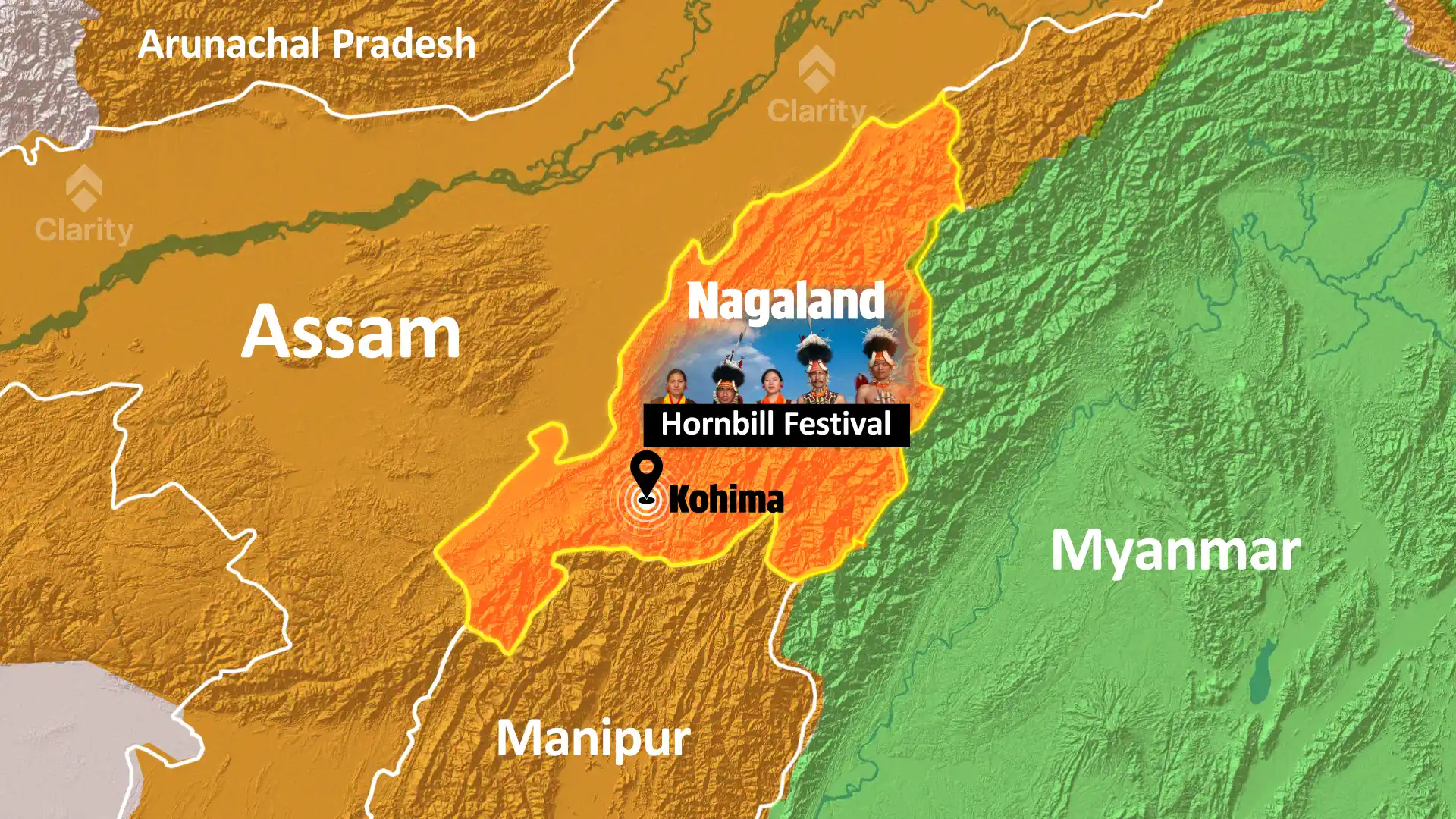
The 26th edition of the Hornbill Festival opened on 1 December 2025 at the Naga Heritage Village near Kohima, coinciding with Nagaland’s statehood day. The 10‑day cultural extravaganza attracted more than 22,000 visitors on its opening day and over 40,500 in the first two days. Partner countries this year include Austria, Malta, France, Ireland, the United Kingdom and Switzerland, while Arunachal Pradesh is the partner state. The festival aims to showcase the rich traditions of Nagaland’s tribes and boost tourism.
Background
The Hornbill Festival, often called the “festival of festivals,” was inaugurated in 2000 by the Nagaland government to promote inter‑tribal harmony and celebrate the state’s cultural heritage. It takes its name from the hornbill bird, revered across Naga folklore as a symbol of bravery and abundance. The festival is held annually from 1 to 10 December at Kisama, a heritage village about 12 km south of Kohima. Each of Nagaland’s 18 tribes builds a morung—a traditional communal hut—where visitors can learn about its unique customs, architecture and handicrafts.
Highlights of the 2025 edition
- Cultural performances: Every day features vibrant folk songs, warrior dances and storytelling by the Ao, Angami, Sumi, Konyak, Lotha and other tribes. Modern music events, including the Hornbill Rock Contest and fusion performances, attract young audiences.
- Indigenous sports: Spectators can witness Naga wrestling, archery, bamboo stilt walking and traditional tug‑of‑war. These sports emphasise strength, balance and community cooperation.
- Art and cuisine: Visitors sample smoked pork, bamboo‑shoot curries, millets and rice beer while browsing stalls selling bamboo crafts, beadwork and handwoven textiles. Artisans demonstrate weaving, wood carving and pottery techniques.
- International participation: Six partner countries showcase their own culture and cuisine, fostering cultural exchange. Diplomats and tourists from these countries interact with local communities, while the partner state Arunachal Pradesh presents its tribal dances and food.
- Tourism boom: According to the Nagaland tourism department, the festival attracted 22,508 visitors on the first day (363 foreigners, 5,314 domestic tourists and 16,831 local residents) and 18,010 on the second day. The footfall is expected to grow as the festival progresses.
Significance
The Hornbill Festival has become a major attraction in India’s north‑east, drawing national and international travellers. It provides a platform for the 18 Naga tribes to celebrate their distinct identities while reinforcing unity. The event generates revenue for artisans, farmers and tour operators, thereby supporting the local economy. Its growing global profile also encourages cultural diplomacy and understanding between India and partner countries.
Conclusion
Celebrating the Hornbill Festival not only preserves Nagaland’s intangible heritage but also positions the state as a vibrant destination for cultural tourism. Continued investment in infrastructure, environmentally responsible tourism and equitable benefits for tribal communities will help sustain this unique “festival of festivals” for generations to come.
Source: IE