

Why in news?
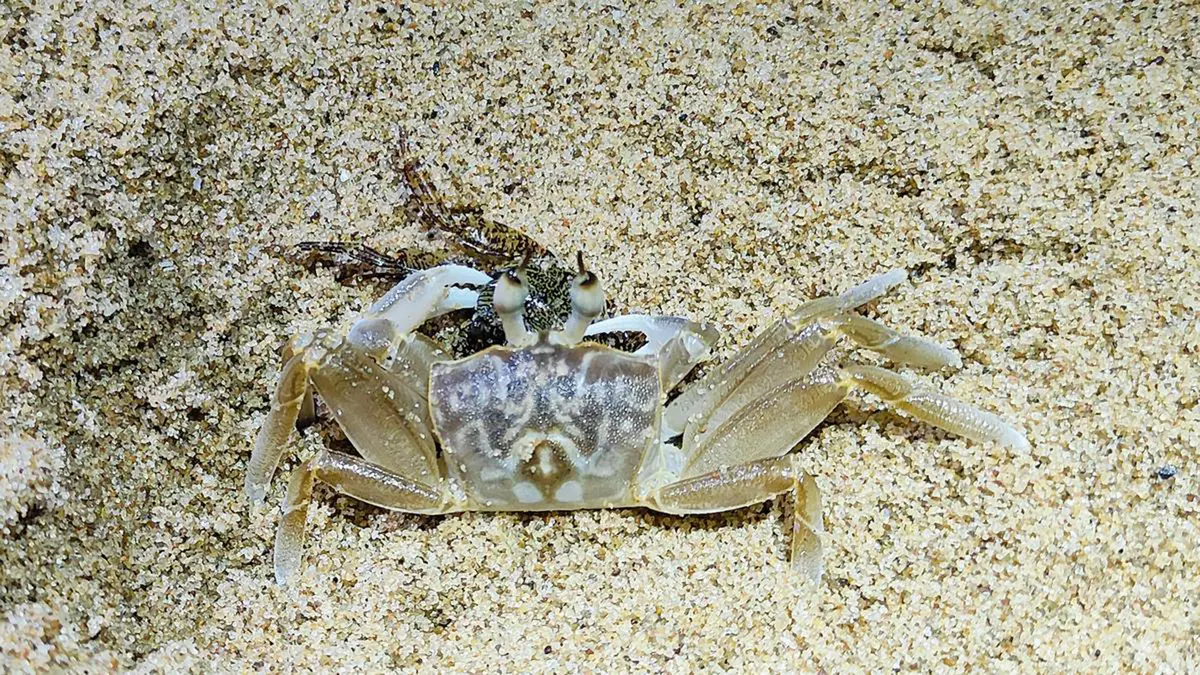
The horn‑eyed ghost crab (Ocypode ceratophthalmus) has drawn curiosity among naturalists and students preparing for competitive exams because of its distinctive horn‑like eye stalks and role as a beach scavenger. Understanding this species sheds light on coastal ecology and the importance of preserving sandy shorelines.
Background
Ghost crabs belong to the family Ocypodidae and are known for their square bodies, long legs and stalked eyes. The horn‑eyed ghost crab is widely distributed across the Indo‑Pacific region—from the coast of East Africa through India and Southeast Asia to Japan and the Pacific islands. It inhabits sandy beaches where waves meet the shore. The crab’s eyestalks extend into pointed horns, giving it its common name. Its body measures about 6–8 centimetres across and is coloured beige, greenish or brown to blend with its environment.
Ecology and behaviour
- Fast runners: Ghost crabs are among the fastest land crabs, capable of moving over 2 metres per second. Their speed helps them escape predators and quickly retreat to their burrows.
- Burrow builders: They dig deep, branched burrows above the high‑tide line. These burrows offer shelter from predators and extreme temperatures and can extend more than a metre underground.
- Feeding habits: Ghost crabs are opportunistic scavengers. They feed on detritus, small insects and even the eggs and hatchlings of sea turtles and shorebirds. By cleaning up organic material, they help keep beaches healthy.
- Communication: Males produce chirping sounds by rubbing ridges on their claws, a behaviour called stridulation, which may help in courtship or defending territory.
- Indicator species: Because ghost crabs are sensitive to human disturbance, their presence and abundance indicate the ecological health of sandy beaches. Heavy beach traffic, pollution and artificial lighting can disrupt their populations.
Significance
- Beach ecosystem health: Ghost crabs recycle nutrients, aerate sand and form part of the food web, supporting shorebirds and larger predators.
- Conservation awareness: Studying these crabs highlights the need to protect beach habitats from excessive development, littering and vehicle traffic.
- Educational value: Their unusual appearance and behaviours make them an engaging subject for students learning about coastal ecosystems.
Conclusion
The horn‑eyed ghost crab exemplifies the delicate balance of life along shorelines. Conserving sandy beaches ensures that such fascinating creatures continue to thrive and perform their ecological roles.
Source: TH