

Why in news?
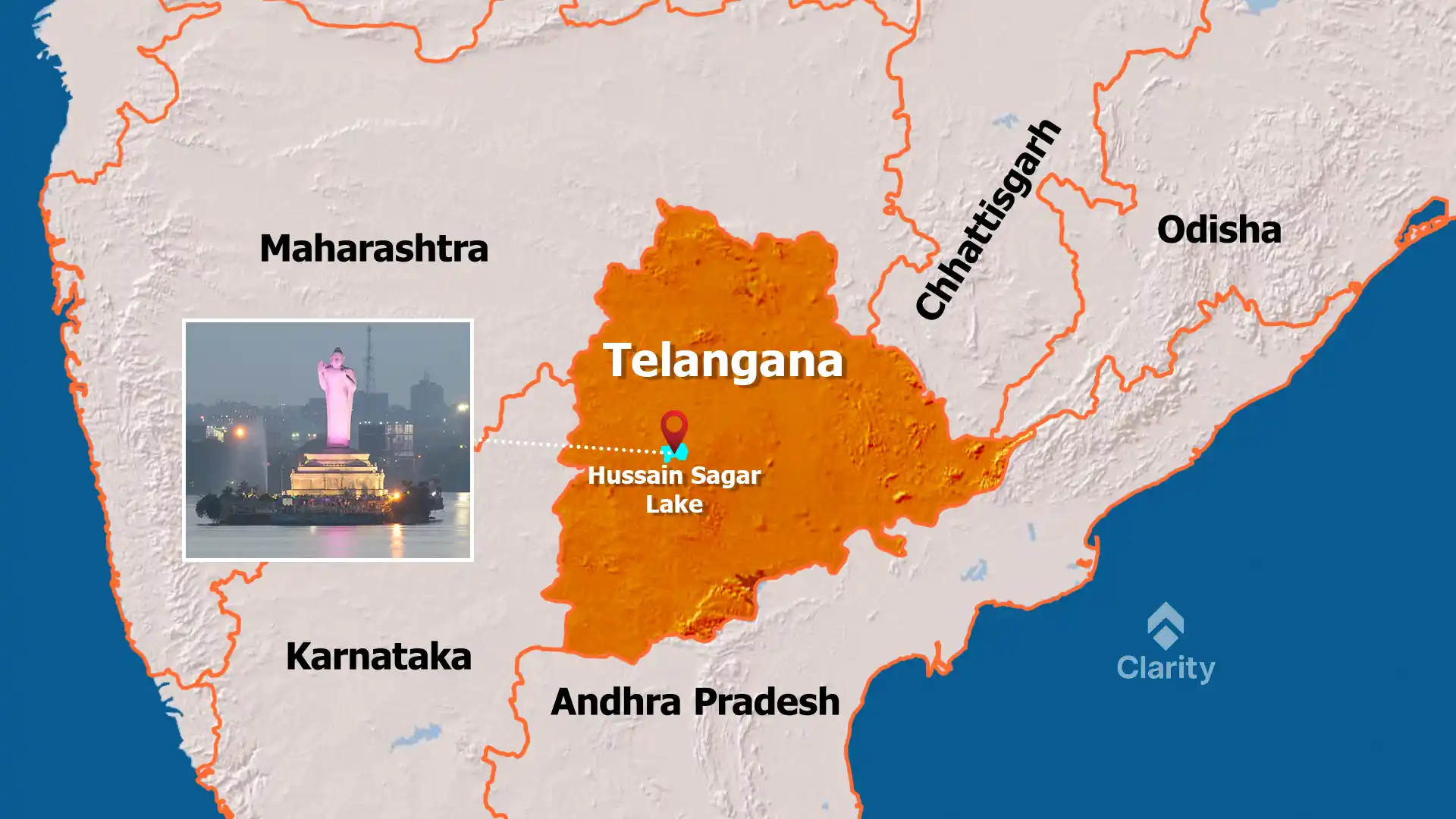
The historic Hussain Sagar in Hyderabad has long suffered from algal bloom and a foul smell due to sewage and industrial effluents. To address this, the Hyderabad Metropolitan Development Authority (HMDA) announced a two‑year bioremediation project that will use enzyme solutions and biochar‑based Bokashi balls to reduce organic pollution, improve dissolved oxygen and restore the lake’s ecological balance.
Background
Hussain Sagar is a heart‑shaped reservoir built in 1562 CE by Ibrahim Quli Qutb Shah and named after the Sufi saint Hussain Shah Wali. Spread over about 5.7 square kilometres, the lake once supplied drinking water to Hyderabad and separated the twin cities of Hyderabad and Secunderabad. Rapid urbanisation led to untreated sewage, industrial effluents and nutrient‑rich runoff entering the lake, causing eutrophication, algal blooms and fish kills.
Bioremediation plan
- Enzyme solutions: Specially formulated enzymes will be sprayed on the water to accelerate the breakdown of organic waste and reduce odour‑causing compounds.
- Bokashi balls: HMDA will deploy biochar‑based balls containing beneficial microorganisms that sink to the bottom, digest sludge and suppress algal growth.
- Improved dissolved oxygen: By reducing organic load and algae, the project aims to raise dissolved oxygen levels, making the lake more hospitable for fish and other aquatic life.
- Public engagement: Authorities plan to involve local communities through awareness campaigns and by promoting better waste management practices upstream.
Significance
- Reviving a cultural landmark: Hussain Sagar is famous for its 18‑metre tall Buddha statue on an island. Cleaning the lake will improve the skyline of Hyderabad and encourage tourism and recreation.
- Model for other lakes: The use of natural enzymes and microbes could provide a sustainable approach for restoring other urban water bodies across India.
- Environmental benefits: Healthier waters support fish, birds and plant life, improve air quality and provide cooling during hot seasons.
Conclusion
The Hussain Sagar restoration project recognises that simply removing visible trash is not enough; the root causes of pollution must be addressed. Through bioremediation and improved sewage management, the lake can regain its ecological function and continue to be a symbol of Hyderabad’s heritage.