Why in news?
Residents of Hyderabad have complained of a strong foul odour around the historic Hussain Sagar Lake. Rising temperatures have triggered rapid algal growth, and the resulting bloom is decomposing and releasing unpleasant smells. Municipal authorities are spraying microbial solutions and using speedboats to break up the algae, but the incident highlights long‑standing pollution issues in the lake.
Background
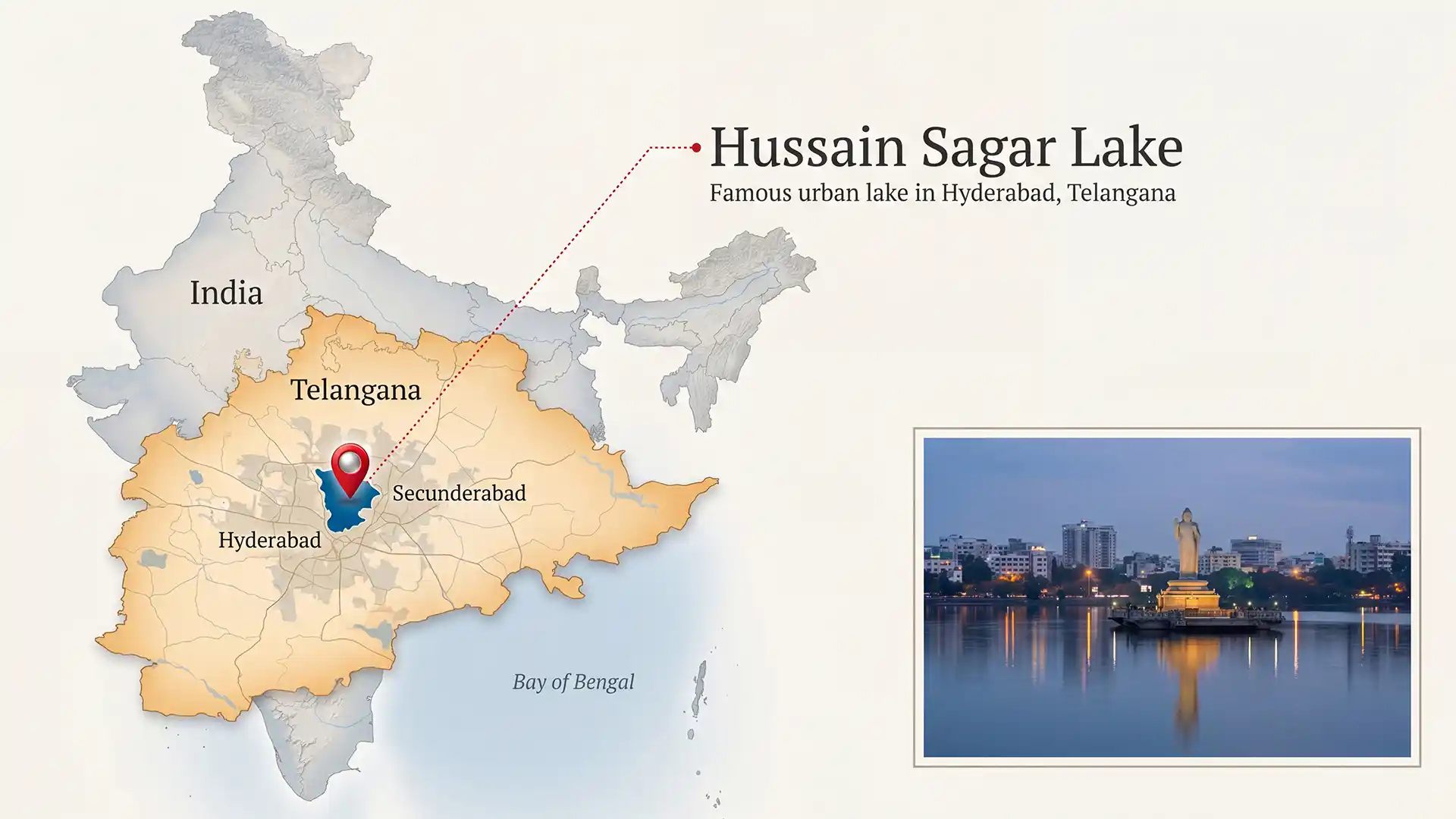
Hussain Sagar is an artificial lake located between Hyderabad and Secunderabad. It was excavated in 1562 by Sultan Ibrahim Quli Qutb Shah and named after Hussain Shah Wali, a saint who supervised its construction. Originally built on a tributary of the Musi River to supply drinking water and irrigation to the twin cities, it has since become an iconic landmark. The lake spreads across about 5.7 square kilometres and is often called the “Tank Bund” because of the prominent embankment road that skirts its western edge. In the 1990s a 16‑metre‑tall monolith Buddha statue was installed on Gibraltar Island at the centre of the lake, transforming the waterbody into a tourist attraction. Over the years however, rapid urbanisation has led to sewage, industrial effluents and storm‑water drains emptying into the lake, degrading its water quality.
Key facts
- Hussain Sagar is one of the largest heart‑shaped lakes in the world and connects Hyderabad and Secunderabad. It once served as the main source of drinking water for the city until 1930.
- The lake is about 5.7 sq km in area with a maximum depth of around 32 feet. Gibraltar Island hosts the 18‑tonne Buddha statue, which draws tourists and pilgrims.
- Parks, recreational facilities and statues of notable Telugus line the Tank Bund, making the promenade a popular evening spot.
- Untreated sewage, industrial effluents and nutrient‑rich runoff encourage the growth of algae and water hyacinth. When these plants die and decompose they deplete oxygen and release foul‑smelling gases.
- The Greater Hyderabad Municipal Corporation periodically deploys aerators, weed‑harvesting machines and microbial treatments to control eutrophication, but persistent inflows continue to pollute the lake.
Why the smell matters
- A strong odour indicates severe eutrophication and declining oxygen levels that harm fish and other aquatic life.
- The lake is not only a recreational area but also a cultural symbol. Unpleasant smells discourage tourism and reduce the quality of life for nearby residents.
- Algal blooms can produce toxins that pose health risks to people and animals, making water treatment more costly.
- The episode underscores the need to intercept untreated sewage and upgrade wastewater treatment infrastructure in rapidly growing cities.
Conclusion
The foul odour wafting from Hussain Sagar is a symptom of deeper environmental neglect. Restoring the lake will require stopping sewage inflows, treating effluents before discharge and investing in long‑term lake‑management plans. Preserving this historic waterbody is essential not only for public health and tourism but also for Hyderabad’s cultural heritage.