

Why in news?
Tripura’s power minister Ratan Lal Nath announced that the state has identified ten sites along rivers such as the Gomati, Manu and Feni to install hydrokinetic turbines. The goal is to produce about 185 MW of electricity using the flow of water, complementing rooftop solar installations and reducing reliance on gas‑based power.
Background
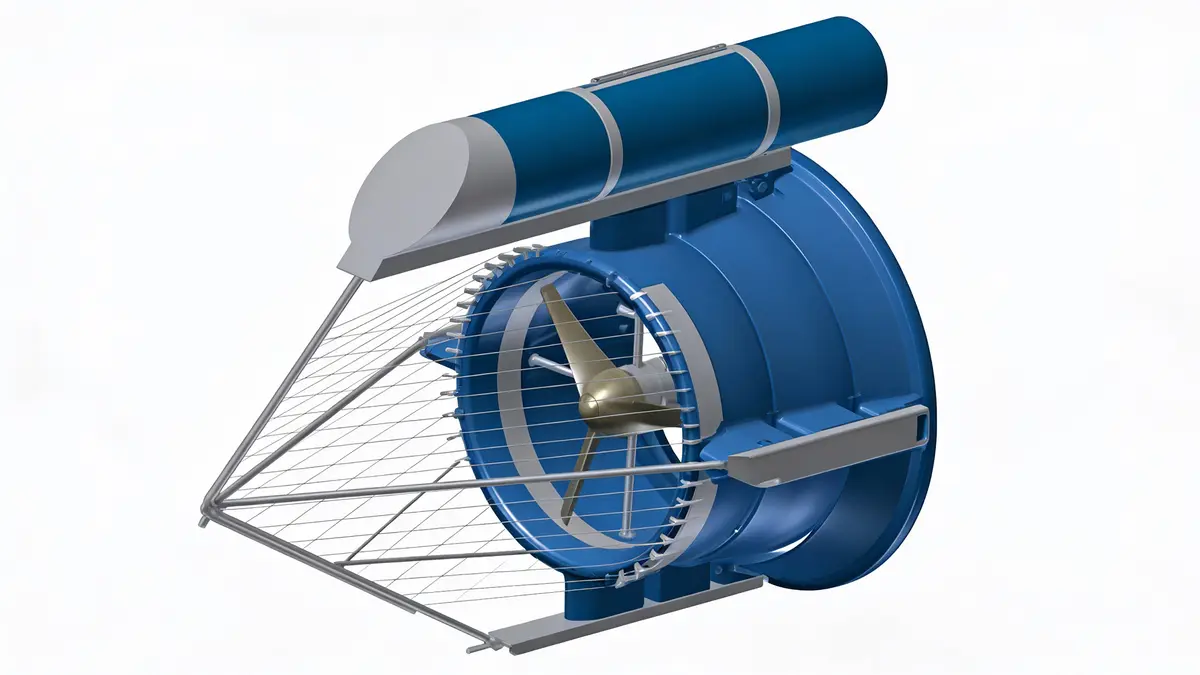
Hydropower typically relies on dams that create large reservoirs and exploit the potential energy of stored water. Hydrokinetic turbines represent a different approach: they harness the kinetic energy of flowing water directly in rivers, canals or tidal streams without building large‑scale barriers. The technology is sometimes compared to underwater windmills because it uses the current itself to turn the turbine blades and generate electricity.
How hydrokinetic turbines work
- Placement in watercourses: Turbines are anchored or mounted on floating platforms within the natural flow of a river or tidal channel. Unlike conventional hydropower, they do not require dams, diversion weirs or extensive civil works, which minimises disruption to aquatic ecosystems and surrounding communities.
- Rotor and generator: As water flows past the turbine’s blades—configured as horizontal‑axis, vertical‑axis or helical rotors—it causes the rotor to spin. This mechanical rotation drives an electric generator that produces power.
- Modular deployment: Multiple turbines can be arranged in arrays across a river to scale up output. Devices can also be installed on floating frames so they rise and fall with water levels.
Benefits
- Renewable and reliable: Flowing water provides a steady source of kinetic energy, offering continuous power with capacity factors often exceeding those of solar or wind installations.
- Minimal environmental impact: Because the technology does not block rivers, it preserves natural flow, sediment transport and fish migration routes. Properly designed debris screens protect the turbines from damage and aquatic life from harm.
- Scalable and flexible: Hydrokinetic systems can be tailored to local energy needs, from small village‑scale units to multi‑megawatt arrays. They are particularly suited to remote areas where grid connectivity is poor and diesel generation is expensive.
- Lower maintenance: With few moving parts and no large dams to operate, hydrokinetic installations generally have lower maintenance costs and easier logistics than traditional hydropower projects.
Tripura’s initiative
Tripura plans to deploy hydrokinetic turbines at ten river locations, including Chakmaghat, Maharani, Dumboor, Natunbazar, Kulai, Manu, Feni and other sites. Officials estimate that these installations could collectively generate 185 MW of electricity—enough to supply power to households and reduce dependence on fossil fuels. The project is part of a broader state strategy that also includes rooftop solar panels on government buildings and households.
Sources: India Today